The Most Romantic French Countryside Wedding Venues:
-
myfrancewedding.com
- Blog
- 3

There is a particular magic that unfolds when love meets the French countryside — the golden light softening over limestone turrets, the fragrance of lavender drifting across a terrace set for dinner, the quiet clink of local wine poured under a canopy of plane trees. For couples drawn to authenticity, heritage, and landscapes that feel as though they have been waiting centuries for this very moment, a French countryside wedding offers something that no other destination can replicate.
At Myfrancewedding, we understand the pull of France’s rolling hills, storied estates, and vineyard-draped horizons. Whether you envision exchanging vows in a Renaissance chateau, celebrating among Burgundian vines, or gathering loved ones in a honey-stoned Dordogne farmhouse, this guide illuminates the most captivating French countryside wedding venues — and the practical details you need to bring your vision to life.
Why Choose a French Countryside Wedding Venue
France’s countryside is not a single landscape; it is a tapestry of distinct terroirs, each offering a profoundly different atmosphere for celebration. The Loire Valley alone is home to over 300 chateaux, set along a UNESCO World Heritage river corridor renowned for its vineyards and refined gastronomy. Provence enchants with sun-drenched lavender plateaus, olive groves, and Côtes de Provence rosé. The Dordogne unfolds in gentle valleys rich with truffles, foie gras, and medieval villages classified among Les Plus Beaux Villages de France.
What these regions share is a deep-rooted tradition of hospitality and an abundance of venues that welcome couples with exclusive use of entire estates — something far more difficult to find in urban settings. Many French countryside venues offer on-site accommodation, meaning your celebration can stretch across a weekend: welcome drinks on a Friday terrace, Saturday ceremonies in a private chapel or walled garden, and a leisurely Sunday brunch by the pool. This multi-day, residential format transforms a wedding from a single event into a shared experience, drawing guests into the rhythms of French country life.
Practically, France’s countryside regions are remarkably accessible. Venues in the Dordogne sit within 30 minutes of Bergerac Airport. Loire Valley estates are often under two hours from Paris. Provençal properties connect easily to Marseille, Nice, and Toulon. And crucially, the density of exceptional venues — particularly in the Dordogne, often called “the Land of 1001 Châteaux” — creates a competitive market that can suit a range of budgets far broader than many couples expect.
Top French Countryside Chateau Venues
The French chateau wedding is an archetype of romantic celebration — centuries-old architecture wrapped in formal gardens, a grandeur that feels effortless rather than ostentatious. Below, we compare some of France’s most distinguished chateau wedding venues across key regions, each offering exclusive use, on-site accommodation, and distinct character.
| Venue | Region | Era / Style | Guest Capacity (Seated) | On-Site Accommodation | Defining Feature |
|---|---|---|---|---|---|
| Château Challain | Loire Valley | 19th-century Neo-Gothic | 120+ | 23 suites (approx. 50 guests) | Neo-Gothic spires, stained glass, 72 acres of gardens, forest, and lake |
| Château de Jalesnes | Loire Valley | 1610 Renaissance | Up to 180 | 17 suites (up to 65 guests) | Historic chapel, heated pool, multi-day exclusive use with no curfew |
| Château de Vallery | Île-de-France / Burgundy border | Renaissance (designed by Pierre Lescot) | Contact for details | Up to 56 guests | Built by the architect of the Louvre; floating gardens, terraces, and pool |
| Château du Fey | Burgundy | 17th-century Historic Monument | Contact for details | Up to 160 guests | Eco-conscious design; 40 hectares of gardens and woodland in rolling Burgundy hills |
| Château de Fonscolombe | Provence (near Aix-en-Provence) | 1730, Italian-classical French | Up to 150 | 50 rooms and suites (up to 110 guests) | 18th-century chapel, two elegant towers, Guerlain-calibre grounds |
| Château Gassies | Bordeaux | 18th-century hilltop estate | Up to 150 | Up to 43 guests | Panoramic views over the Garonne Valley and surrounding vineyards |
| Château de la Couronne | Charente-Dordogne border | Historic chateau, luxury renovation | Contact for details | 21 bedrooms (up to 50 guests) | 5 acres of gardens; full weekend packages with welcome soirée and pool party |
| Château du Doux | Dordogne (Corrèze) | 1904–1906, architect Jean-Louis Pascal | Contact for details | Up to 70 guests on-site | 25-metre pool, wood-panelled function rooms, all-inclusive packages available |
Each of these chateaux offers exclusive use, meaning you and your guests inhabit the estate as though it were your own private world for the weekend. This exclusivity is a hallmark of the French countryside wedding experience — no other events, no shared spaces, simply your celebration unfolding across centuries of architecture and carefully tended grounds.
Loire Valley Chateaux: Renaissance Grandeur Meets Relaxed Elegance
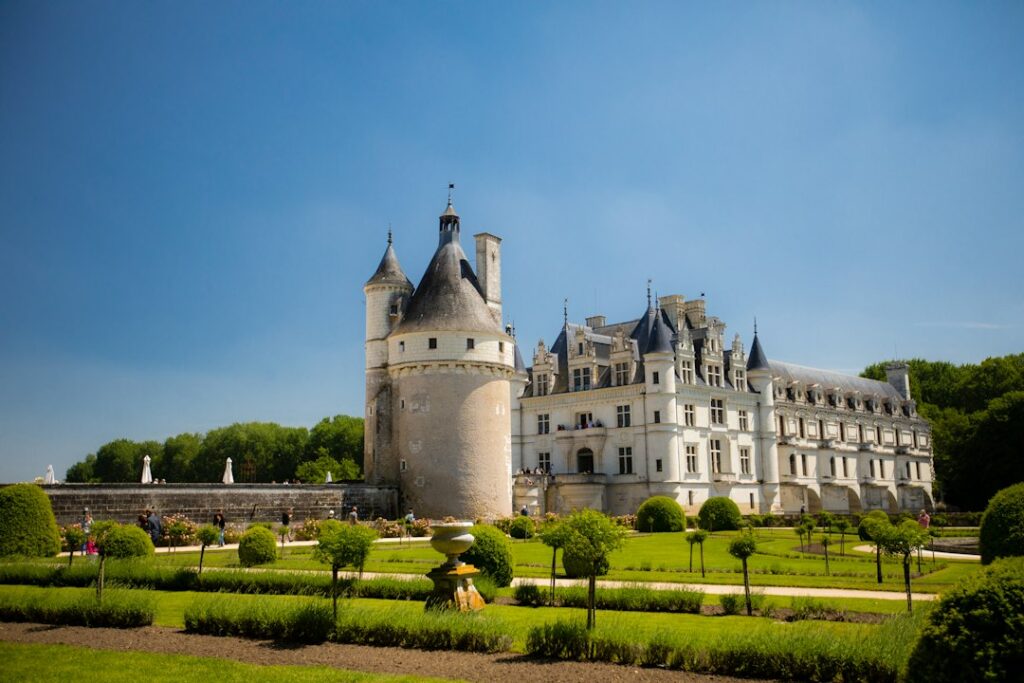
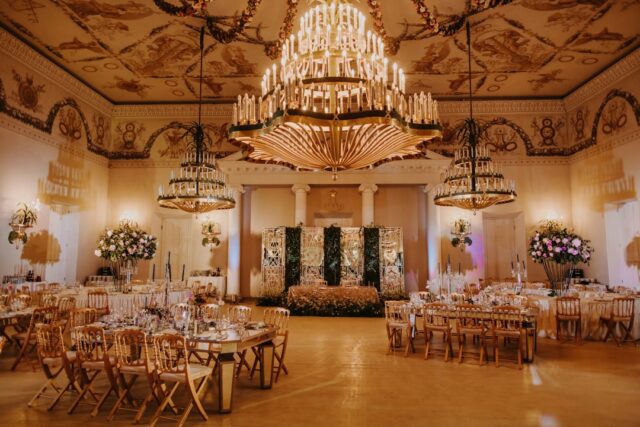
The Loire Valley — often called the “Garden of France” — is a UNESCO World Heritage region celebrated for its harmonious blend of nature, architecture, and refined living. Château Challain, for instance, is a 19th-century neo-Gothic jewel featuring marble spiral staircases, ornate wood panelling, hand-painted ceilings, and a private lake within its 72-acre grounds. With 23 individually decorated suites accommodating approximately 50 guests overnight, it provides the intimate residential feel that multi-day celebrations require, while its grand ballroom seats 120 or more for the wedding reception itself.
Just 19 kilometres from the charming town of Saumur, Château de Jalesnes is a meticulously restored Renaissance estate originally built in 1610. Designed for multi-day takeovers, it offers a historic chapel with stained glass for ceremonies, interconnecting salons for dining and dancing, a chestnut grove for open-air moments, and a heated pool. Its in-house or recommended catering teams draw on the richness of Loire Valley gastronomy — seasonal menus balanced between refinement and comfort, paired with exceptional local wines including Sancerre, Vouvray, and Crémant de Loire.
Provençal Chateaux: Sun-Kissed Stone and Mediterranean Soul
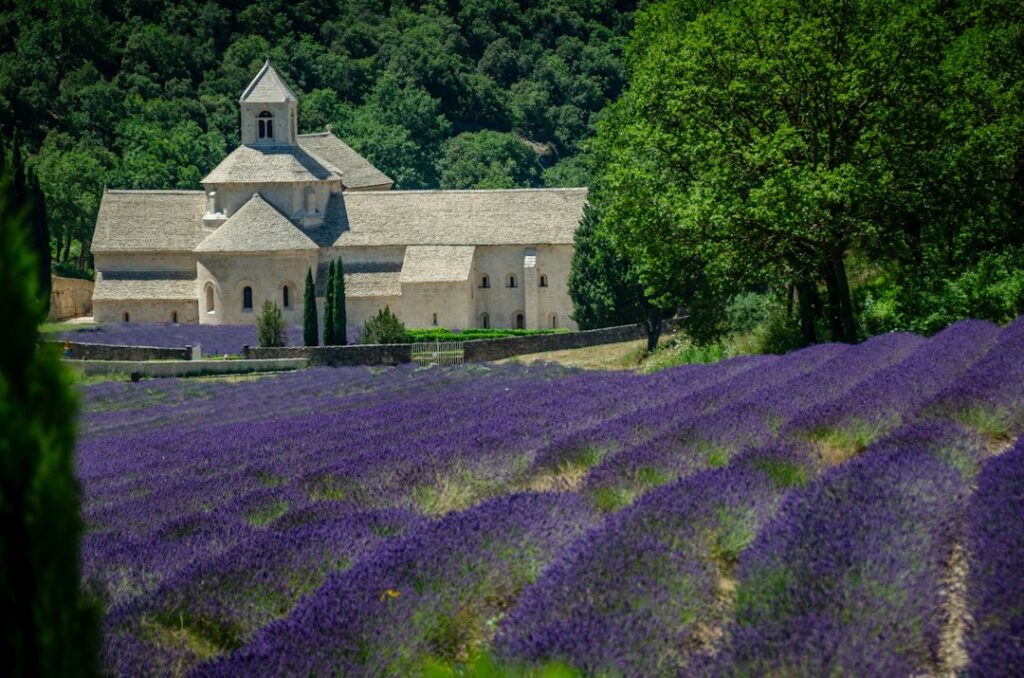
In Provence, chateaux carry a different character — warm ochre and honey-coloured stone, terraced gardens overlooking vineyards, the scent of rosemary and thyme on every breeze. Château de Fonscolombe, built in 1730 and located just 20 minutes from Aix-en-Provence, is a five-star property that offers 50 luxurious rooms and suites, an on-site 18th-century chapel, and the kind of Italian-classical French architecture — complete with two distinctive towers — that gives every photograph a painterly quality. The estate can host up to 150 guests and be fully privatised for your celebration.
If you are beginning to imagine your own celebration in these landscapes, our team at Myfrancewedding can help you navigate the breadth of French countryside venues and connect you with the estate that speaks to your vision. We invite you to explore our curated listings and reach out to begin the conversation.
Rustic Farmhouse and Vineyard Wedding Locations
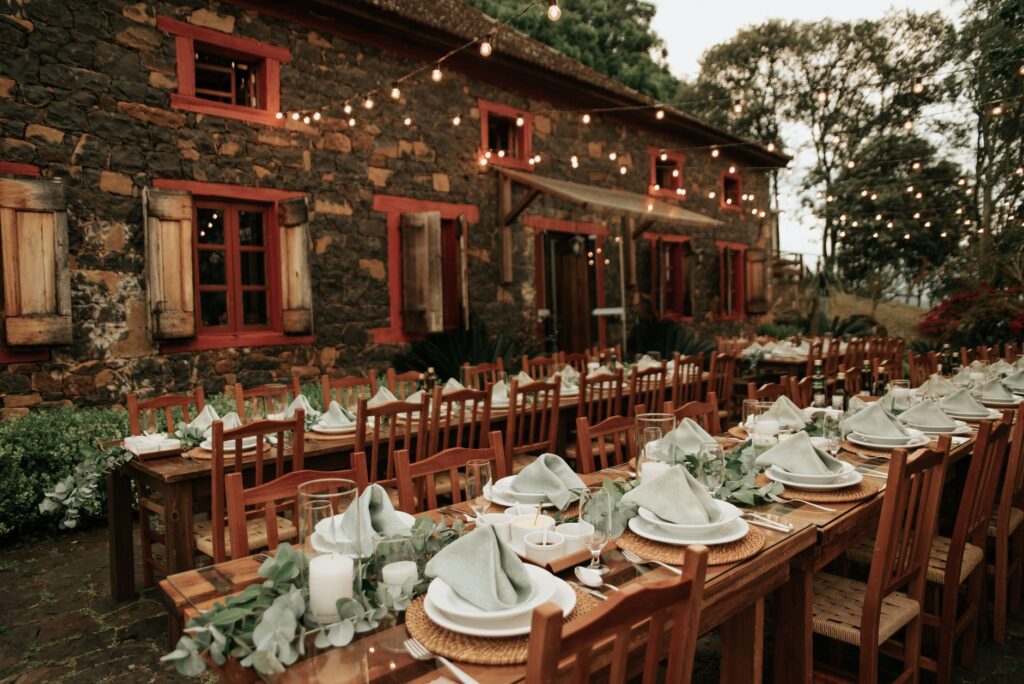
Not every French countryside wedding calls for turrets and ballrooms. For couples drawn to a more grounded, sensory celebration — long tables under ancient oaks, bare feet on sun-warmed stone, the hum of cicadas as the evening descends — France’s rustic farmhouses, domaines, and vineyard estates offer an equally compelling canvas.
Dordogne Farmhouses: Rustic Character with Gastronomic Soul
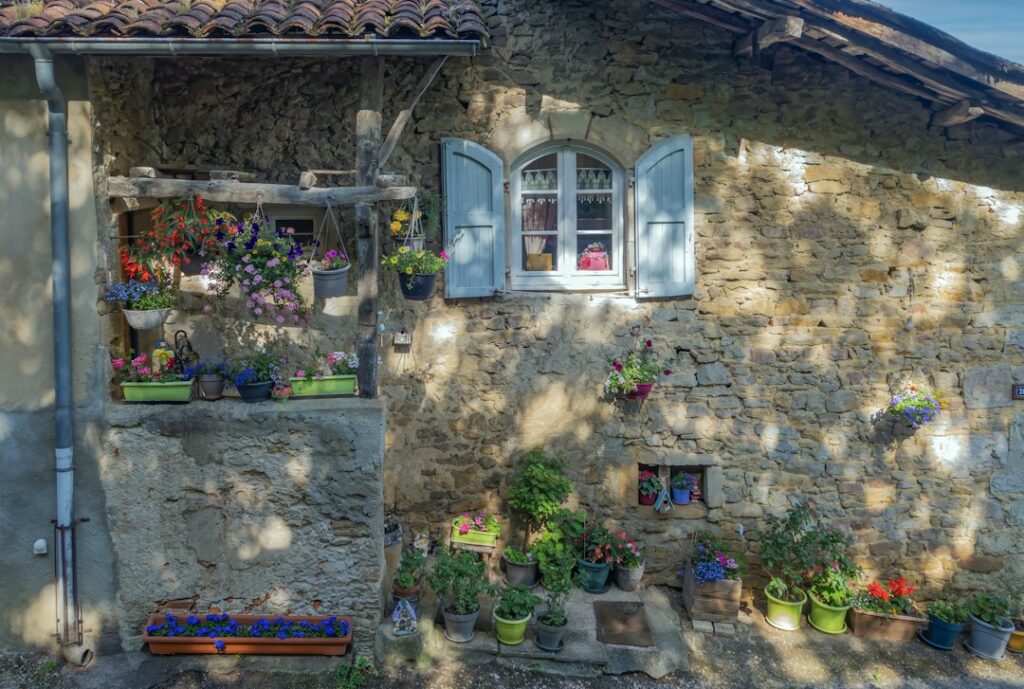
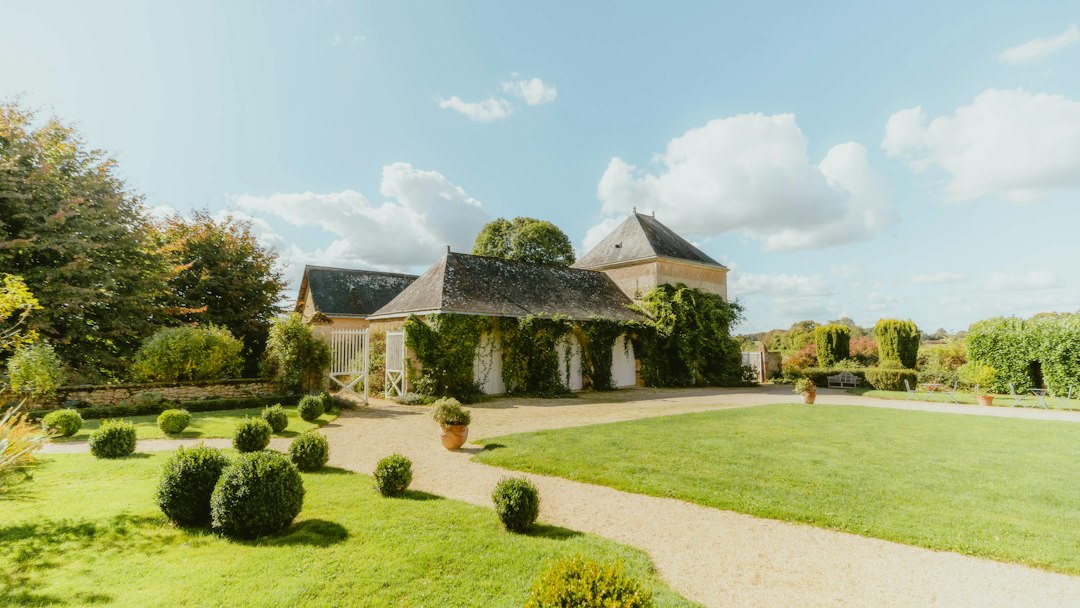
The Dordogne region, in southwest France, is a treasure trove of converted farmhouses where honey-coloured stone barns, exposed timber beams, and flower-filled meadows create an atmosphere of relaxed, unpretentious beauty. Many of these properties offer a “blank canvas” approach — couples bring their own caterers, florists, and styling, drawing on the region’s extraordinary local produce: truffles, foie gras, Bergerac wines, and artisan cheeses.
A typical Dordogne farmhouse venue might feature a restored barn with high-pitched roof and exposed stone walls seating 80 guests, beautiful gardens for outdoor ceremonies, a heated swimming pool, and on-site accommodation for 30 to 45 guests across independent gîtes, each with private kitchens and living spaces. These venues excel at creating a “home away from home” feeling, where the wedding is the centrepiece of a week-long gathering — families cooking together, children exploring meadows, friends discovering the local bastide markets and medieval villages that dot the surrounding countryside.
Vineyard Estates: Celebrating Among the Vines
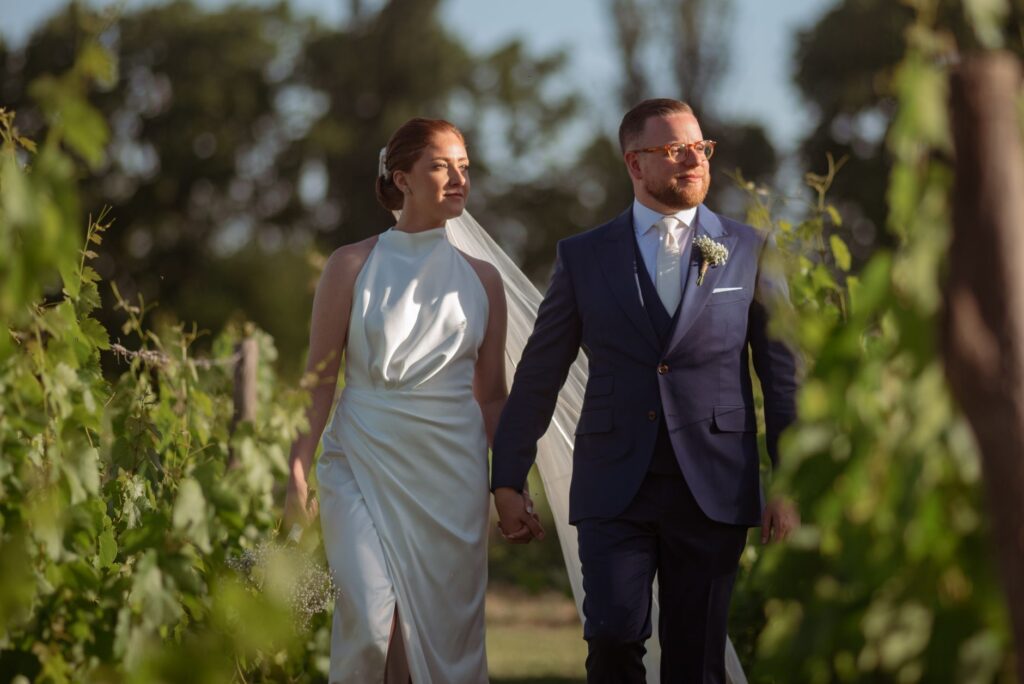
Vineyard weddings in France offer something no other setting can: a celebration rooted literally in the terroir that fills your glass. From Bordeaux and the Loire in the west to Burgundy and Champagne in the east, and Languedoc, Provence, and Corsica in the south, the diversity of French wine regions translates into a wealth of venue styles — from grand crus estates to intimate organic domaines.
In Provence, La Verrière and Chêne Bleu is a medieval priory at the heart of a working vineyard estate, set within a UNESCO nature reserve. Ceremonies can unfold in meticulously restored ancient buildings, with receptions for up to 120 seated guests and a Grand Vaulted Hall ideal for more intimate cocktail dinners. The estate’s in-house catering team works with the wedding party on bespoke menus, and the on-site wines — produced on the very slopes surrounding the celebration — add a layer of authenticity that is impossible to replicate elsewhere.
Château d’Estoublon, at the foot of the Alpilles mountain range in the Baux-de-Provence region, has been producing wine and olive oil since 1489. Available for exclusive private hire, it encompasses 200 hectares of olive groves and vineyards, with ten bedrooms and suites for the wedding party. Its inner courtyards, double staircase facade, and sunlit Provençal landscapes make it a sought-after choice for couples who value heritage and a deep connection to place.
In Burgundy, Château de Varennes — named by CNN among the top ten best wedding venues worldwide — sits amidst the finest vineyards of Beaune. This family-owned estate, restored over 400 years, features a historic chapel, lavender fields, an orangery, and accommodation for 38 guests, along with private chef services and concierge support.
Provence vs Loire Valley: Regional Venue Comparison
Choosing between Provence and the Loire Valley is one of the most common dilemmas for couples planning a French countryside wedding. Both regions are magnificent, but they offer distinctly different atmospheres, climates, and practical considerations. The comparison below highlights the key differences to help you determine which landscape best matches your celebration.
| Factor | Provence | Loire Valley |
|---|---|---|
| Landscape | Lavender fields, olive groves, limestone hilltop villages, Mediterranean coastline | River valleys, vineyard-draped hills, formal gardens, dense woodland |
| Climate | Hot, dry summers (June–September); ideal for outdoor celebrations; occasional Mistral winds | Warm but milder summers; four distinct seasons; golden autumn harvest light |
| Peak Season | June through September; lavender blooms late June to early August | June through September; spring gardens (March–May) and autumn foliage equally appealing |
| Venue Style | Provençal mas, vineyard domaines, luxury hilltop estates, renovated bastides | Renaissance and medieval chateaux, manor houses, wine estates, boutique auberges |
| Culinary Character | Mediterranean cuisine; rosé, olive oil, seafood, ratatouille, local herbs | Refined French gastronomy; Sancerre, Vouvray, rillettes, goat cheese, river fish |
| Nearest Major Airports | Marseille, Nice, Toulon, Avignon (TGV) | Paris (CDG/Orly), Tours, Nantes, Angers, Poitiers |
| Guest Activities | Wine tasting, village markets, coastal excursions, hiking the Luberon, spa retreats | Chateau-hopping (Chambord, Chenonceau), wine tours, river activities, hot air balloons |
| Ideal For | Couples seeking sun-soaked al fresco celebrations with a Mediterranean sensibility | Couples drawn to regal architecture, lush green landscapes, and proximity to Paris |
Both regions deliver an authentically French experience, but the emotional register is different. Provence speaks in warm, vivid tones — terracotta, saffron, deep purple lavender against an azure sky. The Loire Valley whispers in softer hues — silvery river light, pale tuffeau stone, the tender green of centuries-old gardens. Your choice may ultimately come down to whether your celebration is one of sun-drenched exuberance or gentle, regal romance.
What to Consider When Booking Your French Countryside Venue
Finding the venue that resonates with your vision is only the first step. A successful French countryside wedding requires attention to several practical dimensions that can significantly shape both your experience and your budget.
Exclusive Use and Multi-Day Hire
Most countryside venues in France are hired on an exclusive-use basis, often for a minimum of two or three nights. This is a defining advantage — it allows you to create a full weekend experience for your guests — but it also means planning welcome dinners, morning-after brunches, and daytime activities throughout the stay. Many estates offer packages that include coordination for these ancillary events, from poolside barbecues to vineyard tours.
On-Site Accommodation vs. Nearby Lodging
On-site sleeping capacity varies enormously — from intimate estates housing 15 to 20 guests, to grand chateaux accommodating 50 to 160. When choosing your venue, consider how important it is that all guests stay together under one roof. Many venues supplement on-site rooms with recommended local gîtes, bed-and-breakfasts, and nearby hotels, often coordinating transport between them. Clarify these logistics early, as rural France — while enchanting — can mean limited local accommodation options if not planned ahead.
Catering: In-House, Recommended, or Independent
French countryside venues typically fall into three catering models. All-inclusive packages handle everything from canapés to wedding cake, with in-house chefs drawing on local produce. “Dry hire” venues offer the space and allow you to bring your own caterers, giving maximum creative freedom but requiring more planning. A middle ground — where the venue provides a curated list of recommended caterers — is increasingly common and often the best balance of flexibility and quality assurance. Whichever model you choose, expect the food to be central to the celebration: French wedding feasts are typically multi-course, wine-paired affairs that honour regional culinary traditions.
Seasonality and Timing
Peak wedding season in France runs from June through September, when warm evenings and long daylight hours enable al fresco dining well past sunset. However, shoulder seasons — May and October — offer their own rewards: lower venue rates, fewer tourists, and exquisite light. In Provence, lavender blooms from late June to early August; in the Loire Valley, autumn’s golden tones and harvest season create a uniquely atmospheric backdrop. Some venues in Burgundy offer truffle-season winter weddings, an experience both intimate and deeply gastronomic.
Legal Requirements
Civil marriages in France require residency documentation and can involve significant paperwork for international couples. Many destination wedding couples choose to complete their legal ceremony in their home country and hold a symbolic or religious ceremony in France, which allows complete freedom of venue — from a chateau garden to a vineyard terrace to a private chapel. A knowledgeable local wedding planner can guide you through the options and ensure every detail is properly arranged.
Frequently Asked Questions
How much does a French countryside wedding venue typically cost?
Venue costs in the French countryside vary considerably by region, season, and level of service. Rustic farmhouse or domaine venues can start from around €3,000 to €5,000 for low-season hire. Mid-range chateaux typically range from €5,000 to €15,000 for a multi-night exclusive booking. Luxury properties with extensive accommodation and all-inclusive packages can range from €30,000 to well over €100,000 for peak-season, week-long hires. The Dordogne and southwest France generally offer more competitive pricing than Provence or the Côte d’Azur.
What is the ideal guest count for a French countryside wedding?
French countryside venues accommodate a remarkably wide range of celebrations. Intimate farmhouse weddings suit 30 to 60 guests, while mid-sized chateau celebrations typically welcome 80 to 150. Larger estates — particularly in the Loire Valley and Normandy — can host 200 to 300 guests or more. The key consideration is the balance between total guest capacity and on-site sleeping: a venue that seats 150 for dinner but sleeps only 30 will require careful coordination of local accommodation and transport.
When should we book our French countryside wedding venue?
For popular venues during peak season (June to September), booking 12 to 18 months in advance is recommended. Sought-after properties like Château Challain, Château de Jalesnes, and prominent Provençal estates can fill two years ahead for summer dates. Shoulder-season and winter weddings afford more flexibility, with 9 to 12 months’ lead time often sufficient. Early enquiry also opens negotiation for extended stays or upgraded packages.
Do we need a wedding planner for a French countryside wedding?
While not strictly required — especially at venues with strong in-house coordination teams — a bilingual wedding planner with local expertise is highly recommended for international couples. They navigate vendor relationships, legal nuances, language considerations, and the logistical complexities of a destination event. Many French venues maintain partnerships with experienced planners who know the estate intimately and can ensure your celebration unfolds seamlessly.
Can we hold a legally recognised wedding ceremony at a French countryside venue?
In France, legally binding civil ceremonies must be performed at the local mairie (town hall) by the mayor or a deputy, and require specific residency documentation. However, many couples choose to complete their legal marriage at home and hold a symbolic or religious ceremony at their chosen venue — in a private chapel, garden, or vineyard setting. This approach provides the greatest flexibility in selecting both your venue and your celebrant.
Start Planning Your French Countryside Wedding
The French countryside holds a venue for every vision — whether your heart is set on a turreted Loire Valley chateau reflected in a glassy lake, a Provençal vineyard estate where the wine in your glass was harvested from the slopes beside your dinner table, or a Dordogne farmhouse where stone walls and wild meadows frame a celebration that feels both timeless and entirely your own.
At Myfrancewedding, we are here to help you discover the venue that matches not just your guest count and budget, but the emotional tenor of your celebration — the feeling you want to carry with you long after the last glass is raised. Browse our curated collection of French countryside wedding venues, and when you are ready, contact Myfrancewedding to begin planning the celebration you have been imagining. Your French love story is waiting to unfold.