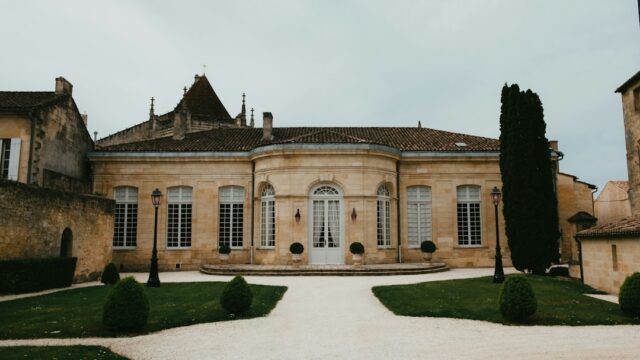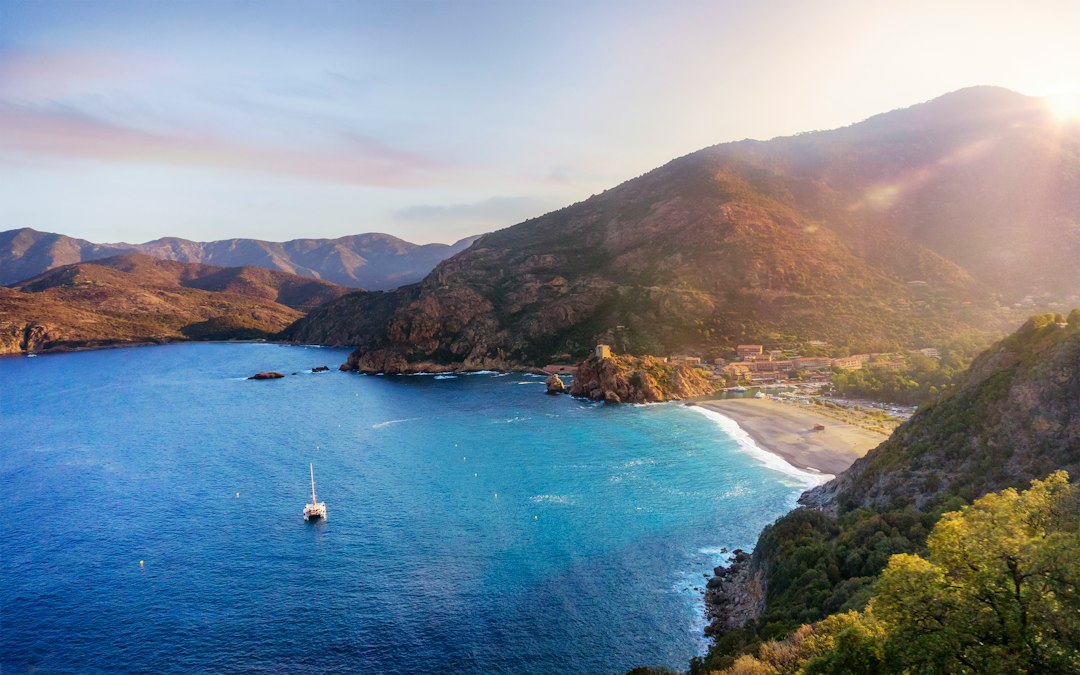
8 Corsica Wedding Venues Beyond Provence and Paris
-
myfrancewedding.com
- Destination WeddingsWeddings
- 1

Why Corsica for a Destination Wedding
Corsica exists at a cultural crossroads that no other French region can claim. Ruled by Genoa for five centuries before becoming French in 1768, the island carries an identity that is neither wholly Italian nor wholly French but something more compelling: the warmth and expressiveness of Italian coastal life fused with French sophistication in cuisine, architecture, and art de vivre. For couples who have already chosen France but want something distinct from the lavender fields of Provence or the grand boulevards of Paris wedding venues, a Corsica wedding venue offers a setting where rugged maquis-scented hills tumble into turquoise coves, where Genoese watchtowers still stand above secret beaches, and where wedding traditions run deeper than anything you will find on the mainland.
The landscape alone would justify the journey. Corsica packs more geographic diversity into its 180-kilometre length than many entire countries: white-sand beaches lapped by Mediterranean crystal, granite peaks rising to 2,700 metres, chestnut forests carpeting the interior, and vineyards clinging to sun-baked slopes. But what sets the island apart is its cultural texture. Corsicans speak their own language, cook with ingredients found nowhere else in France, and sing in harmonies that UNESCO has recognized as intangible cultural heritage. A wedding here is not simply a French celebration in a beautiful location. It is an immersion in a place with its own soul.
While couples exploring French countryside wedding venues might weigh Loire chateaux against Provençal vineyards, Corsica offers something neither region can: the feeling of being on an island where the mountains meet the sea, where Italian warmth meets French sophistication, and where your celebration can incorporate traditions that have survived centuries of changing flags. Whether you envision a clifftop ceremony above the Mediterranean or a candlelit feast in a 15th-century convent, Corsica delivers an experience your guests will still be describing years later.
8 Corsica Wedding Venues Worth the Journey
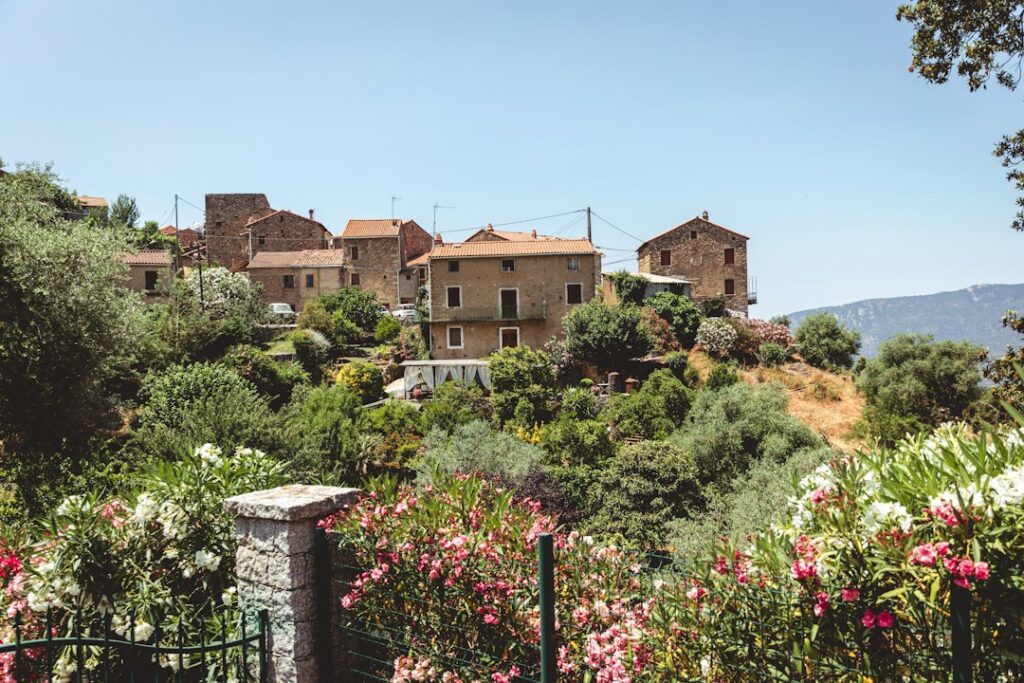
The venues below span the island’s distinct coasts and mountain ridges, from converted stone hamlets overlooking the western gulfs to family-run vineyards in the south. Each one runs an active wedding programme with the infrastructure to support an international guest list: staffing, reception spaces, and on-site accommodation. Together they represent the range of what a Corsica wedding venue can be.
Domaine de Murtoli
Between Sartène and Bonifacio in southern Corsica, Domaine de Murtoli sprawls across 2,500 hectares of unspoiled countryside and rugged coastline. This is not a hotel in any conventional sense. It is an entire world: wild beaches, maquis-covered hills, working farmland, and 20 restored 17th-century bergeries, the traditional stone shepherds’ houses that dot the Corsican interior, now converted into guest accommodation. The estate also includes a five-star hotel with roughly twenty rooms and suites, a restaurant seating 150 guests (250 standing), and in-house catering drawn from produce grown and livestock raised on the property itself.
Murtoli suits couples seeking a full estate takeover rather than a hotel-style booking. The scale means your celebration can unfold across multiple days and locations within the property: a welcome dinner in one of the stone bergeries, a ceremony on a secluded beach, a reception in the farmhouse restaurant with its monumental fireplaces and arched ceilings. Figari Sud-Corse Airport is a 30-minute drive away. Pricing is arranged on request, tailored to the scope of your event. For couples who want total privacy and the feeling of inhabiting their own private Corsica, nothing on the island compares.
Les Oliviers de Palombaggia
Near Porto-Vecchio, the Bougon family has shaped Les Oliviers de Palombaggia since 1972, building traditional Corsican farmhouse villas that blend into two hectares of maquis-covered hillside. Pink granite walls and terracotta roofs sit beneath century-old olive trees and umbrella pines, a short walk from the unspoiled Carataggia Cove and just 1.5 kilometres from Palombaggia, one of the island’s most celebrated beaches. Three distinct event spaces, Les Arcades, La Pergola, and the indoor Marcantonu room, give couples flexibility to move the celebration through different settings across the day, from a ceremony beneath ancient olives to a candlelit banquet on the terraces.
The estate welcomes up to 80 seated guests (120 standing) and sleeps 48 across private villas with heated pools. Couples bring in the independent caterers of their choice or arrange a private chef through the estate. The bridal morning begins in a converted former sheepfold, a preparation space steeped in the property’s agricultural roots. Nearby attractions include Bonifacio’s clifftop citadel and the granite spires of the Aiguilles de Bavella. Pricing starts from €38,500 for peak season (June through September), with a minimum two-night stay. Figari airport is approximately 30 minutes away by car.
Couvent de Pozzo
On Cap Corse, the narrow peninsula that reaches north from Bastia like a finger pointing toward Genoa, the Couvent de Pozzo is a 15th-century Capuchin monastery perched at 300 metres altitude. The convent’s elevated position gives it a sense of retreat and seclusion that few Corsican venues match: panoramic views over the Tyrrhenian Sea, gardens bordered by wild nature, and a permaculture vegetable garden that supplies the kitchen. The property accommodates up to 120 guests for a seated dinner, with on-site accommodation for 14 across the convent’s stone-walled bedrooms.
Wedding packages start from €18,000 for a three-day, two-night exclusive hire that includes garden privatization, accommodation for up to 15 people, breakfast for overnight guests, and lunch for 20 on the wedding day. Catering, beverages, DJ, lighting, and floral design are arranged separately, giving couples creative freedom. An event tent must be installed at the guest’s expense in case of bad weather, a practical consideration for any mountain venue. Bastia Airport is 45 minutes away, making arrivals straightforward for guests flying from mainland France or elsewhere in Europe.
La Signoria
In the Balagne region near Calvi, La Signoria is an 18th-century Genoese residence turned five-star Relais and Chateaux hotel. The estate sits between sea and mountains in a wooded park of palm trees, eucalyptus, olive trees, orange trees, and centuries-old pines. Reception rooms accommodate between 10 and 100 guests depending on the space and layout chosen, and the hotel offers accommodation for up to 73 guests across rooms, suites, apartments, villas, and even a romantic tree house perched in the vegetation.
The restaurant holds a Michelin star, with the chef preparing personalized menus featuring Corsican produce and Mediterranean flavors. A private beach, Signoria Mare, lies five minutes away, accessible to hotel guests, with a fisherman’s-hut-inspired restaurant serving local seafood. The spa Casanera uses organic Corsican products and offers signature treatments with local essential oils, ideal for a bridal morning or guest relaxation between events. La Signoria is roughly four kilometres from the centre of Calvi and six kilometres from Calvi airport, one of the island’s four airports. Pricing is available on request, tailored to the event.
Domaine de Vignale
In Venzolasca, Haute-Corse, Domaine de Vignale is a historic estate whose roots trace back at least to the 11th century, when Benedictine monks from the island of Gorgona held the land. In the 14th century, the property passed to the Chartreuse de Calci in Pisa, and today the Chiari family has stewarded it for three generations. The estate spans more than two hectares of Mediterranean gardens, a palm grove, and olive orchards, with century-old buildings surrounding a verdant courtyard. A vaulted cellar, a dovecote, and a historic well anchor the property’s timeless character.
Vignale produces AOP-certified Corsican olive oil on-site, pressing the Ghjermana olive variety cold immediately after harvest. The estate accommodates up to 300 guests, making it one of the largest-capacity venues on the island. Seven bedrooms provide on-site accommodation. Outdoor ceremony locations include the Mediterranean garden and the central courtyard, while the vaulted cellar seats 120 for indoor receptions and serves as a rain backup. A swimming pool and poolside area are available for brunch or cocktail events. Bastia Poretta Airport is a 15-minute drive. Pricing is available on request.
Domaine de Peretti della Rocca
Outside Figari in southern Corsica, Domaine de Peretti della Rocca is a working vineyard established by Jean-Baptiste de Peretti della Rocca, who planted his first endemic grape varieties in 2013 and now tends six hectares of vines, all harvested by hand. The estate produces PDO wines, with the grapes expressing the Figari terroir’s granite soils and sun. Nine rooms and bergeries, each named for a family member, provide accommodation with private heated pools. The on-site restaurant A Spartera serves Corsican cuisine for dinner, and the domaine offers wine tastings and private vineyard walks.
The venue hosts weddings and private events, with modular indoor and outdoor spaces that can be adapted to ceremonies and receptions. The atmosphere is bohemian and intimate, shaped by the owner’s commitment to consistency between his principles and the experience he offers guests: tranquility, authenticity, and a deep connection to the land. Figari airport is roughly 10 minutes away. Accommodation is adults-only, and pricing is arranged on request. For couples who want their celebration rooted in a working vineyard where the wine in their glass was harvested from the surrounding slopes, this domaine offers an experience few mainland French venues can match.
Olympe Tizzano
On Corsica’s southern coast, Olympe Tizzano commands a cliffside position above the Bay of Tizzano, where two hectares of wild Mediterranean plateau create an open-air celebration space defined by horizon, sea light, and the scent of maquis. The venue’s terraces, pool zone, and open-air lounges are oriented toward the sunset, giving evening celebrations a natural spectacle as the light drops over the water. This is a venue shaped by the rugged character of southern Corsica, where the landscape has been left deliberately wild rather than manicured, and where music and conversation carry across the plateau under some of the clearest night skies on the island.
The property hosts up to 150 guests with full venue privatisation, making it one of the larger-capacity Corsican venues. On-site bergeries, the traditional stone shelters found across the island, accommodate 24 overnight guests. Pricing starts from €10,080 for peak season (June through September). Figari Airport is 75 minutes away. Olympe Tizzano suits couples drawn to the untamed side of Corsica, where the venue’s power comes from the landscape itself rather than from formal architecture or manicured gardens.
U Capu Biancu
Near Bonifacio at Corsica’s southern tip, U Capu Biancu is a four-star beachfront hotel set in a wild, natural setting away from mass tourism. Three secluded beaches, two of them fully equipped, provide the setting for outdoor ceremonies or sunset cocktail receptions. La Paillote, the hotel’s elegant beachfront restaurant, accommodates up to 70 guests for dinner under straw parasols, while a panoramic terrace overlooking the bay offers space for aperitifs and gathering. The hotel’s approach is deliberately “100% natural”: teams pick flowers and gather branches from the maquis to decorate the wedding, favoring authenticity over formality.
The hotel comprises 39 rooms and 5 villas, with accommodation for up to 78 guests. A notably distinctive policy: U Capu Biancu hosts weddings exclusively in June and during the first two weeks of September. The hotel does not host weddings during the peak summer months of July and August, a deliberate choice that aligns with the most favorable shoulder-season conditions on the island. Full hotel buyouts are available in October under specific conditions. Figari airport is approximately 25 minutes away. Pricing is available on request. For couples seeking an intimate, barefoot beachfront celebration with the Mediterranean as their backdrop, this is among the most natural venues on the island.
If Corsica’s blend of wild beauty and cultural depth resonates with your vision, our team at Myfrancewedding can help you narrow the field and connect with the estate that matches your guest count, your budget, and the emotional tone you want your celebration to carry.
At a Glance: Comparing 8 Corsican Venues
| Venue | Region | Style | Seated Capacity | Sleeps On-Site | Nearest Airport | Pricing From |
|---|---|---|---|---|---|---|
| Domaine de Murtoli | Sartène, south | Estate with restored bergeries | 150 | ~20 rooms + bergeries | Figari (30 min) | On request |
| Les Oliviers de Palombaggia | Porto-Vecchio area | Olive grove estate | 80 | 48 guests in villas | Figari (30 min) | €38,500 |
| Couvent de Pozzo | Brando, Cap Corse | 15th-century convent | 120 | 14 guests | Bastia (45 min) | €18,000 |
| La Signoria | Calvi, Balagne | Genoese residence, Relais and Chateaux | 100 | 73 guests | Calvi (10 min) | On request |
| Domaine de Vignale | Venzolasca, Haute-Corse | Historic olive oil estate | 300 | 7 bedrooms | Bastia (15 min) | On request |
| Domaine de Peretti della Rocca | Figari | Working vineyard | Contact venue | 9 rooms + bergeries | Figari (10 min) | On request |
| Olympe Tizzano | Bay of Tizzano, south | Cliffside plateau | 150 | 24 guests in bergeries | Figari (75 min) | €10,080 |
| U Capu Biancu | Near Bonifacio | Beachfront hotel | 70 | 39 rooms + 5 villas | Figari (25 min) | On request |
Beachfront vs. Mountain: Two Distinct Corsican Experiences
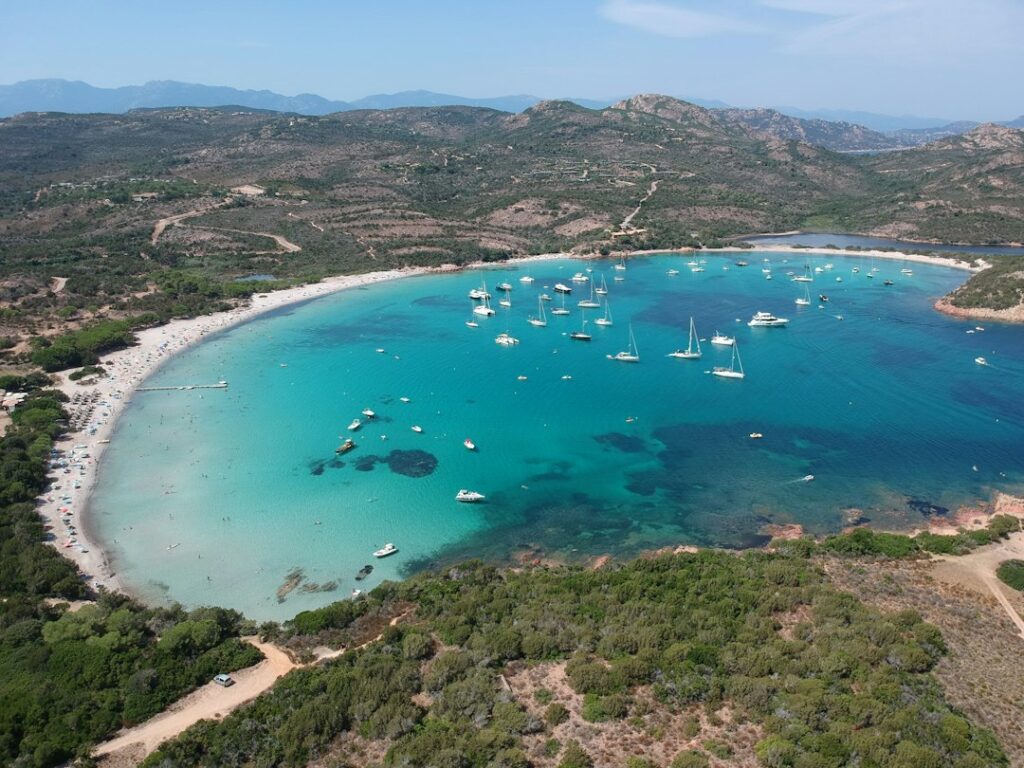
Corsica’s geography creates a choice no mainland French region can offer: a wedding where the Mediterranean is your ceremony backdrop, or one where you are surrounded by mountains, forests, and the scent of maquis at altitude. Most couples lean toward one or the other, but understanding the tradeoffs of each helps you choose the Corsica wedding venue that matches your vision.
The Beachfront Experience
Beachfront venues like U Capu Biancu, Les Oliviers de Palombaggia, and Olympe Tizzano place the Mediterranean at the center of your celebration. The advantages are obvious: turquoise water as a ceremony backdrop, sunset aperitifs on terraces facing the horizon, and the possibility of a barefoot reception on a private beach. The coastal light is luminous and cinematic, and your guests experience the island’s most celebrated feature immediately upon arrival.
The tradeoff is exposure to peak-season pressure. Southern Corsica’s beaches, particularly around Porto-Vecchio and Bonifacio, draw heavy tourist traffic in July and August. Venue access can be congested, restaurant reservations become competitive, and accommodation costs for guests surge. This is why several of the island’s most thoughtful venues, including U Capu Biancu, simply do not host weddings during peak summer. If your heart is set on a beachfront Corsica wedding venue, the shoulder seasons of May-June or September offer the same turquoise waters with a fraction of the crowds.
The Mountain and Interior Experience
Mountain venues like the Couvent de Pozzo on Cap Corse, Domaine de Vignale in the Casinca plain, and the deep interior estates like Domaine de Murtoli offer something different: cooler evening air, panoramic views that stretch from summit to sea, and a sense of seclusion that coastal venues rarely achieve. The maquis, Corsica’s fragrant scrubland of myrtle, rosemary, thyme, and cistus, is most intense at altitude, filling the evening air with a scent that becomes inseparable from the memory of the day.
The tradeoff is accessibility. Mountain venues may require winding roads and longer transfers from airports, which matters when coordinating guest logistics. Some, like the Couvent de Pozzo, require an event tent as a weather backup, a practical necessity at 300 metres altitude where mountain weather can shift quickly. But for couples who value privacy, authenticity, and the feeling of being away from everything, the mountain experience delivers a depth that beachfront settings cannot match.
The Hybrid Option
Some venues straddle both worlds. La Signoria in Calvi sits between sea and mountains, with a private beach and a wooded mountain park on the same property. Domaine de Murtoli’s 2,500 hectares encompass both coastline and interior, allowing couples to move their celebration from a beach ceremony to a mountain dinner. For couples who cannot choose, these hybrid estates offer the most complete Corsican experience in a single venue.
Planning Essentials: Travel, Seasons and Local Traditions
Getting to Corsica: Ferries and Flights
Corsica is accessible by sea and by air, and the choice between them shapes your guest experience. The fastest ferry crossing from mainland France is Nice to Bastia with Corsica Ferries, taking approximately 6 hours year-round. Toulon to Bastia takes 9 to 11 hours, while Marseille to Bastia takes about 12 hours, typically overnight with cabins available. Ferries also serve Porto-Vecchio, Ajaccio, and Ile-Rousse from various mainland ports, with seasonal schedules varying by company. For guests who enjoy the journey as part of the experience, arriving by ferry builds anticipation in a way that flying cannot. Summer ferry reservations should be booked 4 to 6 months ahead.
By air, the choice between Figari and Bastia depends on which end of the island your venue occupies. Figari Sud-Corse Airport serves the south, sitting 15 minutes from Bonifacio and 30 minutes from Porto-Vecchio. It offers year-round flights to Paris Orly, Marseille, and Nice via Air Corsica, with seasonal routes to Paris CDG, London Gatwick, London Heathrow, Brussels, and Milan. Bastia Airport serves the north, Cap Corse, and the Balagne, with year-round flights to Paris Orly, Marseille, Nice, and Lyon, plus seasonal connections to London Gatwick, Frankfurt, Munich, Vienna, and other European cities. Calvi Airport, smaller and seasonal, serves the Balagne and is convenient for venues like La Signoria. All four Corsican airports are connected by Air Corsica’s year-round network to mainland France.
When to Go: July-August Crowds vs. Blissful Shoulder Seasons
Timing matters more in Corsica than in most mainland French regions, because the island’s infrastructure feels the strain of peak tourist season acutely. July and August bring the highest prices, the thickest crowds, and the most limited venue and accommodation availability. Beaches around Porto-Vecchio and Bonifacio can be packed, restaurants require reservations well in advance, and ferry crossings sell out weeks ahead. Some of the island’s most considered wedding venues, including U Capu Biancu, simply decline to host weddings during these months.
May and June offer warm temperatures, the maquis in full bloom, and a island that still feels like it belongs to the Corsicans rather than to the tourist influx. September brings sea temperatures at their warmest, golden light that photographers prize, and the return of a quieter rhythm after the August exodus. October remains viable for weddings, though weather becomes less predictable for outdoor receptions after mid-month. For a Corsica wedding venue that relies on outdoor spaces, May-June and September are the sweet spots: reliable weather, lower costs, and an island at its most authentic.
Corsican Wedding Traditions Worth Incorporating
Corsican traditions give a wedding on the island a character that is impossible to replicate on the mainland, and they are the strongest reason to choose Corsica over any other Mediterranean destination. Incorporating even a few of these elements transforms a destination wedding from a beautiful event in a scenic location into something rooted in place and culture.
Paghjella polyphonic singing. Paghjella is a traditional Corsican polyphonic singing style where three male voices interweave in harmonies recognized by UNESCO as intangible cultural heritage. The sound is haunting, ancient, and unlike anything a string quartet or DJ can produce. Local groups are available for hire on the island, and a paghjella performance during the ceremony procession or at the transition between the aperitif and dinner creates a moment that stops conversation and gives your guests goosebumps. Discuss timing and repertoire with your planner to place the performance where its impact is greatest.
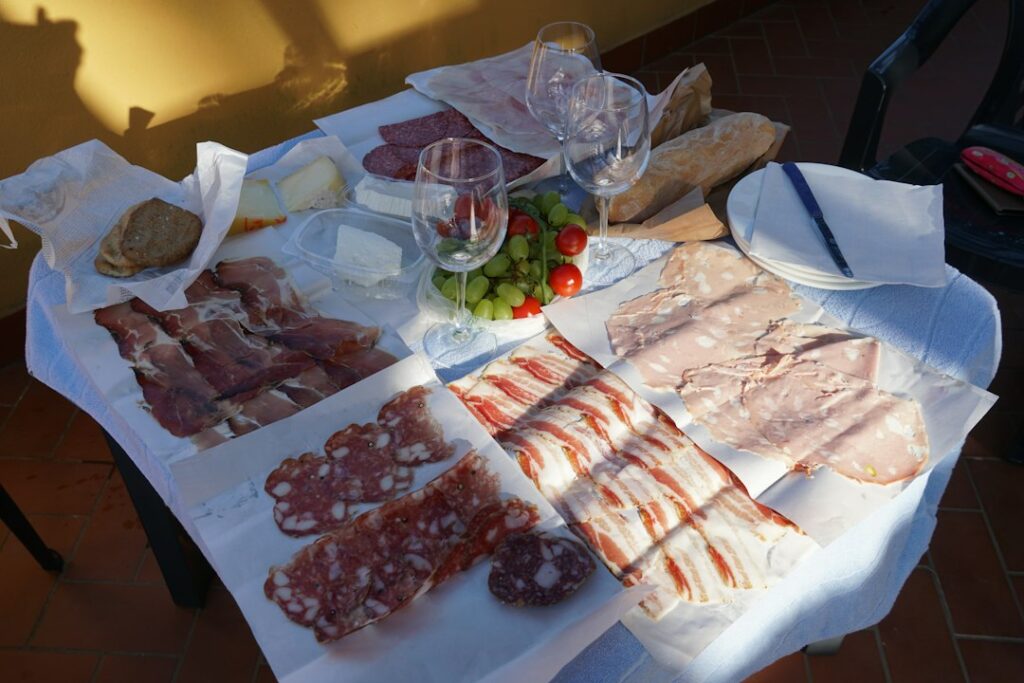
The Corsican wedding feast. A traditional Corsican wedding is not a three-course dinner followed by dancing. It is an extended, multi-course celebration that can stretch across an entire afternoon and into the night, anchored by the island’s extraordinary gastronomy. The apéritif spread alone tells your guests where they are: lonzu (cured pork loin), coppa, and figatellu (a liver sausage traditionally smoked over chestnut wood), alongside brocciu, a fresh sheep or goat cheese that appears in everything from savoury tarts to dessert beignets. Canistrelli, crisp biscuits made with chestnut flour ground from the island’s interior forests, accompany the first glass. The main courses draw on the land and sea equally: wild boar, suckling pig, fresh fish, and seasonal vegetables. The meal closes with myrtle liqueur, a digestif distilled from the berries of the maquis, whose flavor is pure Corsica.
Local wine pairings. Corsica’s nine AOP wine regions produce distinctive wines from endemic grape varieties like Niellucciu, Sciaccarellu, and Vermentinu. Many venues, particularly the working vineyards like Domaine de Peretti della Rocca, offer wines produced on the very slopes surrounding the celebration. Pairing your feast with estate-grown Corsican wine adds a layer of authenticity that is impossible to replicate when the wine arrives from elsewhere.
These traditions are not themed decorations or add-ons. They are living cultural practices with deep roots, and incorporating them respectfully is what distinguishes a Corsican wedding from a wedding that merely happens to take place in Corsica.
Next Steps: Finding Your Corsican Venue
Corsica rewards couples who approach it with curiosity and intention. The island’s venues span a remarkable range: 2,500-hectare estates with restored shepherds’ houses, olive grove domains walking distance from postcard beaches, 15th-century convents at 300 metres altitude, Genoese residences with Michelin-starred kitchens, and working vineyards where the wine in your glass was harvested from the slopes beside your dinner table. The common thread is authenticity. These are not generic event spaces dressed up for weddings. They are places with history, character, and a deep connection to the land they occupy.
Choosing the right Corsica wedding venue means matching the island’s offerings to your guest count, your travel logistics, and the emotional tone you want your celebration to carry. A 30-guest intimate gathering at U Capu Biancu, with maquis flowers gathered by the hotel team and a barefoot ceremony on a private beach, feels entirely different from a 150-guest celebration at Olympe Tizzano, where the horizon and the night sky define the space. A convent wedding on Cap Corse carries a different energy than a vineyard wedding in Figari. The venue you choose shapes everything that follows.
Contact Myfrancewedding today to begin exploring Corsican venues, request availability for your preferred dates, and connect with experienced local planners who know the island’s estates intimately. Your Corsican love story is waiting to unfold.
Frequently Asked Questions
How do guests get to Corsica for a wedding?
Corsica is accessible by ferry and air. The fastest ferry from mainland France is Nice to Bastia with Corsica Ferries (approximately 6 hours, year-round). Marseille to Bastia takes about 12 hours, typically overnight, with Corsica Linea. Toulon also connects to Bastia, Ajaccio, and Porto-Vecchio. By air, Figari Sud-Corse Airport serves the south (near Bonifacio and Porto-Vecchio) with year-round flights to Paris Orly, Marseille, and Nice, plus seasonal routes to London, Brussels, and other European cities. Bastia Airport serves the north and Cap Corse with a similar year-round network. Book ferries 4 to 6 months ahead for summer dates.
When is the best time of year for a Corsica wedding?
May, June, and September are the ideal months for a Corsica wedding. The weather is warm, the maquis is fragrant, tourist crowds are thinner, and venue availability is better than in peak summer. July and August bring high prices, crowded beaches, and limited availability at sought-after venues. Some venues, like U Capu Biancu, do not host weddings at all during July and August. October is possible but weather becomes less reliable for outdoor receptions after mid-month.
What makes a Corsican wedding different from a mainland French wedding?
Corsica blends Italian and French cultural influences, giving weddings a character impossible to replicate on the mainland. Traditions include paghjella polyphonic singing (recognized by UNESCO as intangible cultural heritage), extended multi-course feasts featuring local charcuterie like lonzu and figatellu, brocciu cheese, chestnut flour dishes, and myrtle liqueur as a digestif. The island landscape, from Genoese watchtowers to wild maquis plateaux, provides a setting distinct from Provençal lavender fields or Parisian grandeur.
Can we legally marry in Corsica as non-residents?
French law requires at least one partner to reside in the commune where the marriage takes place for 30 to 40 days before a civil ceremony. Most international couples complete the legal civil marriage in their home country and hold a symbolic or religious ceremony in Corsica. This approach provides complete freedom to choose any venue, from a private beach to a mountaintop convent, without administrative constraints.
How far in advance should we book a Corsica wedding venue?
For peak-season dates in June, July, and September, booking 12 to 18 months ahead is recommended. Sought-after estates like Domaine de Murtoli or La Signoria can fill two years in advance for prime dates. Shoulder-season weddings in May or October may require 9 to 12 months of lead time. Early booking also allows better coordination of guest travel, especially ferry reservations during summer.