Luxury Destination Wedding Packages in France Decoded
-
myfrancewedding.com
- ProvenceWedding VenuesWeddings
- 35

Picture a Provençal bastide at golden hour: honey-stone walls glowing against an olive grove, a long table set for 80 beneath plane trees, candlelight catching the rim of every glass. Now picture the invoice. A venue quoting €30,000 HT becomes €36,000 TTC. A caterer quoting €12,000 HT becomes €13,200 TTC. Across 10 to 15 vendor invoices, the cumulative VAT surprise typically adds €3,000 to €8,000 that couples did not anticipate. This is the gap between the dream and the budget, and it is where luxury destination wedding packages in France either earn their premium or expose their limitations.
The word “package” makes sophisticated couples flinch. It suggests a fixed menu, a predetermined floral scheme, a wedding that looks like the one before it and the one after it. For couples who have spent months curating a Pinterest board of bespoke details, the idea of signing a bundled contract feels like surrendering the very individuality that drew them to France in the first place. That skepticism is understandable. It is also, in most cases, based on a misunderstanding of how French venues actually structure their offerings. A luxury package at a French château or five-star hotel is not a cookie-cutter template. It is a logistical foundation: venue hire, on-site accommodation, catering framework, and operational support bundled into a single contract, with the creative layers built on top by you and your planner. Understanding what that foundation includes, where the value lies compared to building everything from scratch, and which line items will blindside you is the difference between a package that simplifies your planning and one that conceals costs.
What ‘Luxury Package’ Actually Means at French Venues
At a French château or palace hotel, a “luxury package” is not a single all-inclusive price that covers everything from flowers to theDJ. It is a structured contract that bundles the foundational elements of the wedding: exclusive use of the estate or venue spaces, on-site accommodation for a defined number of guests, a catering framework (whether imposed, recommended, or dry-hire), and operational inclusions such as site management, housekeeping, security, and insurance requirements. Everything that makes the wedding yours, from the floral design to the music to the photography, sits on top of this foundation and is almost always handled by external vendors you choose.
The confusion arises because French venues use the word “package” differently than Caribbean resorts or Italian villa operators. A resort package typically means a flat per-head rate covering ceremony, dinner, drinks, and basic decor. A French château package means you are renting the entire estate for a weekend, with a catering framework attached, and then building the production around it. The bundle is the scaffolding, not the finished building. This distinction matters because it determines where your money goes and where your creative control begins.
Package Versus Bespoke: The Real Tradeoff
The couples most tempted to go fully bespoke are usually the ones who have read the venue’s package inclusions and found them too restrictive: an imposed caterer, a limited wine list, mandatory room blocks. They assume that a dry-hire venue, where they bring in every vendor themselves, will give them more control and lower costs. Both assumptions can be true. Both can also be wrong.
A package simplifies logistics. The venue has an established relationship with its caterer, its staff know the kitchen, the security protocols are pre-negotiated, and the accommodation is built into the contract. You are not sourcing a caterer who has never worked in that kitchen, not coordinating separate insurance policies, not negotiating overtime rates with a site manager you have never met. The cost of that simplicity is reduced flexibility: you work within the venue’s culinary framework, and you accept the inclusions as they are structured.
A bespoke, dry-hire approach gives you the empty space and full creative freedom. You choose every supplier, every wine, every detail. The cost of that freedom is that you are building the wedding from the ground up: equipment rental, kitchen logistics, staffing, service, insurance, security. A château quoting €23,000 for venue hire on a dry-hire basis becomes a very different total once you add a caterer, wine, rentals, and service staff. For couples who want to source their own wine from surrounding vineyards, design their own menu with a private chef, and control every aesthetic decision, dry-hire is the right model. For couples who want a logistical foundation they can personalize above, a package is the more efficient path.
Why the ‘Cookie-Cutter’ Fear Is Overstated
The fear that a package means an identical wedding is largely unfounded at the luxury tier. No two weddings at Château de Sannes look the same, despite the estate’s imposed caterer and fixed weekend structure. The floral design, the lighting, the music, the ceremony format, the timeline, the welcome dinner, the farewell brunch: all of these are shaped by the couple and their planner, not by the venue’s package. What the package provides is the operational spine: the estate is yours for the weekend, the bedrooms are made up and managed, the caterer knows the kitchen, the security is arranged. The creative freedom is not in the package’s inclusions but in everything you layer above them. A well-structured package gives you fewer logistical problems to solve, not fewer creative decisions to make.
The Core Components: What’s Typically Included
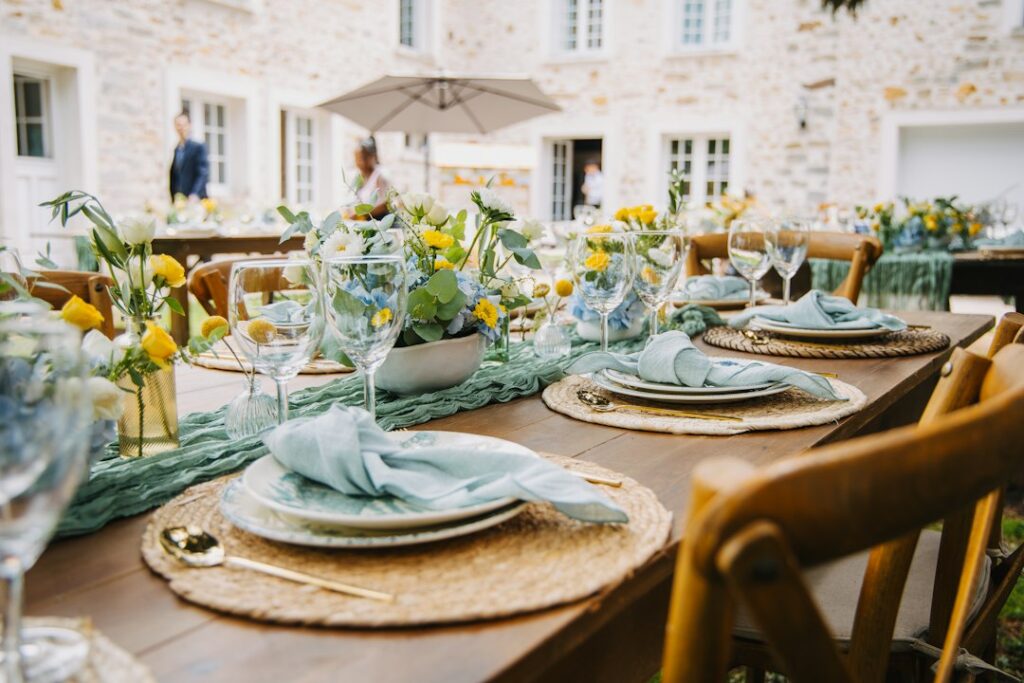
A luxury wedding package at a French venue typically includes exclusive use of the estate or venue spaces for a defined period (usually Friday afternoon through Sunday midday), on-site accommodation with daily housekeeping, a site manager or wedding coordinator on the venue’s side, and access to the grounds, gardens, pool, and reception rooms. Catering may be included as an imposed partner, offered via a recommended list, or left entirely to your choice under a dry-hire model. What sits outside the package, almost universally, is floral design, lighting and sound, music and entertainment, photography and videography, wedding planning and coordination, guest transport, and the ceremony itself.
What You Can Expect in the Bundle
The inclusions vary by venue type and region, but the following elements appear in most luxury packages at French châteaux and palace hotels:
- Exclusive use of the estate, gardens, reception rooms, and outdoor ceremony spaces for a minimum two-night weekend
- On-site accommodation (the number of bedrooms varies dramatically: from 8 rooms sleeping 17 at a Provençal estate to 200+ rooms at a Paris palace hotel, where guests pay room rates)
- Daily housekeeping and a housekeeper or site manager present throughout the weekend
- Access to caterer facilities, kitchen equipment, and equipment storage
- Catering framework: either an imposed in-house caterer with a per-head rate, a recommended vendor list, or dry-hire with full external freedom
- Pre- and post-event cleaning of the venue
- Weather backup: indoor reception rooms or marquee options (sometimes included, sometimes an additional charge)
- Security staffing (mandated at many châteaux, typically €500 to €1,500)
What Sits Outside the Bundle
Every French wedding package, regardless of venue tier, excludes a predictable set of line items. These are the costs that couples consistently underestimate when comparing the package price to their total budget:
- Catering beyond the food: wine, champagne, and bar service are almost always billed separately, with alcoholic beverages carrying the full 20% VAT rate
- Floral design for ceremony and reception (external florist required at virtually every venue)
- Lighting, sound, decoration, and production (not included in venue hire at any venue tier)
- Music and entertainment: DJ, ceremony musician, live band
- Photography and videography
- Wedding planning and coordination (strongly recommended for international couples, €8,000 to €25,000 depending on venue complexity)
- Guest transport and shuttles (€3,000 to €6,000 for a weekend, often underestimated)
- Event liability insurance (€150 to €400, required by virtually every venue, non-negotiable)
- Corkage fees if you bring your own wine (€5 to €35 per bottle depending on venue tier)
The accommodation gap is the single most consequential structural fact of a French château package, and it is the one most couples discover after they have already booked. Every château in France seats more guests for dinner than it beds for the night. A Provençal estate that seats 220 but sleeps 31 means 189 guests need hotel rooms elsewhere, plus shuttle transport between the venue and those hotels. This gap drives the largest hidden cost in a château package: not the venue hire or the catering, but the logistics of moving guests who cannot stay on-site. For a deeper framework on how to evaluate this tradeoff, our guide to choosing your wedding venue château in France by region maps the accommodation gap across every major château region.
Regional Pricing Realities: Provence vs. Paris vs. Bordeaux
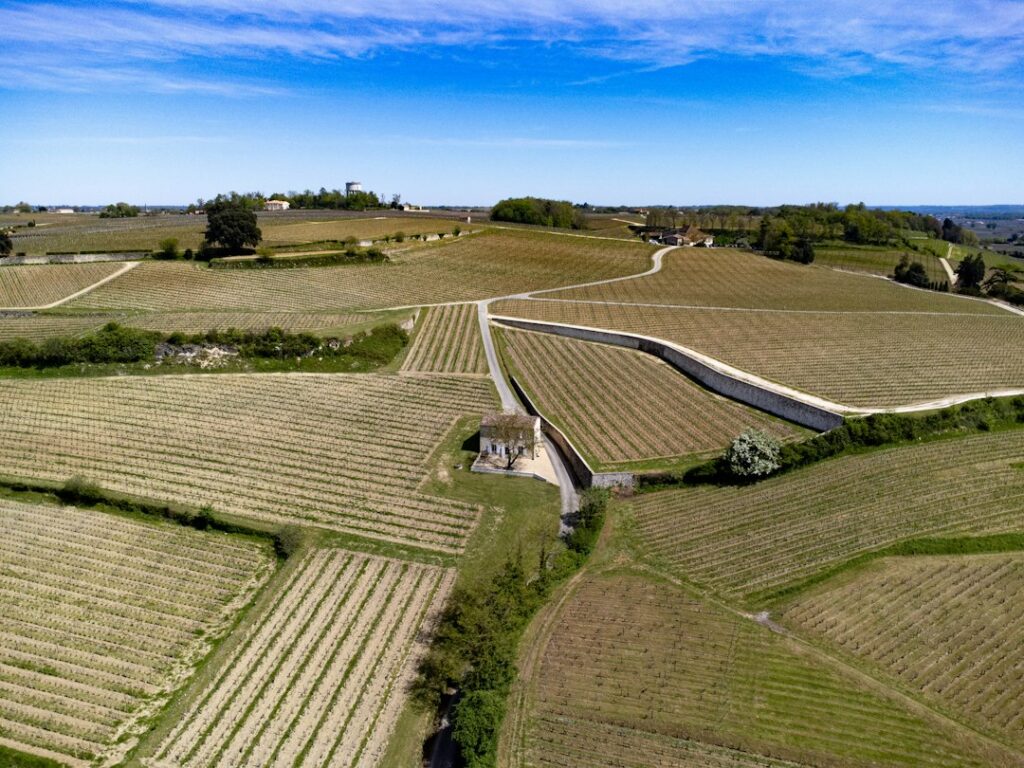
Luxury means something different in each French region, and so does the package structure. A Provençal bastide, a Parisian palace hotel, and a Bordeaux vineyard estate operate on fundamentally different models: different catering frameworks, different accommodation ratios, different hidden costs. Comparing them on venue hire alone is like comparing a castle, a hotel, and a winery on square footage. The price tells you nothing without the structure behind it.
Provence: The Imposed-Caterer Bastide
A Provençal bastide package typically centers on an exclusive weekend buyout with an imposed caterer. The estate is yours from Friday to Sunday, the kitchen is run by the venue’s culinary partner, and the accommodation gap is significant. Peak-season venue hire in the Luberon routinely starts at €30,000 to €40,000 TTC, with premium estates reaching €55,000. Catering is billed separately at approximately €140 per head for 100 guests or more, with wine and bar service on top. The on-site accommodation is limited: 15 to 31 beds at most estates, which means most of your guests will stay in nearby towns and arrive by shuttle.
What it does well: the imposed caterer simplifies food logistics enormously. The estate’s culinary partner knows the kitchen, the staff, and the service flow. You are not coordinating an external caterer who has never worked in the space. The weekend format creates a residential experience for the guests who do stay on-site, with breakfast, pool access, and the natural unfolding of a multi-day celebration.
What to watch for: the accommodation gap. At an estate like Château de Sannes, which sleeps 31 across 15 bedrooms but seats 220 for dinner, the logistics of housing and transporting the remaining guests become a structural line item. Shuttle transport for a weekend runs €3,000 to €5,000. The imposed caterer means you cannot bring in a private chef or your own culinary vision. The Mistral wind, which can gust through the Rhône Valley from spring to early summer, will disrupt an outdoor ceremony if you have not planned a backup. For a full line-by-line budget at a representative Provençal estate, see our Château de Sannes wedding cost breakdown, where an 80-guest June wedding runs €112,000 to €156,000 all-in TTC.
Paris: The Palace Hotel Turnkey Package
A Parisian palace hotel package is the closest thing France has to a true all-inclusive model. The Shangri-La Paris, housed in the former residence of Prince Roland Bonaparte, offers Grand Salon dinners for 80 to 120 guests, Michelin-calibre in-house catering, and 100 rooms and suites (31 with Eiffel Tower views) under the same roof. The Hôtel Plaza Athénée, with 208 rooms and its Art Deco Salon Haute Couture, suits larger receptions and multi-day weekends where guests stay on-site. The package structure is built around room hire plus mandatory in-house catering, with the hotel’s wedding team coordinating florals, lighting, and service.
What it does well: turnkey convenience. Catering, beverages, service staff, table settings, and coordination are all under one roof. Guest accommodation is in the same building, which eliminates the shuttle transport problem entirely. A dedicated wedding team manages logistics. For couples who want a produced, elegant Paris celebration without sourcing 15 separate vendors, this is the most efficient model.
What to watch for: the headline room hire (€3,500 to €9,000 at some palace hotels) is not the real cost. Mandatory in-house catering packages bring the total to €35,000 to €50,000+ for 80 to 100 guests, and that figure can climb significantly with premium wine selections and multi-day programming. Because these are functioning hotels, your event shares the building with other guests, which means noise restrictions and time constraints apply. Most Paris venues enforce curfews ranging from midnight to 2 AM. You are also locked into the hotel’s culinary vision, which may be extraordinary but is not yours to shape. For a complete survey of Paris venue types and their package structures, our guide to places to get married in Paris by type compares palace hotels, private mansions, restaurant buyouts, and châteaux near the city.
Bordeaux: The Dry-Hire Vineyard Estate
A Bordeaux vineyard estate package is structurally different from both Provence and Paris. The model is dry-hire: the venue provides the space, the accommodation, and the infrastructure, and you bring in your own caterer, your own wine, and your own production. Estates like Château Gassies, an 18th-century hilltop property on 14 hectares, offer weekend packages starting at €23,000 including accommodation for 43 guests, exclusive estate use, pool, sauna, and a wedding coordinator. There is no imposed caterer and no corkage fee, meaning you can bring in wine from surrounding châteaux at cost.
What it does well: creative freedom. You choose the chef, the menu, the wine, the florals, the lighting. You can source Margaux and Pomerol directly from local producers. The no-curfew policy at some estates means dancing can run until 4 AM, a rarity in France. Bordeaux-Mérignac Airport is 20 minutes from most estates, the closest airport-to-venue ratio of any major château region.
What to watch for: because venue hire does not include catering, you are building the food and beverage budget from scratch. A quality caterer and wine pairings for 100 guests add €12,000 to €25,000 on top of the venue hire. Equipment rental, staffing, and service are your responsibility. The creative freedom is real, but it requires you to be an active builder of your own wedding rather than a guest at a venue that handles everything. For couples comparing the southern French château market, our guide to wedding châteaux in the south of France covers Provence, Languedoc, and the Côte d’Azur alongside each other.
The Comparison at a Glance
The table below compares the package structures and pricing signals across the three venue types. All figures are shown TTC where available. Venue hire ranges reflect peak-season weekend rates; all-in totals reflect a high-quality but considered 80-guest celebration, not the most elaborate possible production.
| Dimension | Provençal Bastide | Parisian Palace Hotel | Bordeaux Vineyard Estate |
|---|---|---|---|
| Catering model | Imposed caterer (at ~€140/head) | Mandatory in-house, Michelin-calibre | Dry-hire, external caterers, no corkage |
| Venue hire (peak weekend, TTC) | €30,000 to €55,000 | €15,000 to €50,000+ (salon hire) | €23,000 (includes 43 beds) |
| On-site accommodation | 15 to 31 beds (significant gap) | 100 to 208 rooms (guests pay room rates) | 43 beds (closest to guest count) |
| Catering cost (100 guests, food + service) | ~€14,000 (wine/bar extra) | €15,000 to €30,000+ (beverages often included) | €12,000 to €25,000 (you build from scratch) |
| Corkage | Not applicable (imposed caterer) | Not applicable (in-house beverages) | €0 (no corkage, bring your own wine) |
| Sound curfew | Varies by estate (confirm before booking) | Midnight to 2 AM (strict Paris noise rules) | None (dancing until 4 AM at some estates) |
| Hidden cost alert | Accommodation gap, Mistral wind, security €500 to €1,500 | Service charge on total bill, noise curfew, shared building | Equipment rental, staffing, insurance all separate |
| All-in for 80 guests (TTC) | €112,000 to €156,000 | €35,000 to €50,000+ (venue + catering only) | €50,000 to €90,000 (venue + catering + production) |
| Best for | Couples who want a residential weekend with simplified catering | Couples who want turnkey luxury with zero logistics | Couples who want full creative control and wine sourcing |
A note on the Paris figure: the €35,000 to €50,000+ range at a palace hotel covers venue hire and in-house catering for 80 to 100 guests, but does not include florals, photography, music, or external production. A fully produced palace hotel wedding with elaborate floral installations, a live band, and multi-day programming will reach significantly higher totals. The Bordeaux figure is lower because the dry-hire model means you control every cost line, but it also means you are responsible for every cost line.
If you are weighing package versus bespoke at a French venue and want to compare the real numbers before committing, Myfrancewedding can help you build a side-by-side cost breakdown that separates HT from TTC across every line item.
Bespoke Additions Worth the Investment
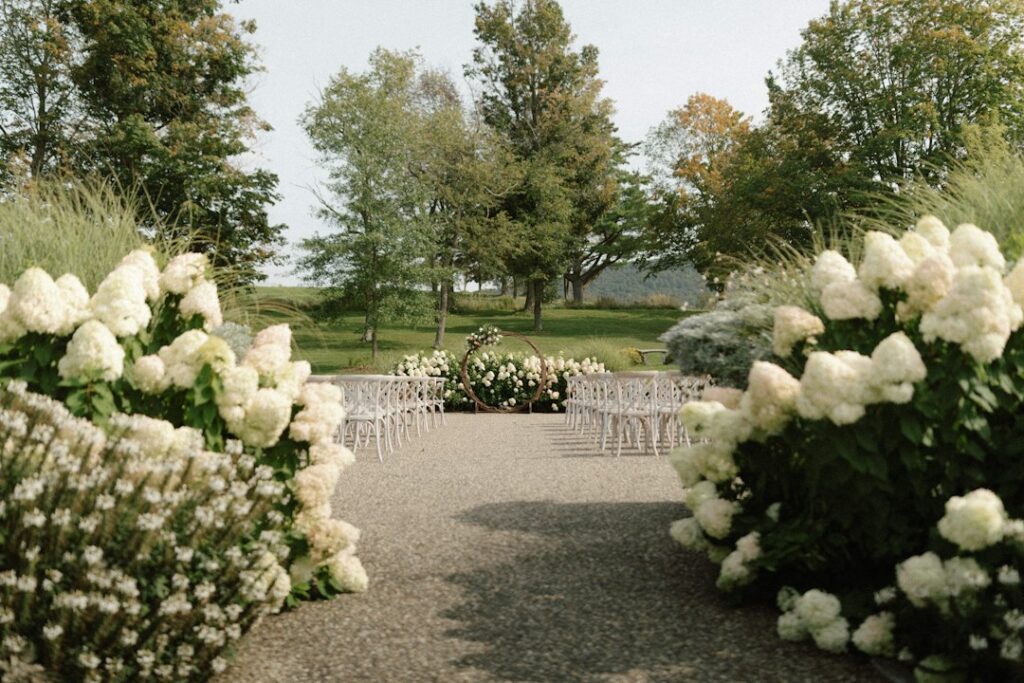
Not every element of a luxury wedding benefits from bespoke treatment. Some additions deliver disproportionate emotional impact relative to their cost, while others are expensive line items that guests barely notice. The couples who spend wisely are the ones who know which category each element falls into and direct their budget accordingly.
Where to Invest
Floral design is the single highest-impact investment at a French château. The venue provides the architecture; the flowers provide the atmosphere. A ceremony arch framing the estate’s olive grove, a long table runner of seasonal Provençal flowers, and strategic lighting that transforms the reception room at dusk deliver more emotional impact per euro than almost anything else you can buy. Budget €8,000 to €15,000 for a ceremony and reception floral design that honors the setting without competing with it. Seasonal Mediterranean flowers reduce cost by 20 to 35% compared to imported varieties.
Lighting is the element most couples underinvest in and most regret. A château at night, lit with warm uplighting on the stone walls, festoon bulbs strung through the plane trees, and candles on every table, becomes a different venue from the one your guests arrived at. Budget €5,000 to €10,000 for lighting and sound that transforms the estate after dark.
A wedding planner is not a luxury addition. For international couples navigating French vendor contracts, VAT structures, and venue logistics from abroad, a planner is the single most important investment you can make. Budget €8,000 to €15,000 for a planner who knows the region, has existing relationships with the venue and its preferred vendors, and can present all figures TTC so you are comparing real costs. A planner is what prevents the €3,000 to €8,000 VAT surprise from happening.
Where to Exercise Restraint
Elaborate stationery, custom favors, and premium transportation for the couple are line items where the per-guest impact is low relative to the cost. A beautifully designed invitation suite is worth the investment; a letterpress menu card for each of 80 guests that guests glance at once and leave on the table is not. A vintage car for the couple’s transfer between ceremony and reception is a lovely touch; a fleet of vintage cars for the wedding party is a cost that could be redirected into floral design or lighting.
The accommodation gap is also where restraint pays off. Rather than booking every overflow guest into a 4-star hotel 30 minutes from the venue, identify two or three partner properties within a 10-minute radius and negotiate a room block. This reduces shuttle costs, shortens transport times, and keeps the weekend cohesive. A venue that can point to three partner properties within a 10-minute radius is far easier to manage than one where the closest quality beds are half an hour down a rural road.
Questions to Ask Before Signing a Package Contract
The difference between a luxury package that delivers value and one that conceals costs comes down to the questions you ask before signing. French venue contracts are detailed, but the details that matter most to international couples are often the ones buried deepest in the fine print. Ask these questions in writing and require written answers.
Is the Quoted Price HT or TTC?
This is the single most important question, and it is the one most couples forget to ask. French quotes are frequently presented HT (hors taxes, before VAT), and the VAT is added on the final invoice. The rates are not uniform: venue hire, equipment rental, and all alcoholic beverages carry the full 20% VAT rate, while catering and food service carry 10%. Per the French government’s official VAT guidance for food and beverage services, catered events with table service (including weddings) are taxed at the intermediate 10% rate for food, while alcoholic drinks are always taxed at 20% regardless of how they are consumed. A venue quoting €25,000 HT becomes €30,000 TTC. A caterer quoting €12,000 HT becomes €13,200 TTC at the food rate. Always confirm whether a package price is HT or TTC before building your budget, and ask your planner to present all figures TTC so you are comparing real costs.
What Is the Catering Service Charge?
The per-head catering rate quoted in a package may or may not include the service charge. French caterers often add a service charge of 12 to 15% on top of the food cost, covering waitstaff, table settings, and service logistics. Sometimes this is already included in the per-head rate. Sometimes it is a separate line item that appears on the final invoice. Ask specifically: does the per-head price include service staff, tableware, linens, and glassware, or is service charged separately? The difference can add thousands of euros to a 100-guest catering bill.
Is There a Corkage Fee?
If the package allows you to bring your own wine (common at dry-hire venues in Bordeaux, impossible at imposed-caterer venues in Provence), ask about the corkage fee, known in French as the droit de bouchon. Corkage fees range from €5 to €10 per bottle at mid-range venues to €20 to €35 at premium châteaux. For a 100-guest wedding consuming 150 bottles of wine and champagne, a €20 corkage fee adds €3,000 to your bar budget. Some dry-hire venues, like certain Bordeaux estates, charge no corkage at all. Others charge a wine management fee (gestion des boissons) for handling and serving your wine, which may be a flat rate rather than per bottle. Ask for the exact structure before sourcing your own wine.
What Security and Insurance Are Required?
French event liability insurance (responsabilité civile) runs €150 to €400 and is required by virtually every venue, non-negotiable. Security guards are mandated at many châteaux and typically cost €500 to €1,500 depending on guest count and event duration. At Château de la Napoule on the Côte d’Azur, security is mandatory at €960 TTC for events under 200 guests and €1,440 for larger groups, plus €120 for organizer liability insurance. These are not optional add-ons; they are contractual requirements, and they should appear in your budget from the first draft, not as a surprise on the final invoice.
What Happens if We Exceed the Curfew?
French châteaux in rural areas are subject to municipal noise regulations, and the curfew varies by property. Some estates allow music until 4 AM with no restrictions. Others impose a midnight curfew, or require outdoor music to stop at 11 PM with an indoor DJ permitted afterward. Beyond the contracted finish time, each additional hour is typically billed at €500 to €720 TTC. Ask what the curfew is, whether it applies to outdoor and indoor spaces equally, and what the overtime rate is. Write it into the contract. A midnight curfew is not a dealbreaker if you plan around it, but discovering it the night of your wedding is.
Which Elements of the Package Are Fixed and Which Are Modular?
Ask the venue to specify which inclusions are non-negotiable and which can be modified. At an imposed-caterer venue, the catering framework is fixed, but the menu, the wine selections, and the service style may be customizable within that framework. At a palace hotel, the in-house catering is mandatory, but florals, lighting, and music are external. At a dry-hire venue, everything is modular, which means everything is your responsibility. Understanding the boundary between what the venue controls and what you control is what determines whether the package simplifies your planning or constrains it.
Next Steps
A luxury destination wedding package in France is not a surrender of individuality. It is a logistical foundation that lets you focus your creative energy where it matters: the florals, the light, the music, the ceremony, the meal, the moments your guests will remember. The package provides the estate, the kitchen, the beds, and the operational spine. You provide the vision. The couples who get this right are not the ones who go fully bespoke to avoid anything that sounds like a package. They are the ones who understand what the package includes, what it excludes, and where the hidden line items live, then build their budget and their celebration on that foundation with clear eyes.
The most expensive mistake in French wedding planning is not choosing the wrong package or the wrong venue. It is signing a contract without understanding the difference between HT and TTC, without accounting for the accommodation gap, without budgeting for security and insurance, and without knowing which elements are fixed and which are yours to shape. These are the details that turn a €40,000 venue hire into a €130,000 total, and they are the details that a qualified planner will surface before you commit, not after.
Contact Myfrancewedding to request dates, a tailored cost breakdown that distinguishes HT from TTC, and a curated shortlist of venues matched to your guest count, your budget, and the emotional tone you want your celebration to carry. We will confirm availability against your dates, map the accommodation split between on-site suites and nearby partner hotels, and build a line-by-line budget that accounts for VAT, security, insurance, corkage, and service charges from the first inquiry to the final invoice.
Frequently Asked Questions
What is the difference between a luxury wedding package and going bespoke at a French venue?
A package bundles venue hire, on-site accommodation, and often catering into a single contract with defined inclusions, reducing the number of separate vendor negotiations. Bespoke (dry-hire) gives you the space only and you build every element from scratch. Packages simplify logistics and cap certain risks; bespoke offers full creative control but means you manage every line item, including equipment rental, staffing, and insurance.
Are luxury destination wedding packages in France more expensive than a la carte planning?
Not necessarily. Packages can be more cost-efficient because the venue has established relationships with its caterer, staff, and suppliers, reducing coordination overhead. However, packages with imposed caterers or mandatory room blocks can cost more if those inclusions do not match your needs. The key is comparing the all-in TTC total, not just the headline venue hire figure.
What hidden costs should I watch for in a French wedding package?
The most common are VAT (quoted HT but invoiced TTC, adding 10 to 20 percent depending on the line item), catering service charges of 12 to 15 percent, corkage fees of 5 to 35 euros per bottle if you bring your own wine, mandatory security guards at 500 to 1,500 euros, event liability insurance at 150 to 400 euros, and late-night overtime fees. Across all vendors, these typically add 3,000 to 8,000 euros to the final invoice.
Can I customize a luxury wedding package, or is it truly fixed?
Most French luxury packages are modular, not rigid. The core inclusions (venue, accommodation, catering framework) are fixed, but florals, lighting, music, photography, and ceremony design are typically handled by external vendors you choose. The package provides the structural foundation; the personalization happens in the layers above it. Ask the venue which elements are locked and which are flexible before signing.
How does VAT affect the final price of a French wedding package?
French VAT varies by line item: 10 percent on catering and food service, 20 percent on venue hire, equipment rental, and all alcoholic beverages. A venue quoting 25,000 euros HT becomes 30,000 euros TTC. A caterer quoting 12,000 euros HT becomes 13,200 euros TTC. Always confirm whether a package price is HT or TTC before building your budget, and ask for all final figures presented TTC.