Château Provence Wedding: Vineyard vs Lavender Estate
-
myfrancewedding.com
- ProvenceWedding VenuesWeddings
- 6

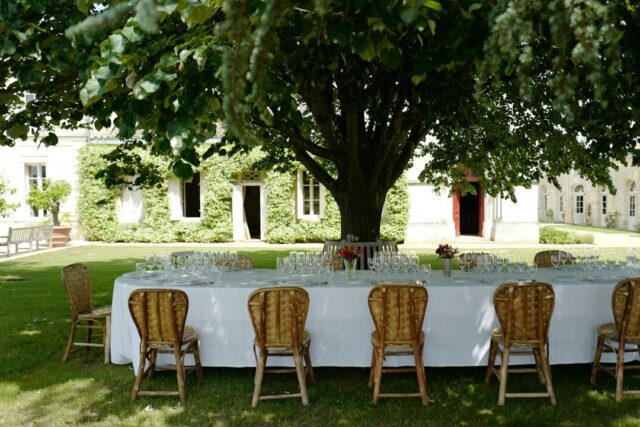
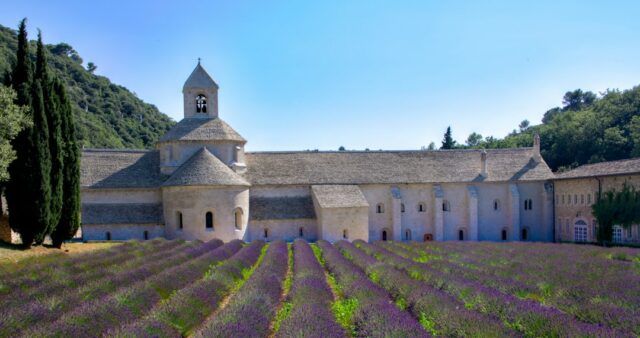
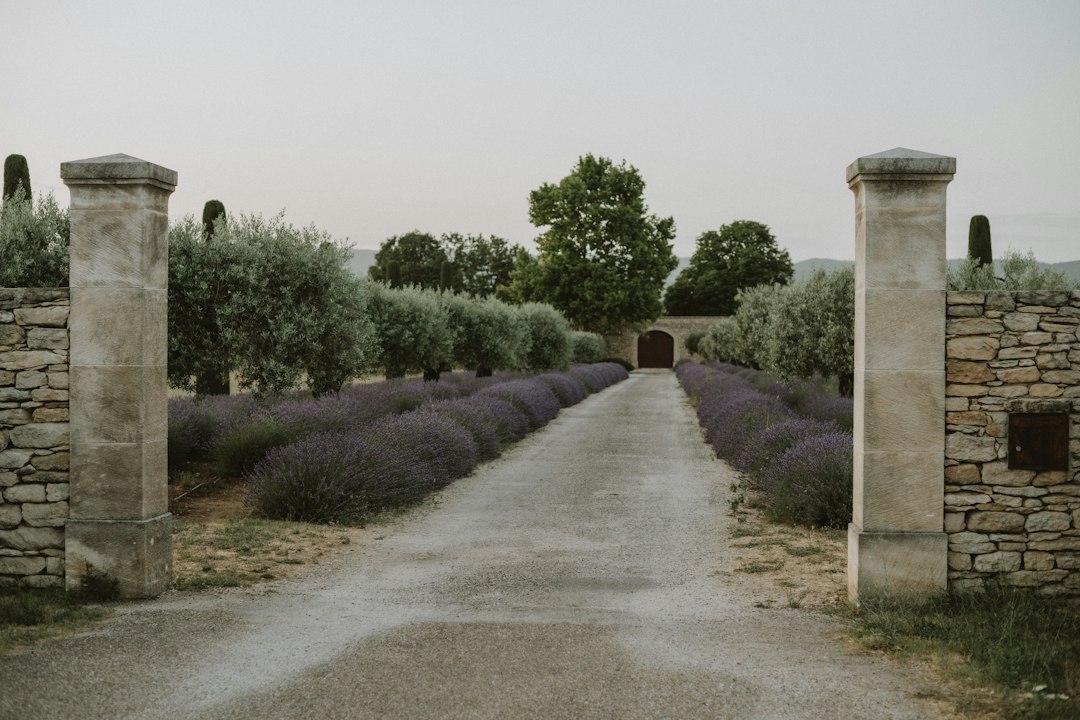
Picture a 17th-century Provençal estate at golden hour: honey-hued stone glowing against an olive grove, lavender rows releasing their scent into warm air, and a long table set for dinner beneath plane trees while cicadas provide the soundtrack. This is the château Provence wedding you have been imagining since before the engagement. What you may not have expected is the paralysis that sets in once you start comparing properties. Provence is not one landscape but several: the Luberon’s vineyard valleys, the Alpilles’ jagged limestone ridges, the Mont Ventoux foothills where lavender grows at altitude. Each sub-region delivers a different version of the Provençal wedding, and the châteaux within them differ fundamentally in character, capacity, and cost.
The couples who end up with the right venue are the ones who stop scrolling through identical-looking photos and start asking different questions: Is this a working vineyard where estate wine is poured at dinner, or a formal garden estate where the landscape is designed rather than cultivated? Does the château sleep 18 or 110, and what happens to the guests who do not get a room? Is the lavender I see in the photos planted decoration or a commercial field, and will it actually be in bloom on my date? This guide cuts through the noise by organizing Provençal châteaux into two distinct characters, vineyard domaines and lavender hilltop estates, so you can self-filter by the vision that matches who you are as a couple.
What Makes a Provence Château Wedding Different
A Provence château wedding is not the same as a château wedding anywhere else in France. The Loire Valley delivers turrets and tuffeau stone. Burgundy delivers gastronomy and rolling vineyards. Provence delivers something none of them can replicate: a sensory landscape where Mediterranean light, lavender scent, olive groves, and a wine culture rooted in the land converge into a single celebration. The stone is warmer here, honey-colored rather than pale. The gardens are less formal, built around shade trees and water features rather than geometric parterres. And the format is almost always residential: a weekend where your guests inhabit the estate rather than arrive for an evening and leave.
Three things set a Provençal château apart from châteaux in other French regions, and understanding them before you compare individual venues saves you from falling in love with a property that cannot deliver what you need.
The Exclusive Buyout as Default
Almost every Provençal estate that hosts weddings operates on a mandatory exclusive buyout model. You take the entire property, every bedroom and reception room and garden, for a minimum two or three nights. There is no partial rental, no single-evening hire. This is what creates the private-world feeling that defines a Provence wedding, but it also means you are paying for the full estate regardless of how many rooms you fill. A château that sleeps 31 but seats 220 charges you for the full capacity even if your guest count is 80. For couples exploring whether this level of exclusivity is worth the investment, our guide to exclusive wedding venues in France profiles estates where privacy is the operating philosophy, including several in Provence.
The Accommodation Gap
Every Provençal château seats more guests for dinner than it beds for the night. This gap is the single most consequential logistical fact of a Provence wedding, and it is the one most couples discover after they have already booked. Château de Sannes sleeps 31 but seats 220. Château de Tourreau sleeps 29 but seats 150. Château d’Estoublon sleeps 20 but accepts events up to 250. The practical question is not “how many guests can the château hold?” but “how many guests can the château sleep?” If the answer is less than your guest count, you are managing overflow hotels and shuttle transport that adds €3,000 to €6,000 to your weekend budget. The exception is Château de Fonscolombe, whose 50 rooms sleeping 110 guests is exceptional for Provence and eliminates the gap for most mid-sized celebrations.
The VAT Structure That Catches Everyone
This is where most international couples get caught. French quotes are frequently presented HT (hors taxes, before VAT), and the VAT is added on the final invoice. The rates are not uniform: venue hire and equipment carry 20% VAT, while catering and food service carry 10%. A venue quoting €25,000 HT becomes €30,000 TTC. A caterer quoting €12,000 HT becomes €13,200 TTC at the food rate. Across 10 to 15 vendor invoices, the cumulative VAT surprise typically adds €3,000 to €8,000 that couples did not anticipate. Always confirm whether a price is HT or TTC before building your budget, and ask that all figures be presented TTC so you are comparing real costs, not pre-tax ones.
Vineyard Domaines: Wine-Country Celebrations
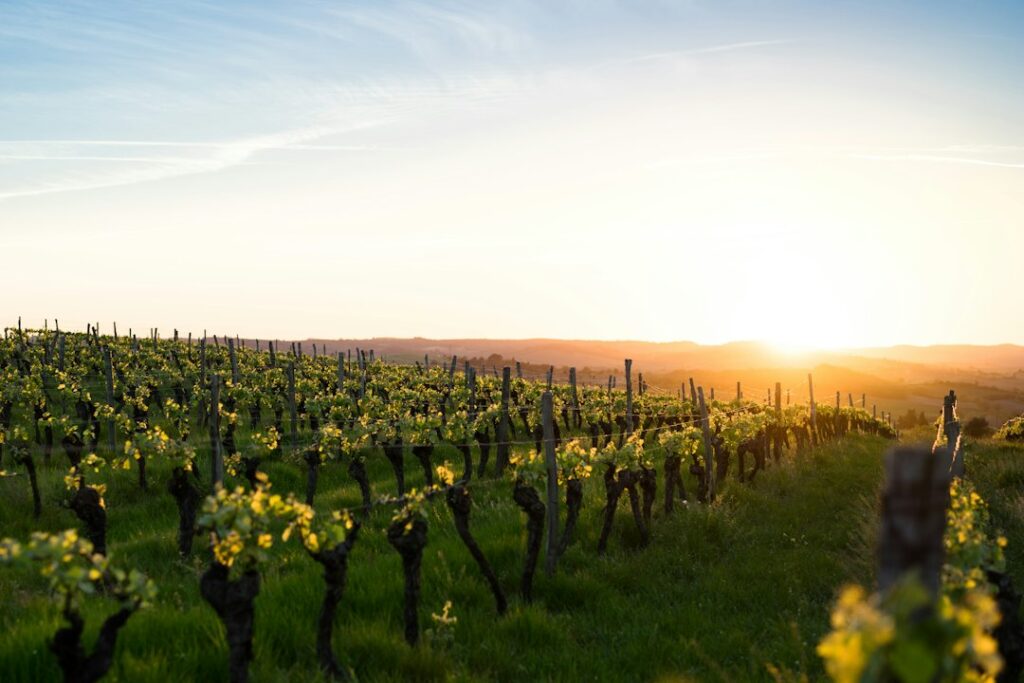
Vineyard domaines are the estates where the working vineyard is the primary landscape and the wine on your table was harvested from the slopes visible from your ceremony space. These châteaux sit in the Luberon and the Vaucluse, where rows of vines form the aisle, cellar doors open onto terraces, and the estate’s own wine is poured at dinner. The emotional register is rooted in the land: rustic authenticity, agricultural beauty, and the sense that your celebration is connected to a place that produces something real. If your vision involves rosé at golden hour, vineyard ceremony backdrops, and a weekend that feels like a private wine-country takeover, this is your character type.
Château de Sannes (Luberon, Vaucluse)
A 17th-century Provençal estate on 73 hectares in the Vaucluse, where honey-hued stone meets rows of lavender and vineyards stretch toward the Luberon foothills. Sannes is the most recognized vineyard domaine in Provence for weddings, and its defining feature is the Orangerie: a movable structure in the olive groves that seats up to 250 for dinner under cover while remaining fully open to the surrounding landscape. This is not a rented marquee. It is a permanent architectural feature designed for outdoor dining in all conditions. The ceremony site among century-old magnolias was chosen for natural shade and acoustics, not improvised from a garden corner.
The estate sleeps 31 across 15 bedrooms and seats up to 220 guests. Peak-season venue hire (June through mid-September) runs from approximately €40,000 TTC for a weekend exclusive use, with shoulder-season rates (May, mid-September through mid-October) dropping to around €30,000 TTC. Catering is handled by the estate’s imposed caterer, Roland Paix, at approximately €140 per head for 100 or more guests, with wine and bar billed separately. Marseille Provence Airport is a 50-minute drive. A full 80-guest wedding here typically runs €112,000 to €156,000 all-in, and our detailed Château de Sannes wedding cost breakdown shows how that budget comes together line by line.
What to watch for: the exclusive buyout model means you are paying for the full 73-hectare property regardless of whether you use every space. The château does not have air conditioning in its historic reception rooms, which is a genuine consideration for July and August weddings when Provençal temperatures routinely exceed 35°C. With only 31 on-site beds for a 220-seat capacity, most guests will need overflow accommodation in nearby Pertuis (15 minutes) or Aix-en-Provence (30 minutes), plus shuttle transport. The imposed caterer limits culinary flexibility, though the kitchen infrastructure is built in and tested.
Château de Tourreau (Vaucluse, Sarrians)
A 17th-century estate in Sarrians at the heart of the Vaucluse, Tourreau is the most expensive vineyard domaine on this list and one of the most sought-after wedding properties in Provence. The estate sleeps 29 guests across 16 en-suite bedrooms and seats up to 150 for dinner. Peak-season venue hire starts from €55,000 for a minimum three-night exclusive use, which includes venue privatization, accommodation for resident guests, continental breakfasts, a wedding lunch takeaway buffet, technical supervision on the wedding night, and a DJ sound system with a dedicated sound engineer.
The built-in sound system is a differentiator worth noting. Outdoor acoustics are unforgiving, and most Provençal estates require you to rent weatherproof speakers and a technician separately. Tourreau includes this in the hire, which means the transition from ceremony processional to cocktail jazz to dinner background to dance floor happens through one integrated system, not three rented speakers. For couples who prioritize production quality and want the vineyard setting with premium infrastructure, this is where the money goes.
What to watch for: at €55,000 for venue hire alone before catering, florals, production, or VAT adjustments, Tourreau sits at the premium ceiling of the Provençal vineyard market. External caterers are permitted, which gives creative freedom but means you are building the food and beverage budget from scratch. The three-night minimum naturally extends the celebration across a long weekend, which suits couples planning a multi-day experience but increases the total investment. The property is frequently booked 18 to 24 months ahead for peak dates.
La Verrière / Chêne Bleu (Mont Ventoux)
A 9th-century medieval priory at the heart of a working organic vineyard, set within a UNESCO Biosphere nature reserve near Mont Ventoux. La Verrière, home of the award-winning Chêne Bleu wine estate, is the vineyard domaine for couples who want genuine intimacy rather than scale. The property offers seven guest rooms sleeping up to 18, with the entire estate privatized for your celebration. Up to 120 guests can be seated for the wedding, with the Grand Vaulted Hall for intimate dinners and multiple ceremony locations including an oval of ancient oak trees and the terrace beside the infinity pool. Venue hire for exclusive use starts from approximately €25,000.
This is the estate where the vineyard is not a backdrop but a working organic farm, and the wine on the table was harvested from the slopes visible from the ceremony space. The UNESCO Biosphere setting creates a level of natural seclusion impossible at estates in more populated areas of the Luberon. For couples planning a celebration of 30 to 80 guests where the residential weekend is the point, not a single orchestrated evening, the seven-bedroom capacity makes this one of the strongest structural fits in Provence for intimate weddings. If you are looking at smaller-scale celebrations more broadly, our guide to small luxury wedding venues for intimate French weddings covers additional estates designed for 30 to 60 guests.
What to watch for: with only 18 beds on-site, larger weddings require significant off-site accommodation, and the nearest villages are small. The venue is perched on a mountain, which means access requires planning and weather can shift quickly at elevation. The tradeoff is worth it for couples who want seclusion and a working-vineyard experience, but it is not the right fit for a 120-guest celebration where most attendees need hotel infrastructure nearby.
Lavender and Hilltop Estates: The Iconic Provençal Backdrop
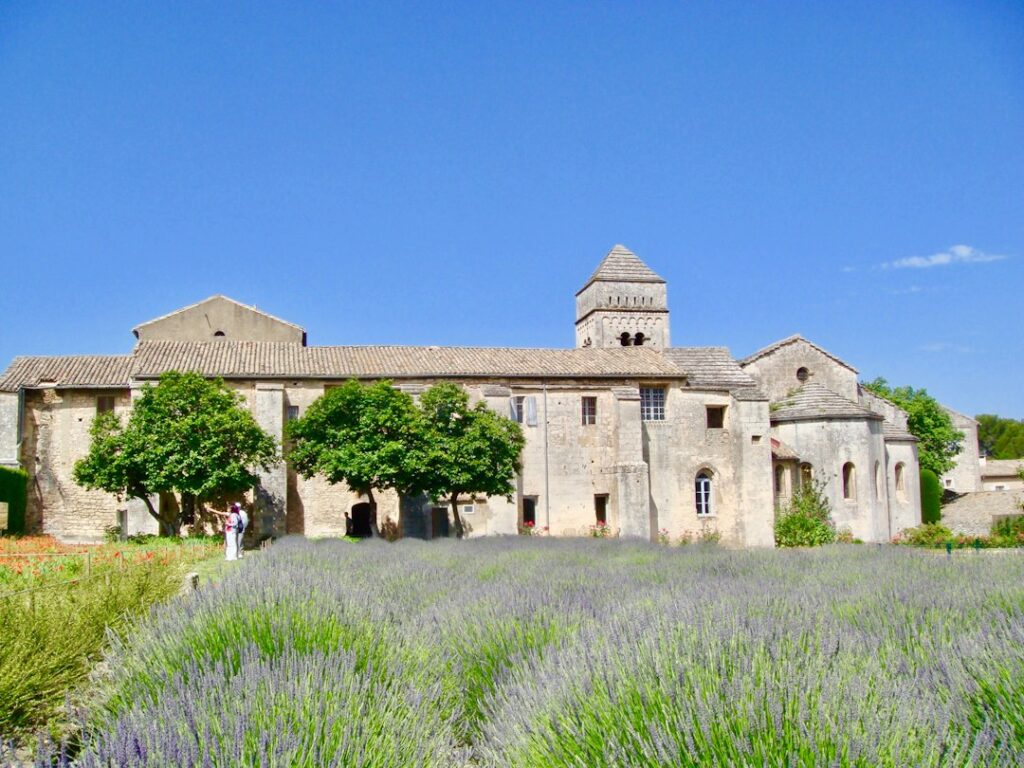
Lavender and hilltop estates deliver the Provençal aesthetic that most couples have pinned on Pinterest: dramatic limestone hills, olive groves cascading down rocky slopes, and formal gardens where lavender hedges frame the château façade. These properties sit in the Alpilles and the Aix-en-Provence area, where the landscape is more sculpted and architecturally dramatic than the agricultural Luberon valleys. The emotional register is curated beauty rather than working-farm authenticity. If your vision involves a grand stone staircase, cypress allées, and the jagged Alpilles ridge as your ceremony backdrop, this is your character type.
Château d’Estoublon (Alpilles, Fontvieille)
A wine and olive estate at the foot of the Alpilles mountain range in Fontvieille, producing wine and olive oil since 1489. Château d’Estoublon is part of the Airelles collection and operates as a private maison rather than a hotel-for-hire. The privatization is total: the château, its ten keys (rooms), the 200 hectares of olive groves and vineyards, and the run of everything on the estate for a minimum of three nights. The grand double staircase and inner courtyards deliver a Provençal setting that is visually unmatched in the region. The estate accepts events of up to 250 guests, though on-site accommodation is limited to 20.
The quoted privatization price is €200,000 including VAT, which covers the château’s ten rooms, everyday meals and estate wines for house guests, butlers, a private chef, daily housekeeping, and concierge service. The welcome dinner, wedding dinner, and farewell brunch are catered separately. This is the ultra-premium end of the Provençal market, where the level of residential service creates a house-party atmosphere rather than a venue rental. The Alpilles backdrop, with its jagged limestone ridge rising behind olive groves, is the Provençal landscape that couples travel from across the world to find.
What to watch for: the €200,000 privatization buys intimacy for 20 overnight guests, not beds for a large wedding. At 150 guests, 130 people need off-site accommodation in nearby Saint-Rémy-de-Provence or Arles with coordinated transport, which adds a shuttle line item and fragments the residential weekend. The total all-in budget for a 150-guest, three-night celebration typically runs €385,000 to €560,000, reflecting the premium positioning. This is a venue for couples whose budget matches the level of service and exclusivity on offer, not for couples seeking value.
Château de Fonscolombe (Aix-en-Provence Area)
An 18th-century Relais and Châteaux property on 12 hectares of classified parkland near Le Puy-Sainte-Réparade, 20 minutes from Aix-en-Provence. Fonscolombe’s defining advantage is accommodation scale: 50 bedrooms and suites sleep up to 110 guests on-site, which is exceptional for Provence and eliminates the accommodation gap that defines most Provençal estate weddings. The property only takes weddings on a full privatization basis, meaning all 50 rooms are yours or the booking does not happen. The on-site restaurant, Le Temps Suspendu, seats 50 and provides the kitchen backbone for outdoor service in the South Park, which hosts dinners for up to 200. A chapel is available for ceremonies.
Full privatization pricing runs from approximately €40,000 for two nights in low season (November through April) to roughly €70,000 for two nights in peak season (May through September), with all 50 rooms and breakfast included. The in-house kitchen operates under a Michelin-starred chef for groups up to 130, and external caterers are available for larger celebrations. The 50 air-conditioned bedrooms are a significant advantage for July and August weddings that most Provençal estates cannot offer. For couples who want the formal-garden Provençal aesthetic without the accommodation gap, this is the strongest structural fit in the region.
What to watch for: the full-buyout requirement means you are paying for all 50 rooms even if your guest count is 40. This is the tradeoff of true exclusivity: the cost of privacy is the cost of the entire estate, not just the rooms you fill. The weather backup for outdoor receptions over 60 guests is the couple’s financial responsibility, which can add €2,000 to €8,000 in marquee costs. The in-house catering means you cannot bring in an outside chef for the main dinner without a minimum spend. For a broader comparison of how this estate stacks up against other southern French properties, our guide to wedding châteaux across the south of France places Fonscolombe in context alongside Languedoc and Riviera alternatives.
Provence Château Venues Compared
The table below compares five Provençal châteaux across the dimensions that actually shape a destination wedding: character type, sub-region, on-site beds, seated capacity, venue hire, and nearest airport. Use it to shortlist by your constraints before you request a single brochure. Prices are shown as published by the venues or listed aggregators. French quotes are frequently presented HT (hors taxes, before VAT), so always confirm whether a figure is HT or TTC (toutes taxes comprises, VAT included) before budgeting.
| Venue | Character | Sub-Region | Sleeps | Max Seated | Venue Hire From | Nearest Airport | Best For |
|---|---|---|---|---|---|---|---|
| Château de Sannes | Vineyard domaine | Luberon (Vaucluse) | 31 (15 rooms) | 220 | ~€30,000 TTC (shoulder) | Marseille (50 min) | Large celebrations, 100 to 220 guests |
| Château de Tourreau | Vineyard domaine | Vaucluse (Sarrians) | 29 (16 rooms) | 150 | €55,000 (3 nights) | Marseille (~1 hr) | Premium mid-size, 100 to 150 guests |
| La Verrière / Chêne Bleu | Vineyard domaine | Mont Ventoux | 18 (7 rooms) | 120 | ~€25,000 | Avignon (45 min) | Intimate, 30 to 80 guests |
| Château d’Estoublon | Hilltop estate | Alpilles (Fontvieille) | 20 (10 rooms) | 250 | €200,000 TTC (3 nights) | Marseille / Avignon TGV | Ultra-premium, 100 to 250 guests |
| Château de Fonscolombe | Garden estate | Aix-en-Provence area | 110 (50 rooms) | 140 | ~€40,000 (2 nights, off-peak) | Marseille (1 hr) | Full buyout, 80 to 140 guests |
Matching Venues to Your Guest Count and Season
The right Provençal château is not the one with the most beautiful photographs. It is the one whose capacity, accommodation, and cost structure actually fit your guest count and your timeline. Here is how to filter the estates above against the two variables that matter most.
By Guest Count
For intimate weddings of 30 to 60 guests, La Verrière is the strongest vineyard domaine fit. Its seven bedrooms and 120-seat capacity mean a 40-guest celebration fills the estate without feeling sparse, and the residential weekend is genuinely communal. Château de Fonscolombe works for intimate celebrations too, but only if your budget absorbs the cost of all 50 rooms. At €40,000 to €70,000 for a full buyout, the per-head venue cost for 40 guests is €1,000 to €1,750 before a single flower is ordered, which may not justify the exclusivity at that scale.
For mid-sized celebrations of 80 to 150 guests, Sannes and Fonscolombe are the strongest fits. Sannes seats up to 220, so 100 to 120 guests fill the Orangerie beautifully, and the 73-hectare estate provides enough space for a celebration of that scale to feel expansive rather than cramped. Fonscolombe’s 140-seat capacity and 110 on-site beds make it the logistically simplest option: a 100-guest wedding here means nearly everyone sleeps on-site, eliminating the shuttle transport costs that define most Provençal weddings. Tourreau works at this scale too, but the €55,000 venue hire and three-night minimum push the total investment higher than Sannes for a comparable guest count.
For large celebrations of 150 to 250 guests, Sannes (seats 220) and Estoublon (up to 250) are the two estates with the infrastructure for scale. Sannes delivers this at a vineyard-domaine price point starting around €30,000 TTC, while Estoublon delivers it at the ultra-premium end with a €200,000 privatization. The difference between the two is roughly the difference between a beautiful Provençal wedding and a fully staffed private-house-party experience with butlers and a dedicated chef. Neither is better. The question is which version of a large Provençal celebration matches your vision and budget.
By Season
May, June, and September are the strongest months for a Provence wedding. The weather is warm enough for outdoor dinners, the light is golden, and the tourist crowds that clog regional roads in July and August have not yet arrived or have already departed. Venue hire in shoulder months (May, mid-September through mid-October) typically runs approximately 25% below peak rates. June is the sweet spot: warm evenings, lavender beginning to bloom at lower altitudes, and thinner crowds than July.
July and August bring extreme heat (35 to 40°C is common) and peak tourist crowds. Many historic châteaux were built centuries before air conditioning, and their thick stone walls stay cool during the day but reception rooms without climate control become ovens during a summer dinner. Among the estates above, only Fonscolombe offers air-conditioned rooms throughout. If you are set on a July or August date at a non-air-conditioned estate, ask about portable climate control rentals, which can add €2,000 to €5,000 to your production budget.
The Mistral wind, which gusts through the Rhône Valley from spring to early summer, can reach 80 km/h and will topple floral installations, scatter place cards, and make outdoor ceremonies uncomfortable. Ask your planner about Mistral patterns for your specific month. For couples who want to understand how Provençal estates handle outdoor infrastructure challenges, our guide to luxury outdoor wedding venues that master the elements covers weather contingencies, sound systems, and terrace kitchen infrastructure in detail.
Lavender Bloom Timing and Other Seasonal Truths
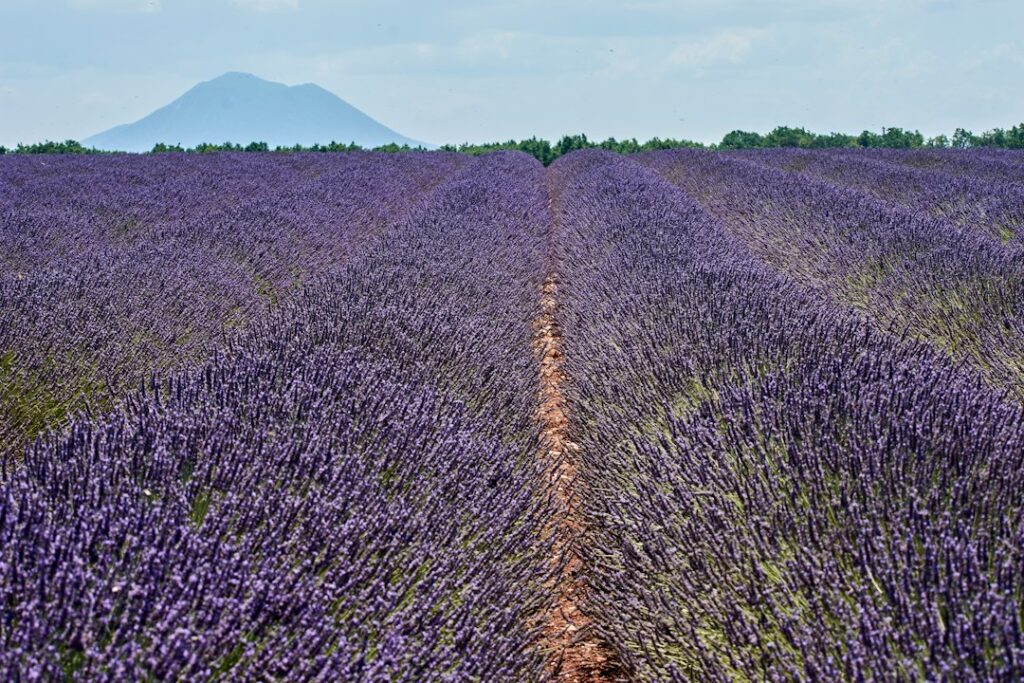
The lavender field ceremony backdrop is the single most pinned Provençal wedding image, and it is also the one most likely to disappoint couples who do not understand the bloom calendar. Here is what you need to know before you plan your date around lavender.
Most Venue Lavender Is Planted Decoration, Not Commercial Fields
The lavender you see in château wedding photos is almost always ornamental lavender planted on the estate grounds as landscaping, not the vast commercial lavender fields of the Valensole plateau. This distinction matters because estate-planted lavender is maintained by the château’s gardening team and is reasonably reliable from mid-June through early August, but it does not deliver the horizon-filling purple expanse that couples see in travel photography. If you want the commercial-field backdrop, you need a venue within driving distance of the Valensole plateau (roughly 60 to 90 minutes from most Luberon estates) and you need to plan a separate excursion, because no wedding château sits on the plateau itself.
The Bloom Window Is Narrower Than You Think
According to the Alpes de Haute-Provence Tourisme office, the Valensole plateau lavender typically blooms from mid-June to mid-July, with peak color in the first week of July. Harvesting begins around mid-July, after which the fields are cut and the visual effect declines rapidly. By August, most Valensole fields are harvested stubble. If your wedding date is in late July or August, the iconic lavender backdrop you have been imagining does not exist at Valensole, and you should plan your floral design around estate-planted lavender or other Provençal elements instead.
There is a second bloom window at higher altitude. The Sault plateau, at 760 metres on the slopes of Mont Ventoux, grows true lavender (Lavandula angustifolia) rather than the lavandin hybrid that dominates Valensole. According to regional tourism sources, Sault lavender typically blooms from mid-July to mid-August, offering a later window for couples whose dates fall after the Valensole harvest. La Verrière, near Mont Ventoux, is the estate best positioned for couples who want access to this later bloom, though the drive to Sault is still 45 to 60 minutes from the estate.
Lavandin vs True Lavender: Why It Matters
What you see in most Provence lavender photos is lavandin, a hybrid that accounts for roughly 90% of Provençal lavender production by volume. Lavandin grows at lower altitudes, blooms slightly later than true lavender, and produces a paler, more grey-blue color before fully opening into blue-violet at peak. True lavender grows above 600 metres, produces a deeper blue-violet, and is the variety used in high-end perfumery. The visual difference is subtle but real: lavandin plants are taller (40 to 60 cm versus 30 to 40 cm for true lavender), and the color shifts depending on the stage of bloom. For wedding photography, both are beautiful, but true lavender at peak produces the more saturated, more vivid purple that couples associate with the iconic Provençal image.
Climate Shifts Are Moving the Window Earlier
Climate trends have been pushing the bloom four to seven days earlier than historic averages over the past several years, according to regional tourism sources. In recent years, some seasons have seen Valensole flowering already under way in early to mid-June, with harvesting beginning before the end of the month. These dates shift every year with the weather, so the most reliable approach is to confirm bloom status with local tourism offices in the two weeks before your wedding date rather than relying on a fixed calendar. If lavender is the primary reason you chose Provence, plan your date for late June through early July and build flexibility into your timeline for a lavender-field excursion the day before or after the wedding itself.
Find Your Provence Château and Request Details
The right château Provence wedding venue is not the one with the most lavender in its photographs. It is the one whose character, whether vineyard domaine or hilltop estate, matches the emotional tone you want your celebration to carry, whose accommodation capacity fits your guest count without a shuttle-transport surprise, and whose cost structure you understand before you sign a contract, VAT included. The vineyard couple belongs in the Luberon, where estate wine and agricultural beauty create a residential weekend rooted in the land. The hilltop couple belongs in the Alpilles or the Aix area, where formal gardens and dramatic limestone ridges deliver the curated Provençal aesthetic. Each estate has a specific cost structure, a specific set of tradeoffs, and a specific version of a Provençal wedding that aligns with one of these visions.
Myfrancewedding helps couples navigate the Provençal venue landscape from the first inquiry to the final invoice, ensuring that VAT structures, accommodation gaps, catering models, and seasonal timing are accounted for before you commit to a property. If you are weighing Provence against other French regions, our guide to wedding locations across ten French regions places the south in context alongside the Loire Valley, Bordeaux, Burgundy, and the Alps. Your French love story is waiting to unfold.
Frequently Asked Questions
What is the difference between a vineyard domaine and a hilltop estate in Provence?
A vineyard domaine is a working wine estate where the vineyard is the primary landscape and estate-grown wine is poured at dinner. These sit in the Luberon and Vaucluse. A hilltop estate sits in the Alpilles or Aix area, where the landscape is more sculpted and dramatic, with olive groves, formal gardens, and limestone ridges as the backdrop. The vineyard domaine delivers rustic authenticity; the hilltop estate delivers curated beauty.
When does lavender bloom in Provence for a wedding backdrop?
On the Valensole plateau, lavender typically blooms from mid-June to mid-July with peak color in the first week of July, according to the Alpes de Haute-Provence Tourisme office. Harvesting begins around mid-July, after which fields are cut. At higher altitude, the Sault plateau near Mont Ventoux blooms from mid-July to mid-August. Climate trends are pushing blooms four to seven days earlier than historic averages. Confirm with local tourism offices two weeks before your date.
How many guests can a Provence château sleep on-site?
Most Provençal châteaux sleep far fewer guests than they seat for dinner. Château de Sannes sleeps 31 but seats 220. Château de Tourreau sleeps 29 but seats 150. Château d’Estoublon sleeps 20 but accepts up to 250 guests. The exception is Château de Fonscolombe, which sleeps 110 across 50 rooms. The gap between seated and sleeping capacity determines your overflow hotel and shuttle transport costs, typically €3,000 to €6,000 for a weekend.
Is July too hot for an outdoor wedding at a Provençal château?
July and August in Provence regularly reach 35 to 40°C. Many historic châteaux lack air conditioning in reception rooms, which can make dinner service uncomfortable. May, June, and September offer comfortable temperatures, golden light, and venue hire reductions of approximately 25%. If you must marry in July, choose an air-conditioned venue like Château de Fonscolombe, or budget for portable climate control rentals at €2,000 to €5,000.
Are Provence château wedding prices quoted with or without VAT?
French venue quotes are frequently presented HT (hors taxes, before VAT), with VAT added on the final invoice. Venue hire and equipment carry 20% VAT, while catering and food service carry 10%. A venue quoting €25,000 HT becomes €30,000 TTC. Across all vendor invoices, cumulative VAT typically adds €3,000 to €8,000. Always confirm whether a price is HT or TTC before building your budget.