Château in Paris for a Wedding: Is It Possible?
-
myfrancewedding.com
- Destination WeddingsFranceWedding VenuesWeddings
- 15

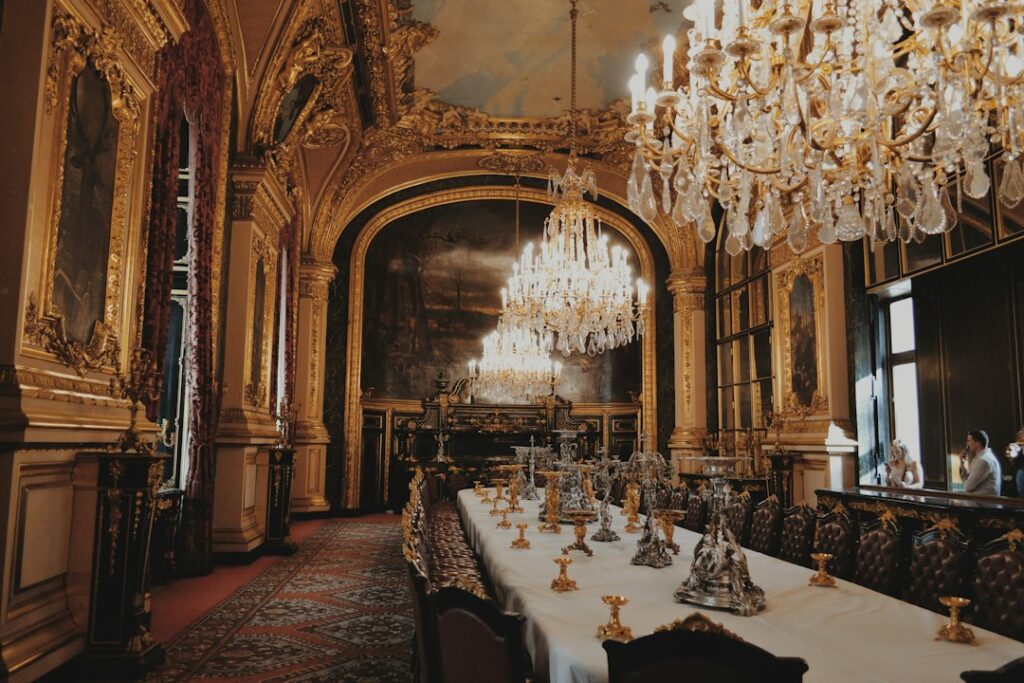
Yes. The most expensive misconception in French destination wedding planning is that a château wedding requires a three-hour drive from Paris into the Loire Valley or a connecting flight to Provence. Several genuine château estates sit within Paris itself or its immediate periphery, close enough that a guest clearing customs at Charles de Gaulle can be standing in a formal garden within 20 minutes. A château in Paris for a wedding is not a compromise or a myth. It is a category that runs from an 18th-century pavilion in the Bois de Boulogne to grand domaines 30 minutes north of the city, and the estates that define it resolve a tension that no rural château can.
The difference between a Paris-area château wedding and a rural château wedding is not architectural. It is logistical. A Loire Valley château demands a TGV or a three-hour coach transfer. A Provence estate requires a connecting flight or a five-hour drive. Both strand guests in regions with limited hotel inventory and fewer transport options. A Paris-area château puts your guests within reach of two international airports, a Eurostar terminal, the densest hotel market in Europe, and a city your guests actually want to visit. The trade-offs are real: fewer on-site bedrooms, tighter noise restrictions, and a landscape that is parkland or suburban rather than deep countryside. But for couples whose guest list includes elderly relatives who cannot manage a transatlantic flight followed by a three-hour train ride, friends whose London meetings end at 6 PM on a Friday, and international travelers who need Paris accessibility, the Paris-area château resolves tensions that a rural estate cannot.
A Château in Paris for a Wedding: Is It Possible Without Leaving the City?
The question couples ask is not whether Paris has beautiful venues. It does. The question is whether a genuine château experience exists without a three-hour transfer from CDG. The answer depends on what you mean by genuine. If you mean turrets, a moat, and centuries of history reflected in a stone facade, the answer is yes, and more easily than most couples think. The estates below span from the Bois de Boulogne inside Paris to Ermenonville 40 minutes north, and each one delivers a château setting that does not require your guests to board a second flight or navigate a regional rail network they have never heard of.
What makes a Paris-area château distinctive is not the architecture alone but the tension it resolves: a fully private estate that feels deep in the French countryside, yet sits 20 minutes from the airport your guests are flying into. For international couples who want château grandeur without stranding their guests in rural France, this combination is rare. For couples who need a venue their guests can reach the same day they land, it may be unmatched. The châteaux within 90 minutes of Paris profiled elsewhere on this site cover the broader field. Here, the focus is narrower: estates within or immediately adjacent to the city, where the transfer from CDG is measured in minutes, not hours.
The Paris Château Spectrum: 5 Estates Compared
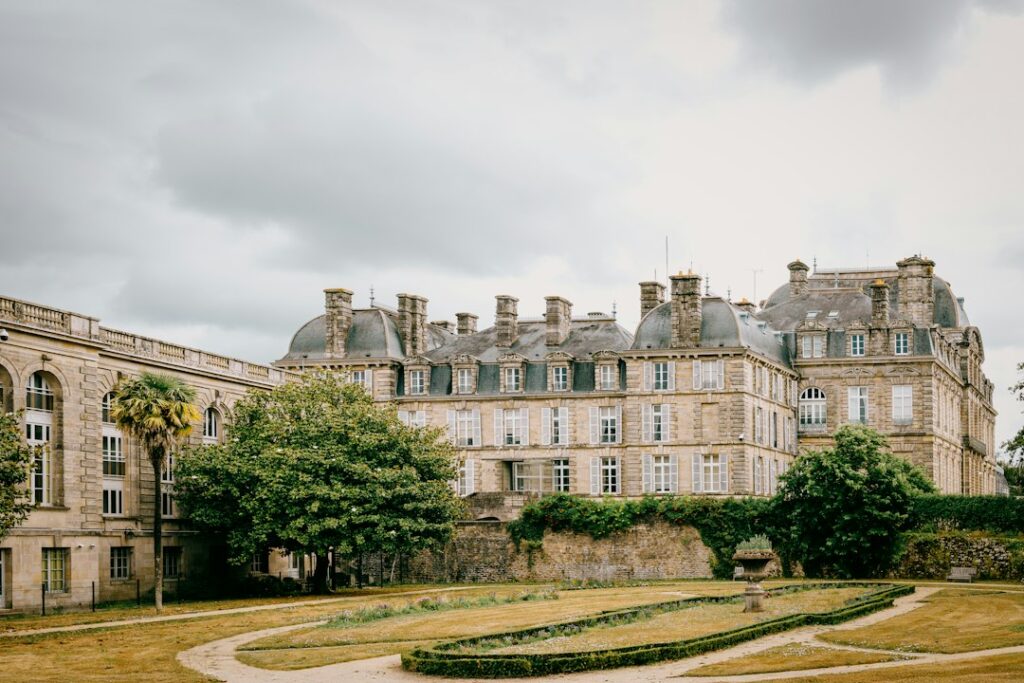
The spectrum runs from venues inside Paris proper to estates 40 minutes north. The closer to Paris, the more convenient the logistics and the stricter the constraints: no on-site accommodation, tighter noise curfews, and a parkland or city-adjacent setting rather than deep countryside. The further out, the more the experience resembles a rural château weekend, with more rooms, later music, and quieter surroundings. Five estates span this range, each matched to a different vision of what a Paris château wedding can be.
Jardins de Bagatelle (Bois de Boulogne, Paris 16th)
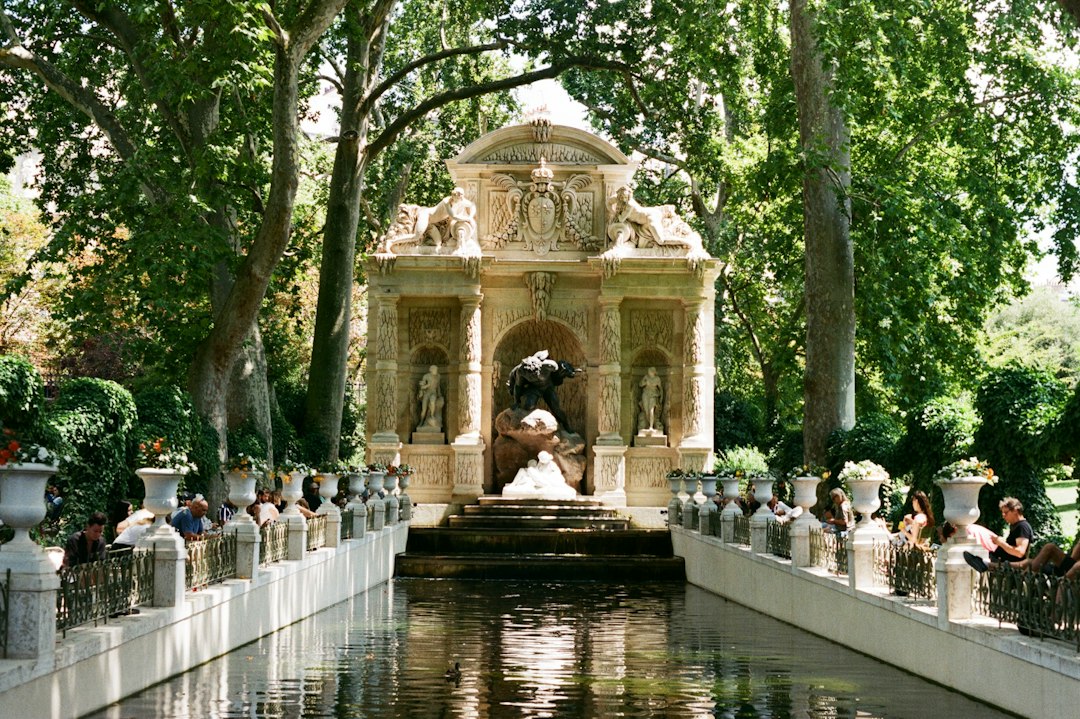
Picture an 18th-century château reflected in an ornamental lake, surrounded by rose gardens with 1,200 varieties, and you are picturing the Château de Bagatelle. Built in 1772 in just 64 days as a bet between the Count of Artois, the future King Charles X, and Marie-Antoinette, it sits within the Bois de Boulogne, the vast park on Paris’s western edge. The reception spaces occupy the estate’s former royal stables and outbuildings, with a main salon seating 108 for dinner and a veranda opening onto the gardens. External catering is permitted, which gives you creative control over both menu and budget. The Orangerie accommodates 80 to 150 guests for seated dinners depending on configuration, and the full estate handles up to 800 for cocktails.
What to watch for: there is no on-site accommodation, which means your celebration is a single evening rather than a residential weekend. Noise is restricted to musique dansante below 85 decibels under the venue’s municipal authorization, and amplified outdoor music faces the same constraints as any Paris-internal venue. What you gain is a genuine château within the city limits, accessible by metro (Pont de Neuilly, line 1) and a five-minute taxi from the Arc de Triomphe. Your guests stay in Paris hotels, and the city itself becomes your backdrop in a way no rural estate can replicate.
Domaine de Sceaux (Sceaux, south of Paris)
A 17th-century estate built for Jean-Baptiste Colbert, Louis XIV’s finance minister, with gardens designed by André Le Nôtre and an Orangerie completed in 1686 by Jules Hardouin-Mansart, the architect who made his name at Versailles. The Domaine de Sceaux sits in Sceaux, about 10 kilometers south of central Paris, reachable by RER B in approximately 30 minutes from Châtelet. The Orangerie, a 530-square-meter stone gallery originally built to house marble sculptures from the Colbert era, seats 250 for dinner and accommodates 600 for cocktails. The Grand Salon of the château itself seats 50, and the intimate Pavillon de l’Aurore seats 30. External caterers are welcome, and the estate provides a list of partner wedding planners.
What to watch for: the Domaine de Sceaux is a departmental estate, not a private château. Evening privatizations run from 6 PM to midnight, a four-hour window that is shorter than the periphery estates. There is no on-site accommodation, and the venue operates within the cultural programming schedule of the departmental museums. Privatization requests must be submitted at least two months in advance. What you gain is a Le Nôtre garden and a Mansart Orangerie at a starting rental of approximately €4,200 HT for the Orangerie, a fraction of what a private château of this architectural caliber would command. That figure is HT (hors taxes, before VAT), which becomes approximately €5,040 TTC at 20% VAT. Always confirm which tax basis a quote uses before budgeting.
Château de Champlâtreux (Épinay-Champlâtreux, Val-d’Oise)
An 18th-century château built between 1751 and 1757 by architect Jean-Michel Chevotet for Mathieu-François Molé, president of the Paris Parliament, and now the home of the Duc de Noailles. Classified as a Historic Monument in 1989, the château sits 15 minutes from Charles de Gaulle and 30 minutes from central Paris, the closest genuine château estate to the airport on this list. Four reception rooms with seven-meter ceilings, period carved paneling, and Versailles-style parquet floors seat 300 for dinner and accommodate 500 for cocktails. The Saint-Eutrope chapel, an 18th-century neo-classical church on the estate, seats 90 for ceremonies. On-site accommodation is limited: the Closerie, a 170-square-meter cottage in a 2,000-square-meter garden a two-minute walk from the château, sleeps 12.
What to watch for: with 300 seated and only 12 beds on site, the accommodation gap is wider here than at any other estate on this list. A 200-guest wedding leaves 188 people needing nearby hotels, and the Val-d’Oise has fewer quality hotels than you might expect 30 minutes from Paris. The dance party runs until 3:30 AM with the château closing at 6 AM, and an extension costs €450 per hour. Fees range from approximately €8,990 to €12,940 depending on season and whether you use a partner caterer. The château operates as a dry-hire venue, meaning you bring your own caterer and build the food and beverage budget from scratch.
Château de Bouffémont (Bouffémont, Val-d’Oise)
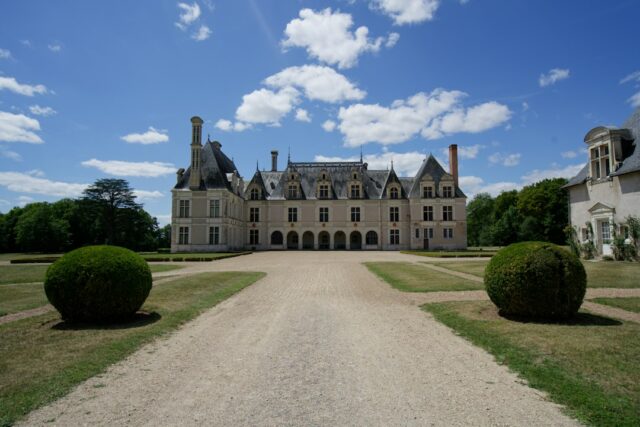
A 19th-century Belle Epoque residence built in 1860 under Napoleon III in the Louis XIII style, set in five hectares of tiered formal gardens in the Montmorency Forest, 20 minutes from CDG and 30 kilometers from central Paris. The château seats 150 for dinner across five reception rooms and sleeps 30 in nine suites across two floors. Unlike most French châteaux, Château de Bouffémont publishes its rates TTC (toutes taxes comprises, VAT included), meaning the price you see is the price you pay for venue hire. The château operates on a recommended-caterer model with no corkage fee, so you can bring your own wine at cost. Our full profile of the Château de Bouffémont wedding breaks down the room-by-room capacities, the accommodation gap between 150 seated and 30 sleeping, and the cost of extending to a full weekend.
What to watch for: the architecture is Belle Epoque rather than Renaissance, which means it lacks the turrets, moats, and medieval drama of a Loire Valley château. If your vision is a fairy-tale castle, this is not it. If your vision is a refined Parisian country estate with crystal chandeliers and formal gardens, 20 minutes from the airport your guests are flying into, this is exactly it. The base hire runs from 3 PM to 4 AM, and the surrounding area is suburban rather than pastoral, with views of forest and golf course rather than vineyards or lavender fields.
Château d’Ermenonville (Ermenonville, Oise)
An 18th-century château reflected in a moat, with turrets and an 18-hectare English garden where Jean-Jacques Rousseau spent his final days. Château d’Ermenonville sits 20 minutes from CDG and 40 minutes from Paris, and it operates as a full boutique hotel with 55 individually decorated rooms and suites designed by Parisian designer Cordelia de Castellane. The Radziwill salon seats 170 for dinner, 140 with a dance floor, and the terrace overlooks the ornamental lake. Dancing runs until 3 AM, and the estate can be privatized from 4 PM to noon the following day. Peak-season weekend rates run from €18,500 for one night to €29,500 for two nights, while off-season weekday rates start at €12,200 per night.
What to watch for: this is the estate that most closely resembles a rural château weekend while remaining within 40 minutes of Paris. With 55 rooms, it nearly closes the accommodation gap for mid-sized celebrations, and the residential format is structurally natural rather than improvised. External caterers are permitted with a corkage option for your own wine. The trade-off is price: Ermenonville is the most expensive estate on this list, and its 40-minute transfer from central Paris is the longest. For couples who want the full residential château experience without a three-hour drive from the airport, it may be the best fit.
How the Five Compare
The table below lets you scan all five estates at once: distance from Paris, proximity to CDG, seated capacity, on-site beds, music curfew, and starting hire. Use it to shortlist by the two variables that most shape a Paris-area château wedding, guest logistics and accommodation depth, before you request brochures.
| Estate | Location | From CDG | From Paris | Seated Dinner | On-site Beds | Music Until | Hire From |
|---|---|---|---|---|---|---|---|
| Jardins de Bagatelle | Bois de Boulogne, Paris 16th | ~35 min | Within Paris | 108 to 150 | None | 85 dB limit | ~€8,000 |
| Domaine de Sceaux (Orangerie) | Sceaux, south | ~45 min | ~30 min (RER B) | 250 | None | Midnight | ~€4,200 HT |
| Château de Champlâtreux | Épinay-Champlâtreux, Val-d’Oise | 15 min | 30 min | 300 | 12 | 3:30 AM | from ~€8,990 |
| Château de Bouffémont | Bouffémont, Val-d’Oise | 20 min | 30 km (~30 min) | 150 | 30 | 4 AM | TTC (VAT incl.) |
| Château d’Ermenonville | Ermenonville, Oise | 20 min | 40 min | 170 | 55 | 3 AM | from ~€12,200/night |
City Logistics: Guest Transport, Hotels & Noise Rules
Guest Transport from CDG and Paris
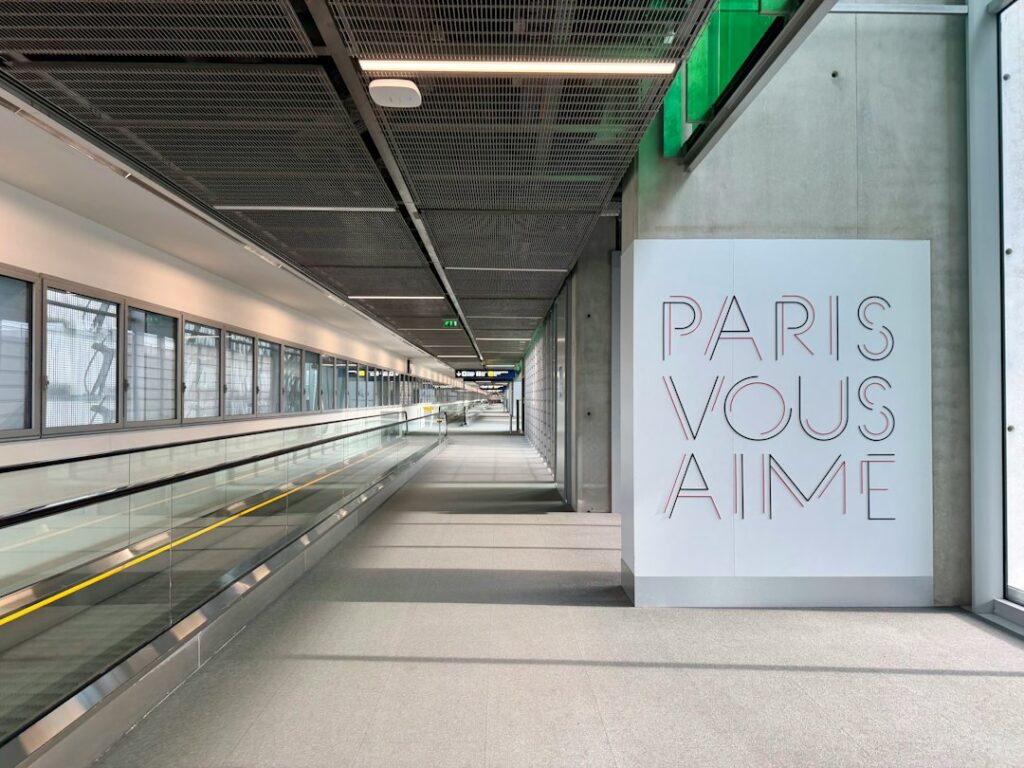
The single advantage of a Paris-area château is that your guests arrive refreshed. Charles de Gaulle Airport is the busiest airport in France, with direct flights from cities across North America, the UK, and Europe. The estates on this list sit 15 to 40 minutes from CDG by car, which means a guest who lands at 2 PM can be on a terrace by 3:30 PM. Compare that to a Provence estate, which requires a connecting flight to Marseille or a five-hour drive from Paris, or a Loire Valley château, which requires a TGV from Gare de Lyon and a taxi from a regional station.
For guests staying in Paris before or after the wedding, several estates are reachable by rail. The Domaine de Sceaux is accessible via RER B from central Paris in approximately 30 minutes. Château de Bouffémont is reachable by regional train from Paris Gare du Nord in about 25 minutes, with the Bouffémont-Moisselles station 2.5 kilometers from the estate. Château d’Ermenonville is accessible via the A1 motorway, 20 minutes from CDG, with Le Plessis-Belleville station 7 kilometers away. When you share travel details with guests, include both the driving route from CDG and the rail route from central Paris, with the nearest station and taxi time called out explicitly.
Hotels and Accommodation Strategy
Every château on this list sleeps fewer guests on site than it seats for dinner. This is the structural reality of the French château market, and it is the single factor that most shapes whether your celebration feels like a residential weekend or a single evening that guests attend and leave. The pattern across these five estates tells the story plainly. The Jardins de Bagatelle and the Domaine de Sceaux have no on-site accommodation at all. Château de Champlâtreux sleeps 12. Château de Bouffémont sleeps 30. Château d’Ermenonville sleeps 55.
The Paris advantage here is significant. Unlike a rural château in the Dordogne or Provence, where the nearest quality hotel may be 30 minutes away with limited availability, Paris has the densest hotel market in Europe. Your overflow guests can stay in central Paris hotels and reach any of these estates by taxi or public transport within an hour. A coordinated shuttle from a Paris hotel to a château 30 minutes away is a manageable line item, typically costing €3,000 to €5,000 for a wedding weekend, not a logistical ordeal.
For the periphery estates, the split works like this: your closest family and the wedding party take the on-site suites, and the remaining guests stay in Paris or nearby hotels with coordinated shuttle transport. For couples planning a 30-guest wedding at Château de Bouffémont, everyone can stay on-site in the nine suites, and the celebration becomes genuinely residential. For a 150-guest wedding at the same estate, 120 guests need nearby accommodation. Confirm the partner-hotel list and shuttle logistics before you commit, because the Val-d’Oise has fewer hotels than you might expect 30 minutes from a major city.
Noise Ordinances and Music Curfews
This is where Paris-area châteaux diverge most sharply from rural estates. Paris noise regulations prohibit amplified outdoor music in public spaces after 10 PM, and the restriction tightens further in residential arrondissements. A venue within Paris proper faces the strictest curfews: the Jardins de Bagatelle limits music to 85 decibels under its municipal authorization, and the Domaine de Sceaux’s evening privatization runs from 6 PM to midnight, a four-hour window.
The periphery estates have more room. Château de Champlâtreux permits dancing until 3:30 AM, with an extension at €450 per hour. Château d’Ermenonville runs until 3 AM. Château de Bouffémont’s base hire runs from 3 PM to 4 AM. These are not Loire Valley estates with no curfew at all, but they are not Paris-internal venues where the DJ shuts down at midnight either. The practical implication: if a late-night dance floor matters to you, the periphery estates are the stronger choice. If your vision is an elegant dinner and early-night dancing with the Eiffel Tower visible in the distance, the Paris-internal venues deliver that experience more authentically than any rural château can. Always confirm the curfew and outdoor music policy on the first call, not on the wedding night.
Trade-Offs: Paris Convenience vs. Countryside Seclusion
The choice between a Paris-area château and a rural château is not a question of quality. It is a question of fit. Both can deliver a celebration that feels timeless. But the trade-offs shape every aspect of the experience, from the moment your guests land to the hour the music stops.
On-site Accommodation
A rural château in the Loire or Provence can sleep 50 to 100 guests, making a full residential weekend logistically natural. A Paris-area château sleeps fewer, and the Paris-internal venues sleep none. The trade-off: Paris hotel inventory is vast, your guests have options at every price point, and a coordinated shuttle from a central Paris hotel is a manageable cost rather than a logistical challenge. The difference between a venue that offers exclusive use and one that truly operates as a private estate is the difference between a hotel that blocks off its ballroom and a château that hands you the keys and leaves.
Setting and Landscape
A rural château is surrounded by vineyards, lavender fields, or forest with no building in sight. A Paris-area château is surrounded by parkland, forest, or gardens, but the surrounding area is suburban. The views from Château de Bouffémont are of the Montmorency Forest and the Paris International Golf Club. The Domaine de Sceaux overlooks Le Nôtre gardens but sits within a densely populated southern suburb. If your dream is a château surrounded by rolling countryside with nothing but fields to the horizon, the Paris area cannot deliver that. If your priority is a château your guests can reach the same day they land, the trade-off is clear.
VAT and Pricing Transparency
This is where most international couples get caught. French quotes are frequently presented HT (hors taxes, before VAT), and the VAT is added on the final invoice. A venue quoting €15,000 HT becomes €18,000 TTC at 20% VAT. A caterer quoting €12,000 HT becomes €13,200 TTC at the 10% food service rate. Château de Bouffémont is unusual in publishing rates TTC, but the Domaine de Sceaux’s Orangerie quotes approximately €4,200 HT, which becomes approximately €5,040 TTC. Always confirm whether each quote is HT or TTC before building your budget, and ask your planner to present all figures TTC so you are comparing real costs rather than pre-tax ones. The cumulative VAT across 10 to 15 vendor invoices typically adds €3,000 to €8,000 that couples did not anticipate.
Per-Guest Economics
The proximity to Paris also changes the economics. At a rural château where you are already paying for a three-day exclusive buyout, a 40-guest wedding concentrates your spend at a higher per-head rate. At €140 per head for 150 guests, your catering budget is €21,000. At the same €21,000 for 40 guests, you are spending €525 per head, which puts you in the range of a Michelin-starred tasting menu. The Paris-area château lets you calibrate this: choose Bagatelle for an intimate dinner of 80, or Champlâtreux for 300, without the structural penalty of a minimum buyout designed for a different guest count.
Catering Model
The Paris-area estates span the full range of catering models. Bagatelle and Ermenonville permit external caterers. Domaine de Sceaux allows you to choose your own caterer. Champlâtreux offers a partner-caterer option or full dry hire. Bouffémont operates on a recommended-caterer list with no corkage fee, which means you can bring your own wine at cost rather than paying a per-bottle surcharge. For a 100-guest wedding consuming three glasses of wine per person, eliminating corkage can save thousands. The choice shapes your food budget, your creative freedom, and your planning complexity. A dry-hire estate gives you the most control but means you are building the food and beverage budget from scratch and managing vendor relationships in French.
Making the Most of Paris for a Multi-Day Celebration
The estates within 40 minutes of Paris reward a multi-day format, and the proximity makes that format logistically feasible in a way that a Provence or Loire Valley estate cannot. Because the transfer is short, guests can arrive Friday, settle in, and join a welcome dinner without the exhaustion of a long journey. A Saturday ceremony and Sunday brunch become natural rather than aspirational.
The format works like this for a typical Paris-area château weekend. Friday: guests arrive, either at CDG or from Paris hotels, and gather for a relaxed welcome dinner at the château or a Paris restaurant. Saturday: ceremony in the château gardens or chapel, cocktails on the terrace, dinner in the main reception room, dancing until the curfew. Sunday: leisurely brunch on the grounds or at a nearby Paris café, followed by departure.
The estates with accommodation make this seamless. Château d’Ermenonville, with 55 rooms and privatization from 4 PM to noon the following day, is built for this format. Château de Bouffémont, with nine suites sleeping 30, creates a residential experience for a smaller group where the weekend unfolds naturally across multiple days. For the Paris-internal venues without accommodation, the multi-day format still works: your guests stay in Paris hotels, take a short transfer to the château for the wedding day, and spend the rest of the weekend exploring the city. The city itself becomes part of the celebration, from a welcome dinner at a Left Bank bistro to a Sunday brunch in the Marais.
One advantage couples overlook: because a Paris-area château is close to the city, you can organize a Paris day trip for your guests as part of the weekend. A welcome dinner at the château on Friday, a Saturday morning excursion into Paris for those who want it, the wedding ceremony and reception on Saturday evening, and a Sunday brunch on the terrace. The proximity makes this feasible without exhausting your guests or fragmenting the group. For a deeper framework on evaluating any château near Paris, our guide on how to choose a château near Paris walks through the six factors that separate the estate that delivers your vision from the one that fights you at every turn. And for a broader view of how the Paris region compares to Provence, the Loire, or Bordeaux, our guide to wedding locations across France’s ten regions maps the same decision variables nationally.
Explore Paris-Area Châteaux for Your Wedding
Whether your vision is a château within the Bois de Boulogne or a grand domaine 20 minutes from CDG, the right estate is the one whose guest-count fit, accommodation depth, and noise policy match the celebration you are actually planning. Enquire about any of the five châteaux profiled above through Myfrancewedding to request current brochures and confirm availability for your dates.
Your French love story is waiting to unfold.
Frequently Asked Questions
Can you get married at a château within Paris itself?
Yes. The Jardins de Bagatelle in the Bois de Boulogne offer a château setting within Paris’s 16th arrondissement, with reception rooms in former royal stables and rose gardens dating to 1772. The Domaine de Sceaux, just south of Paris and accessible by RER B in about 30 minutes, offers the Orangerie seating 250 for dinner within a 17th-century estate with gardens by Le Nôtre. Neither has on-site accommodation, so guests stay in Paris hotels.
Which Paris-area château has the most on-site accommodation?
Château d’Ermenonville, 20 minutes from CDG and 40 minutes from Paris, has 55 individually decorated rooms and suites, the most of any Paris-area château wedding venue. Château de Bouffémont sleeps 30 across nine suites, and Château de Champlâtreux’s Closerie cottage sleeps 12. The Paris-internal venues (Bagatelle, Domaine de Sceaux) have no on-site accommodation.
What noise restrictions apply to Paris-area château weddings?
Within Paris proper, amplified outdoor music is generally restricted after 10 PM under the city’s noise regulations. The Jardins de Bagatelle limits music to 85 decibels under its municipal authorization, and the Domaine de Sceaux’s evening privatization runs from 6 PM to midnight. Venues in the periphery have more flexibility: Château de Champlâtreux permits dancing until 3:30 AM with an extension option, Château d’Ermenonville until 3 AM, and Château de Bouffémont’s base hire runs until 4 AM. Always confirm the curfew before booking.
How does a Paris château wedding differ from a rural château wedding?
A Paris-area château trades deep-countryside seclusion for guest accessibility. Your guests land at CDG and reach the venue in 15 to 40 minutes rather than taking a three-hour train to the Loire or a connecting flight to Provence. The trade-offs are fewer on-site bedrooms (Paris-internal venues have none), tighter noise restrictions, and a suburban or parkland setting rather than vineyards or lavender fields. But Paris hotel inventory and transport links mean your guests are never stranded.
Do Paris-area château quotes include VAT?
Not always. French venue quotes are frequently presented HT (hors taxes, before VAT), with 20% VAT added on the final invoice. A venue quoting 15,000 euros HT becomes 18,000 euros TTC. Château de Bouffémont is unusual in publishing rates TTC (VAT included). The Domaine de Sceaux’s Orangerie quotes approximately 4,200 euros HT, which becomes approximately 5,040 euros TTC. Always confirm whether each quote is HT or TTC before building your budget.