How to Choose a Château Near Paris for Your Wedding
-
myfrancewedding.com
- Destination WeddingsFranceWedding Venues
- 16

Picture a 17th-century hunting lodge where ivy climbs weathered stone, horses once stamped in cobbled courtyards, and the scent of woodsmoke drifts across a walled garden at dusk. Now picture a neoclassical estate ten kilometres away: all symmetry and proportion, crystal chandeliers in a Grand Salon, a gravel drive lined with linden trees, and a reception that feels less like a dinner and more like a state occasion. Both are châteaux near Paris for a wedding. Both will take your breath away on a site visit. But the celebration each one produces, the way your guests move through the space, the mood that settles over the dinner table, the photographs that come out of it, could not be more different. Choosing between them is not a question of better or worse. It is a question of fit, and most couples do not have a framework for evaluating fit until they have already paid a deposit.
You have decided on the Paris region. That decision already narrows the field in ways that matter: two international airports, a Eurostar terminal, a dense rail network, and estates within 90 minutes of the city that let your guests arrive refreshed rather than depleted. But the shortlist of châteaux within that radius still spans Renaissance moated fortresses, neoclassical grand houses, 16th-century hunting lodges with equestrian outbuildings, and boutique-hotel estates with gastronomic kitchens. Each carries a different capacity range, a different accommodation depth, a different catering model, and a different emotional register. What you need now is not another venue list. You need a decision framework that separates the estates that will deliver your vision from the ones that will look beautiful in a brochure but fight you at every turn.
That framework rests on six factors: guest count fit, accommodation depth, exclusive-use policies, wet-weather backup plans, catering philosophy, and aesthetic alignment. None of these is optional. A château that seats 300 but sleeps 15 will fragment your weekend. A venue with an in-house caterer whose food you find mediocre will colour the entire memory. An estate with no real rain backup will leave you watching the weather app for a week before your wedding. The sections that follow walk you through each factor with the specific questions, tradeoffs, and French logistical realities that shape a destination wedding, from the civil ceremony requirement to the rhythm of a multi-day celebration. If you are still building your initial shortlist, our guide to 7 château wedding venues near Paris within 90 minutes profiles specific estates with verified capacity figures, pricing, and transfer times. This article is the lens you use to evaluate them.
The Paris-Region Château: Your Options at a Glance
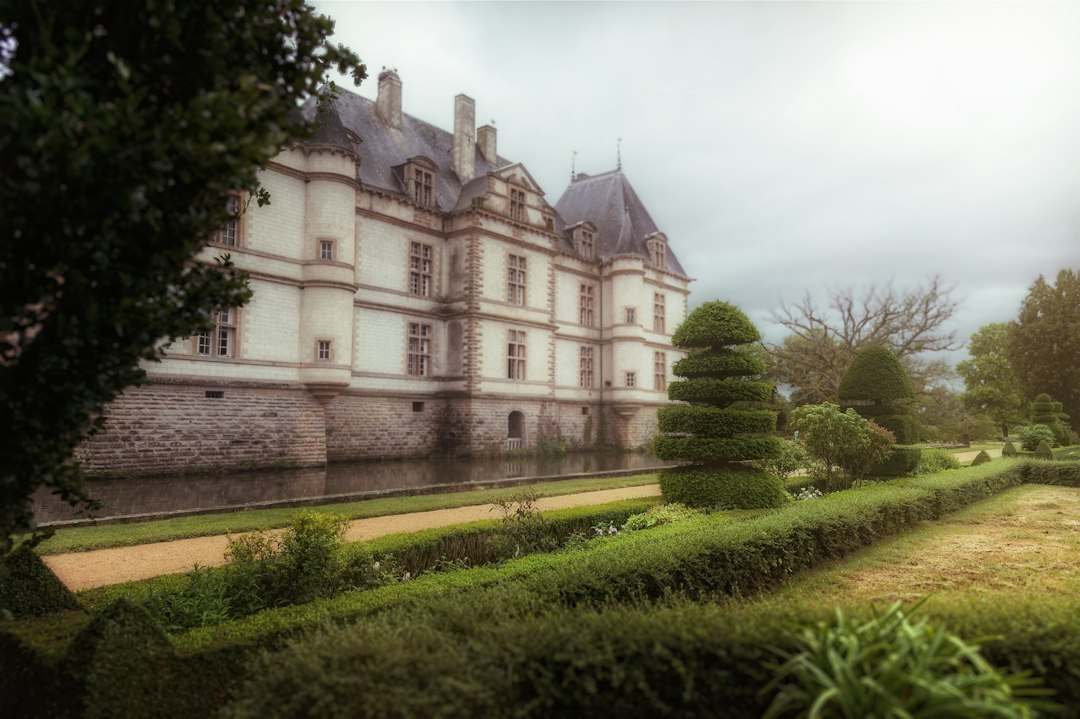
The châteaux within reach of Paris fall into four broad architectural families. Understanding which family a property belongs to tells you more about how your wedding will feel than any brochure photograph, because the architecture dictates the room proportions, the flow between spaces, the acoustics, and the emotional register of the celebration. A Grand Ballroom designed for 220 guests will swallow a 50-person dinner no matter how many candles you light. A hunting lodge built around a courtyard will make 40 guests feel like they have inherited a country estate for the weekend. The table below maps the four families against the variables that most shape your decision.
| Château Family | Architectural Character | Typical Seated Capacity | On-Site Beds | Emotional Register |
|---|---|---|---|---|
| Renaissance moated estate | 16th-century stone, moats fed by natural springs, formal French gardens, Historic Monument classification | 80 to 200 | 15 to 37 | Regal, historically immersive, family-home warmth |
| Neoclassical / neo-Renaissance | Symmetrical facades, grand salons with high ceilings, ornate mouldings, chandelier-lit ballrooms | 110 to 340 | 11 to 55 | Formal, hotel-grade grandeur, designed for scale |
| Hunting lodge / baronial | Stone and brick, equestrian outbuildings, walled grounds, courtyard configurations, pigeonniers | 50 to 160 | 12 to 45 | Rustic warmth, residential intimacy, residential weekend feel |
| Boutique-hotel château | Individually decorated rooms, on-site gastronomic restaurant, English-style parkland, cultural heritage | 80 to 170 | 45 to 55 | Turnkey luxury, literary or cultural depth, full-service model |
These are archetypes, not rigid categories. Some estates blur the lines. Château de Bourron, for instance, is a 16th-century Renaissance château classified as a Historic Monument, but its setting adjoining the Fontainebleau forest gives it the secluded, woodland character of a hunting estate. Château d’Ermenonville carries centuries of literary heritage as the final home of Jean-Jacques Rousseau, but its 55 individually decorated rooms and gastronomic restaurant operate like a boutique hotel. The value of the framework is not in slotting a property into a single box. It is in giving you a vocabulary for the conversation you will have with each estate and with your planner, so that when you walk into a site visit, you already know what questions the architecture is begging you to ask.
6 Factors That Should Shape Your Decision
Six variables drive the gap between the château that looks perfect in photographs and the château that actually delivers your wedding. Understanding each one is the difference between a celebration that feels inevitable, as though the estate was built for your specific day, and one where you are constantly working around the venue rather than with it.
1. Guest Count Fit: The Room Must Feel Full
The most common mistake couples make when evaluating a château near Paris for a wedding is falling for a room that seats 300 when their guest list is 60. A ballroom designed for 220 will swallow a 50-person dinner no matter how carefully you style it. The space reads as empty, the energy dissipates, and no amount of candlelight or floral installations can fully disguise the absence of bodies. Conversely, a reception room that seats 49, like the one at Château de Cormicy in Champagne, will turn away a 70-guest celebration before the conversation begins.
The question to ask is not simply “What is your maximum capacity?” but “Which room will you assign to a dinner of [your guest count], and what is that room’s designed capacity?” A well-matched venue will give you a room built for your scale. Château de Saint-Martin-du-Tertre, with its Grand Ballroom seating 220 and capacity rising to 340 across multiple salons, is magnificent for a 200-guest celebration but will leave a 60-guest dinner feeling under-filled unless the estate assigns you a smaller salon. Château de Motteux, with its lodge village and estate-wide layout configured to the guest count rather than a single grand room, scales more naturally for intimate gatherings. For couples planning a smaller celebration, our guide to 16 small luxury wedding venues for intimate French weddings profiles estates where the reception rooms are designed for 30 to 60 guests, not 200.
2. Accommodation Depth: How Many Guests Actually Stay On Site
Every château near Paris sleeps fewer guests on site than it seats for dinner. This is not a flaw. It is the structural reality of the French château market, and it is the single factor that most shapes whether your celebration feels like a residential weekend or a single evening that guests attend and leave. The ratio that matters is not total capacity but on-site beds as a percentage of your guest list. If you are hosting 80 guests and the château sleeps 37, you have a split: your closest family and wedding party take the on-site suites, and the remaining 43 guests need nearby hotels with coordinated shuttle transport. That shuttle is a line item, typically €3,000 to €5,000 for a coordinated service across a wedding weekend, not an afterthought.
The estates that handle this best have established partner-hotel relationships and can coordinate the overflow seamlessly. Château d’Ermenonville, with 55 on-site rooms, comes closest to closing the gap for mid-sized celebrations. Château de Vallery, sleeping 56 across 28 bedrooms, can house nearly every guest at a 50-person wedding, with additional village accommodation within walking distance for up to 150 more. Château de Méridon, with 35 beds on site and a partner hotel of 42 rooms less than five minutes away, offers a model where the split is managed rather than improvised. The question to ask during your inquiry is not just “How many do you sleep?” but “What is your partner-hotel list, and how far are they from the estate?” Rural Île-de-France has fewer hotels than you might expect an hour from a major city, and the nearest quality accommodation may be 15 to 20 minutes away by car.
3. Exclusive-Use Policies: True Buyout vs Shared Access
Most quality châteaux near Paris operate on an exclusive-use model, meaning you rent the entire property for a defined period, typically Friday afternoon through Sunday midday. But “exclusive use” is not a uniform term. Some estates offer genuine buyout where no one else is on the grounds for the entire weekend. Château de Motteux is built around this model: from Friday afternoon to Sunday midday, no one is on site but the people you invited. Château de Vallery hires exclusively for two to three days with no curfew and full creative freedom over suppliers.
Other estates operate a hybrid model where the château functions as a hotel with guest rooms rented independently outside your event spaces. This is common at boutique-hotel châteaux, where the restaurant and grounds may be open to hotel guests during your celebration. The distinction matters because it affects privacy, noise, and the feeling of inhabiting the estate as your own. A château where strangers are eating lunch on the terrace during your cocktail hour is a different experience from one where the entire property is yours. Ask specifically: “Will any other guests or events be on the property during our celebration? Which spaces are exclusively ours, and which are shared?”
4. Wet-Weather Backup Plans: A Real Room, Not a Marquee Over a Parking Area
Every outdoor ceremony in France needs a rain plan, but the quality of that plan varies enormously. The best châteaux near Paris have an indoor reception room that is as carefully considered as the primary outdoor space, with character, natural light, and a capacity that matches your guest count. The best châteaux have an indoor room that is as carefully considered as the primary outdoor space, with character, natural light, and a capacity that matches your guest count., demonstrating that a rain plan can be a beautiful space in its own right. Some estates offer two grand rooms with high ceilings and large windows, so a dinner moved indoors at the last minute lands in a room with atmosphere, not a functional hall., so a dinner moved indoors at the last minute lands in a room with atmosphere, not a functional hall.
The backup to watch for is the marquee erected over a parking area or courtyard at your expense. Some estates do not have a permanent indoor room large enough for your dinner, and their wet-weather solution is a rented structure that arrives two days before the wedding. That structure costs €3,000 to €8,000 depending on size and finish, and it will not have the stone walls, the exposed beams, or the historic character that made you choose a château in the first place. Ask during the site visit: “Show me the room where dinner would happen if it rains. What is its capacity, and is it included in the hire or billed separately?” If the answer is a tent, ask for the cost and walk into that tent space on the visit, even if it is not yet erected. The concrete slab where it would stand tells you everything.
5. Catering Philosophy: In-House, Recommended List, or Full Dry Hire
French châteaux fall into three catering models, and which one a property uses shapes your food budget, your creative freedom, and your planning complexity more than any other single variable. In-house catering means the estate’s kitchen handles all food and beverage, and no external chef is permitted. This is common at boutique-hotel châteaux like Château d’Ermenonville, where the gastronomic restaurant La Table du Château is on site, and at premium Provençal estates where some estates impose a caterer whose per-head pricing is fixed regardless of your preferences. The advantage is turnkey coordination and a kitchen that knows the space. The constraint is that you are locked into one culinary vision, and if the food does not match your expectations, there is no recourse.
A recommended caterer list gives you a selection of approved providers, typically three to eight, who have worked at the estate before and know the kitchen logistics. This is the middle ground: more choice than in-house, less burden than full dry hire. The limitation is that the list may not include the specific caterer you want, and estates often charge a corkage fee if you bring outside wine. Full dry hire, as practised at Château de Vallery and Château d’Hazeville, means you bring your own caterer, your own wine, and your own bar team. This is the strongest choice for couples with a specific culinary vision or a desire to pour estate-grown wine at dinner, but it means you are building the food and beverage budget from scratch and managing vendor relationships in French, which is where a bilingual planner becomes essential.
One practical note that catches international couples every time: French VAT is not uniform across catering. Catering and food service carry 10% VAT, while alcoholic beverages carry the full 20%. A caterer quoting €100 per head HT for food becomes €110 per head TTC, but the wine on top carries 20%. Ask your planner to present all catering figures TTC so you are budgeting with real numbers, not pre-tax ones. The cumulative VAT across 10 to 15 vendor invoices typically adds €3,000 to €8,000 that couples did not anticipate.
6. Aesthetic Alignment: A Hunting Lodge Is Not a Neoclassical Estate
This is the factor that is hardest to quantify but most shapes the memory. A 17th-century hunting lodge with stone walls, exposed beams, equestrian outbuildings, and a pigeonnier at the centre of a courtyard produces a celebration that feels residential, warm, and slightly wild. Your guests will feel like they have been lent a country house for the weekend. The golden light softening over the limestone, the fragrance of woodsmoke and grass, the sound of gravel underfoot: these details become inseparable from the memory of the day. Château d’Hazeville, with its 1560 foundations, Vexin-park cour carrée, and pigeonnier suites, embodies this register. So does Château de Motteux, with its timber lodges and stone-and-brick stables.
A neoclassical estate produces something entirely different. The symmetry of the facade, the proportions of the Grand Salon, the chandelier light reflected in polished floors: these create a celebration that feels formal, curated, and architecturally significant. Château de Saint-Martin-du-Tertre, a 19th-century neo-Renaissance château listed as a Historic Monument, delivers this register with its magnificent salons and Grand Ballroom. The lavender dreamer who has been pinning Provençal mas stone since the engagement will not find satisfaction in a neoclassical ballroom, no matter how gilded. The romantic minimalist drawn to candlelit intimacy may feel overwhelmed in a salon designed for state occasions. The tradeoff is not quality but character. Both are beautiful. Only one is yours.
Ask yourself which register your vision inhabits. If you picture a long table set for 40 in a stone barn with candles and linen, you are looking for the hunting lodge or rustic Renaissance family. If you picture 150 guests beneath chandeliers in a ballroom with tall windows, you are in neoclassical territory. If you picture a weekend where your guests never leave the estate, where Friday dinner, Saturday celebration, and Sunday brunch unfold without anyone needing a car, you need an estate with sufficient on-site accommodation to make that residential format logistically real. For a broader framework on how the Paris region compares to other French wedding destinations in terms of emotional register, our guide to wedding locations across France’s ten regions maps the same variables nationally.
Questions to Ask During a Site Visit
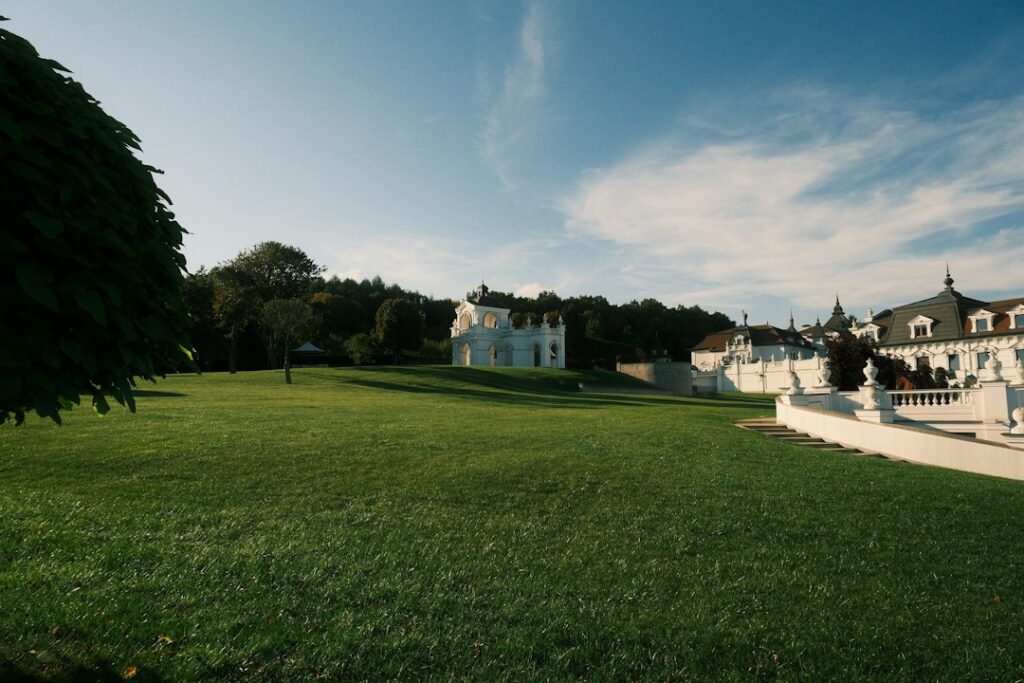
A site visit is not a tour. It is a fact-finding mission, and the questions you ask will determine whether the estate can actually deliver your celebration or merely host it. Print these questions, take notes on the answers, and do not accept vague responses. The estate that gives you specific numbers, specific room names, and specific cost figures during a visit is the one that will give you specific numbers on the final invoice. The estate that waves a hand and says “it will all be fine” is the one where “fine” costs €5,000 more than you budgeted.
Capacity and Room Assignment
- Which specific room will host our dinner, and what is that room’s designed seating capacity (not the estate’s maximum)?
- At our guest count, will the room feel full, or will we need to fill it with additional styling?
- Can we see the room set for a dinner of our approximate size, or see photos of a wedding at a similar guest count?
Accommodation and Overflow
- How many guests can sleep on site, and in what configuration (château rooms, lodges, gîtes)?
- What is your partner-hotel list, and how far is each hotel from the estate?
- Do you coordinate shuttle transport between the château and overflow lodging, or is that our responsibility?
- Is breakfast included for on-site guests, and is it an additional charge?
Exclusive Use and Access
- Will any other guests, hotel residents, or events be on the property during our celebration?
- What time does our exclusive use begin and end? Is there a charge for early arrival or late departure?
- Which spaces are exclusively ours, and which are shared or off-limits?
Wet-Weather Backup
- Show us the indoor room where dinner would happen if it rains. What is its capacity and character?
- Is that room included in the hire fee, or is it an additional charge?
- If the backup is a marquee or tent, what is the cost, and where on the grounds would it be erected?
Catering and Pricing
- Is catering in-house, from a recommended list, or full dry hire?
- If in-house or from a list, can we taste the menu before committing?
- Are your quotes presented HT (before VAT) or TTC (VAT included)? What VAT rates apply to venue hire versus catering versus beverages?
- Is there a corkage fee if we bring our own wine?
Noise, Curfew, and Logistics
- What is the music curfew? Is it negotiable, and is there a fee for an extension?
- Is amplified music permitted outdoors, and until what hour?
- Is there mandatory security personnel, and at what cost?
- What is included in the hire (furniture, WiFi, parking, linens) and what is extra?
Red Flags for Destination Wedding Couples
Not every château near Paris is set up for international destination weddings. Some are beautiful estates that function beautifully for local French couples who live 45 minutes away, arrive the morning of the wedding, and leave that night. For an international couple flying in 40 or 80 guests from multiple countries, the same estate can become a logistical maze. The red flags below are the signals that a venue is not equipped to support a destination celebration, regardless of how stunning the photographs look.
No English-Speaking Point of Contact
If the estate cannot assign you a single English-speaking coordinator who responds to emails within 48 hours, you will spend the next nine months managing a venue relationship in French through a translation app. This is not a sustainable model for planning a wedding from abroad. The best estates for destination weddings either have an English-speaking events manager on staff or work exclusively with bilingual wedding planners who serve as your interface. If the estate’s response to “Do you have someone who can work with us in English?” is hesitation, that hesitation will become your daily reality.
Quotes Presented Only HT, With No TTC Conversion
A venue that presents every figure HT (hors taxes, before VAT) and cannot or will not give you the TTC (toutes taxes comprises, VAT included) equivalent is either inexperienced with international couples or deliberately opaque about the final cost. The HT-to-TTC difference is not trivial: venue hire at €15,000 HT becomes €18,000 TTC at 20% VAT. Catering at €12,000 HT becomes €13,200 TTC at 10% VAT. Across your full vendor stack, the cumulative VAT adds €3,000 to €8,000. A venue that treats this as a minor footnote rather than a figure you need from the first conversation is not set up for couples who are budgeting from abroad and cannot absorb a surprise of that magnitude.
No Partner-Hotel List and No Shuttle Plan
If the estate sleeps 20 and your guest list is 80, the venue’s answer to “Where do the other 60 stay?” should not be “There are hotels in the area.” It should be a named list of partner hotels with distances, rates, and a shuttle coordination plan. Rural Île-de-France has fewer hotels than you might expect. An estate that has not thought through the overflow accommodation question for international guests is one that will leave you solving it yourself, in a region where you do not know the roads, the hotel quality, or the shuttle companies.
No Recommended Planner List
Estates experienced with destination weddings maintain a list of recommended planners who have worked on the property before, know the room logistics, and speak English. Château de Vallery, for instance, publishes a list of recommended planners and caterers experienced with international weddings. If a château has no planner list and tells you “any planner will do,” it means the estate has not been used for destination weddings often enough to have developed those relationships. That inexperience will surface in ways you cannot foresee: a planner who does not know the kitchen layout, a caterer who has never loaded through the service entrance, a production team surprised by the electrical capacity.
Vague or Nonexistent Wet-Weather Plan
If the estate’s answer to “What happens if it rains?” is “We will figure it out” or “We have a tent we can put up,” without showing you the space, the capacity, or the cost, you are looking at a venue that has not stress-tested its rain plan. June and September, the most popular months for Paris-region weddings, are also among the most weather-variable. A venue that cannot show you exactly where 80 guests would eat dinner indoors, in a room with character, is a venue that will hand you a €6,000 marquee invoice two weeks before the wedding.
No Clear Noise Policy or Curfew
French noise regulations are real and enforced. Most châteaux near Paris have curfews ranging from midnight to 3 a.m., and some prohibit outdoor amplified music entirely after a certain hour. A venue that cannot tell you its curfew and outdoor music policy on the first call is one where you will discover the rules on the wedding night, when the DJ is told to shut down at 11:30. Château de Vallery, with no curfew and music permitted until dawn, and Château d’Hazeville, with no music time limit, are rare exceptions. Know the policy before you book, not after.
The Civil Ceremony Reality and the Role of a Wedding Planner
Two French realities sit underneath every château wedding near Paris, and both shape your planning timeline in ways that international couples routinely underestimate. The first is the civil ceremony requirement. Under French law, as detailed on the official Service Public government portal, the only legally recognised marriage in France is a civil ceremony performed by a mayor or deputy at the mairie (town hall). At least one partner must have established residence in the commune for a minimum of one month of continuous living before the publication of the bans, with proof of address required. If neither partner lives in France, a civil marriage at a French mairie is generally not possible. The workaround that the vast majority of international couples choose is to complete the legal civil marriage in their home country and hold a symbolic or religious ceremony at the château. This removes the residency requirement entirely and gives you complete freedom to choose any venue, any celebrant, and any ceremony format without administrative constraints.
The second reality is the role of a bilingual wedding planner. For a domestic French wedding, a planner is a convenience. For a destination wedding, a planner is structural infrastructure. The planner navigates vendor contracts written in French, confirms whether every quote is HT or TTC, coordinates guest transfers from CDG or Gare du Nord, manages the accommodation split between on-site suites and partner hotels, and serves as your single point of contact for a vendor ecosystem that operates in a different language and business culture. Several châteaux near Paris, including Château de Vallery, publish recommended-planner lists specifically because the estate team knows that an international couple without a bilingual planner will struggle to deliver the celebration the venue is capable of hosting. If you are weighing whether the planner fee is justified, consider that the cost of a planner is typically less than the cost of the VAT surprises, accommodation gaps, and logistical errors that a planner prevents.
The Multi-Day Rhythm of a French Château Wedding
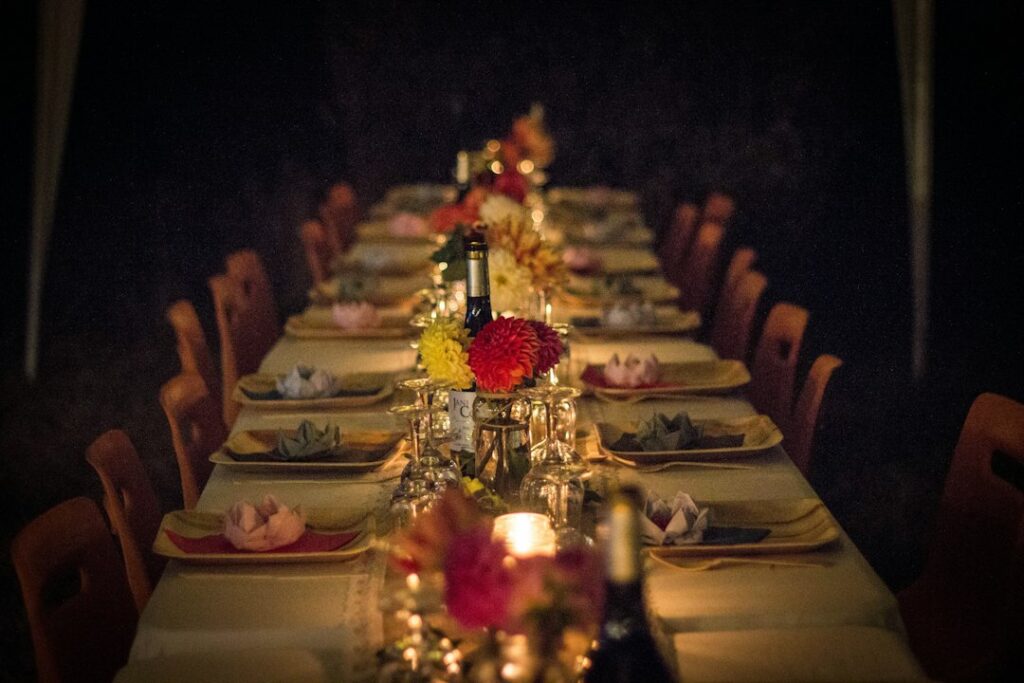
A château wedding near Paris is not a single evening. It is a weekend, and the estates within 90 minutes of the capital are built for that format precisely because the short transfer makes it logistically feasible. The rhythm follows a pattern that has become the signature of the French destination wedding: Friday welcome dinner, Saturday ceremony and reception, Sunday brunch and departure. Guests arrive Friday afternoon, settle into their on-site rooms or partner hotels, and gather for a relaxed evening that sets the tone of a shared experience rather than a performance. The Saturday is the centrepiece: ceremony in the gardens or a chapel, cocktails on the terrace, dinner in the main reception room or outdoors under a canopy, dancing until the curfew or beyond. Sunday morning is leisurely and unstructured, with guests drifting between the breakfast table, the grounds, and goodbyes.
The estates that deliver this format best are the ones designed around it. Château de Motteux is hired exclusively from Friday afternoon to Sunday midday, with its lodge village creating a shared residential experience where guests stay together rather than scattering to hotels. Château de Vallery’s two- to three-day exclusive hire with no curfew lets the celebration run from Friday through Sunday without the artificial compression of a single-night event. Château de Bourron, with its 15 bedrooms and family-home character, lends itself to a weekend that feels like a house party rather than a scheduled production. The key is resisting the urge to over-program. Friday should feel like arriving at a friend’s country house: drinks, a simple dinner, early night. Sunday should be leisurely and unstructured. The wedding itself is the centrepiece. Everything else should feel like the scaffolding of a weekend among friends.
If you are also considering a Paris city venue alongside your château, our guide to 12 places to get married in Paris by venue type covers palace hotels, private mansions, museum gardens, and restaurant buyouts, so you can evaluate whether a city celebration or a château weekend better matches your vision.
Begin Shortlisting Your Château
Choosing a château near Paris for a wedding is not a question of finding the most beautiful estate. The region is full of them. It is a question of finding the estate whose architectural character, capacity range, accommodation depth, catering philosophy, and emotional register align with your guest count, your budget, and the celebration you actually want to host. The six-factor framework above is the lens that turns a folder of beautiful brochures into a shortlist of two or three estates that are genuinely right for you. Walk into each site visit with the questions printed, evaluate each property against the same criteria, and let the answers, not the photographs, drive your decision.
Your French love story is waiting to unfold. Contact Myfrancewedding to request dates, a tailored cost breakdown that distinguishes HT from TTC, and a curated shortlist of châteaux matched to your guest count, your budget, and the emotional tone you want your celebration to carry. We help couples navigate the French venue landscape from the first inquiry to the final invoice, ensuring that VAT structures, accommodation gaps, transport logistics, catering models, and weather contingencies are accounted for before you commit to a location.
Frequently Asked Questions
How do I know if a château near Paris is the right size for my guest count?
Ask which specific room the estate will assign to your dinner and what that room’s designed seating capacity is, not the estate’s maximum. A ballroom built for 220 will feel empty at 60 guests, while a salon designed for 49 will turn away a 70-guest celebration. The room should fit your guest count, not the other way around.
What is the difference between HT and TTC in French château venue pricing?
HT (hors taxes) means the price is before VAT. TTC (toutes taxes comprises) means VAT is included. Venue hire and equipment rental carry 20% VAT, while catering and food service carry 10%. A venue quoting 15,000 euros HT becomes 18,000 euros TTC. Always confirm which applies before budgeting, as the cumulative VAT across all vendors typically adds 3,000 to 8,000 euros.
Can we legally marry at a château near Paris as non-residents?
French law requires at least one partner to reside in the commune where the civil ceremony takes place for a minimum of one month of continuous living. Most international couples complete the legal civil marriage in their home country and hold a symbolic ceremony at the château, which removes the residency requirement and gives complete freedom to choose any venue and celebrant.
Do we need a wedding planner for a château wedding near Paris?
For international couples, a bilingual planner is strongly recommended. The planner navigates vendor contracts in French, confirms whether quotes are HT or TTC, coordinates guest transfers from the airport, manages the accommodation split between on-site suites and partner hotels, and serves as your single point of contact for a vendor ecosystem operating in a different language.
What should a wet-weather backup plan look like at a French château?
The best châteaux have a permanent indoor reception room with character, natural light, and capacity matching your guest count, included in the hire fee. The backup to watch for is a rented marquee erected over a parking area at your expense, typically costing 3,000 to 8,000 euros, which will not have the stone walls or historic character that made you choose a château.