Wedding Château South of France: 8 Venues Compared
-
myfrancewedding.com
- ProvenceWedding VenuesWeddings
- 18

A wedding château south of France is the dream that pulls most international couples into French wedding planning: honey-stone walls against Mediterranean light, cypress-lined drives, long dinners under plane trees. The south is not one place, though. It is three distinct wedding landscapes, each with its own emotional register, cost structure, and logistical personality. Provence speaks in warm, vivid tones: terracotta, saffron, deep purple lavender against an azure sky. Languedoc is wilder and less polished, where garrigue-covered hills meet working vineyards and the Mediterranean feels less like a postcard and more like a frontier. The Côte d’Azur is pure glamour, medieval towers rising from turquoise water, the coastline that has drawn artists and aristocrats for a century. Choosing among them is where most couples stall, because the pretty photographs hide the practical tradeoffs that determine whether your celebration feels effortless or exhausting.
The couples who end up with the right venue are the ones who pair the romantic narrative with actionable logistics from the start: which airport your guests fly into, how far the drive is, whether the estate has air conditioning in July, where the overflow guests sleep, and what the VAT does to the quoted price. This guide does both. For each château, you get the scene that makes it special and the numbers that make it real. If you are still narrowing your search across all of France, our guide to wedding locations across ten French regions places the south in context alongside the Loire Valley, Bordeaux, Burgundy, and the Alps.
Why Choose a Southern French Château
The south of France offers something no other French region can replicate: a wedding landscape where Mediterranean light, centuries-old stone architecture, and a wine culture rooted in the land converge. The Loire Valley delivers château grandeur, Burgundy delivers gastronomy, and Paris delivers cinematic intimacy, but none of them give you an outdoor ceremony under olive trees with the scent of wild herbs in the air and a dinner that stretches past midnight because nobody wants to leave the terrace.
Three considerations should shape your decision before you look at a single venue photo. First, which airport your guests will use. The south is served by Marseille Provence (MRS), Nice Côte d’Azur (NCE), and Montpellier Méditerranée (MPL), plus smaller regional airports at Béziers, Nîmes, and Perpignan. Driving distances between these airports and rural châteaux can range from 25 minutes to over 2.5 hours, and that gap shapes your guests’ experience more than any decorative detail. Second, when you are getting married. July and August in the south mean 35 to 40°C heat, peak tourist crowds, and the highest venue rates. Many historic châteaux were built long before air conditioning and their thick stone walls stay cool during the day, but reception rooms without climate control become ovens during a summer dinner. Third, vendor availability in rural areas. A château in the deep Languedoc countryside may offer stunning scenery, but if the nearest quality florist is 90 minutes away, travel fees and limited availability will constrain your design choices and inflate your budget.
The tradeoff framework is straightforward. Provence delivers the most visually distinctive wedding landscape in France but at the highest venue cost outside Paris and the Riviera. Languedoc offers comparable Mediterranean beauty at 30 to 50% below Provençal pricing, with wilder, less curated scenery and fewer international crowds. The Côte d’Azur provides unmatched glamour and the Mediterranean as a direct backdrop, but you pay a 20 to 40% premium on every vendor line and most venues lack on-site accommodation. For a deeper comparison of specific cost structures, our Château de Sannes wedding cost breakdown shows how a Provençal estate budget comes together line by line.
8 Châteaux Worth Considering Across the South
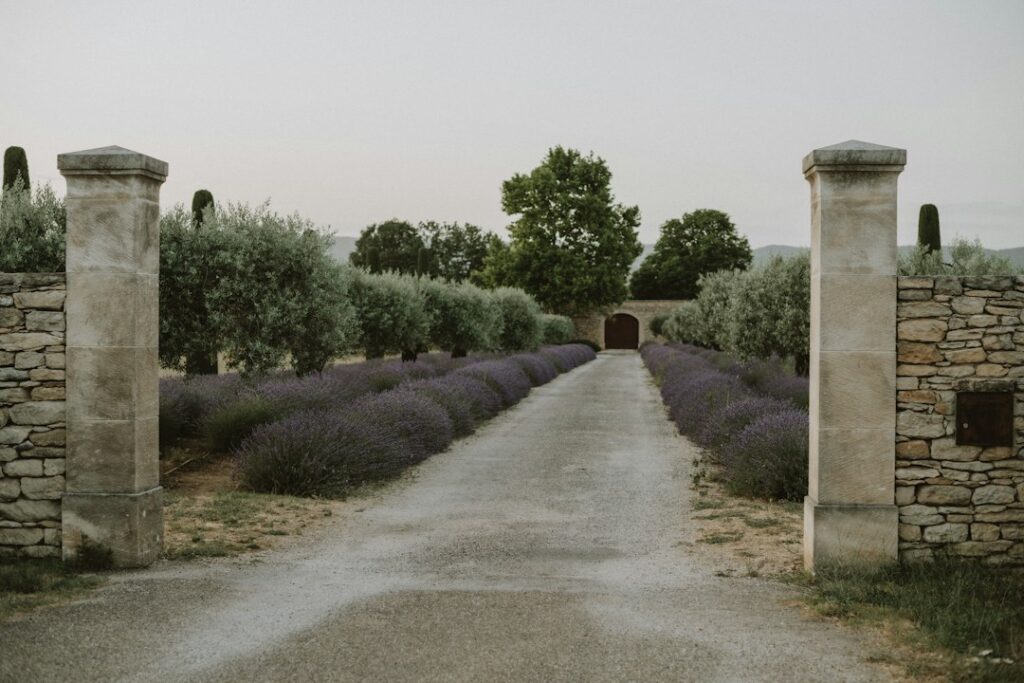
The table below compares eight châteaus across Provence, Languedoc, and the Côte d’Azur, spanning venue hire from €7,500 to €55,000 and capacities from 80 to 450 seated guests. Each venue gets a dedicated section below with the romantic narrative, the practical logistics, and an honest assessment of what to watch for. Prices are shown as published by the venues or listed aggregators. French quotes are frequently presented HT (hors taxes, before VAT), so always confirm whether a figure is HT or TTC (toutes taxes comprises, VAT included) before budgeting. Venue hire and equipment carry 20% VAT, while catering and food service carry 10%.
| Venue | Region | Venue Hire From | Sleeps On-Site | Max Seated | Nearest Airport (Drive) | Catering Model |
|---|---|---|---|---|---|---|
| Château de Sannes | Provence (Luberon) | ~€30,000 TTC | 31 (15 rooms) | 220 | Marseille (50 min) | Imposed caterer (Roland Paix) |
| Château de Fonscolombe | Provence (Aix area) | ~€34,000 | 110 (50 rooms) | 140 | Marseille (1 hour) | In-house Michelin-star chef |
| Château de Tourreau | Provence (Vaucluse) | ~€55,000 | 29 (16 rooms) | 150 | Marseille (~1 hour) | External caterers |
| Château de la Napoule | Côte d’Azur | €13,800 TTC | 0 (no rooms) | 450 | Nice (30 min) | Approved vendor list |
| Château l’Hospitalet | Languedoc (Narbonne) | ~€15,000 | 82 (41 rooms) | 300 | Montpellier (~1h15) | In-house (Michelin Green Star) |
| Château de Pondres | Languedoc (Gard) | €7,500 | 55 (24 rooms) | 300 | Montpellier (35 min) | In-house chef |
| Château Rieutort | Languedoc (Hérault) | ~€10,495 | 60 (château + gîtes) | 300 | Montpellier (~45 min) | External caterers |
| Château de Sainte-Cécile | Languedoc (Hérault) | €10,000 | 16 | 200 | Montpellier (30 min) | External caterers |
Château de Sannes (Provence, Luberon)
Picture a 17th-century Provençal estate where honey-hued stone meets rows of lavender, century-old magnolias cast shade over ceremony guests, and vineyards stretch toward the Luberon foothills. Château de Sannes sits on 73 hectares in the Vaucluse, with a restored Bergerie (traditional sheepfold) housing six bedrooms and a heated outdoor pool, a guest house with two additional rooms, and a movable Orangerie in the olive groves that seats up to 250 for dinner. The estate sleeps 31 across 15 bedrooms and can welcome 220 guests for a seated meal. Peak-season venue hire (June through mid-September) runs from approximately €40,000 TTC for a weekend exclusive use, with shoulder-season rates (May, mid-September to mid-October) dropping to around €30,000 TTC.
Logistics: Marseille Provence Airport is a 50-minute drive. Nice Côte d’Azur Airport is 2.5 hours, which makes Marseille the unambiguous choice for flying guests in. The château’s seven double rooms in the main building are billed separately by the night, on top of the weekend hire that includes the Bergerie and guest house bedrooms. Most guests for a wedding over 31 people will stay in nearby Pertuis (15 minutes), Lourmarin (20 minutes), or Aix-en-Provence (30 minutes), requiring shuttle transport that typically costs €3,000 to €5,000 for the weekend. Catering is handled by the estate’s imposed caterer, Roland Paix, at approximately €140 per head for 100 or more guests, with wine and bar billed separately.
What to watch for: the exclusive buyout model means you pay for the full property regardless of whether you use every space. The château does not have air conditioning in its historic reception rooms, which is a consideration for July and August weddings when Provençal temperatures routinely exceed 35°C. The Mistral wind, which gusts through the Rhône Valley from spring to early summer, can disrupt outdoor ceremonies. A full 80-guest wedding at Sannes typically runs €112,000 to €156,000 all-in. For couples seeking small luxury wedding venues for intimate French weddings, the scale here may be more than your guest count requires.
Château de Fonscolombe (Provence, Aix-en-Provence Area)
An 18th-century Relais & Châteaux property designed as a grand family home, set on 12 hectares of classified parkland near Le Puy-Sainte-Réparade, a short drive from Aix-en-Provence. Fonscolombe’s defining advantage is accommodation scale: 50 bedrooms and suites sleep up to 110 guests on-site, which is exceptional for Provence and eliminates the accommodation gap that defines most Provençal estate weddings. The on-site restaurant, Le Temps Suspendu, seats 50; the South Park hosts outdoor dinners for up to 200. A chapel is available for ceremonies. Venue hire starts from approximately €34,000 for peak-season exclusive use with a minimum two-night stay, including accommodation and daily gourmet breakfast for all overnight guests.
Logistics: Marseille Provence Airport is about 1 hour by car. Nice is roughly 2 hours. The property is open from early April to early January, which extends the viable wedding season beyond the Provence norm. Catering is in-house, with capacity up to 140 seated indoors or 200 using an external caterer., with capacity up to 140 seated indoors or 200 using an external caterer. Beyond 60 covers in the main restaurant, equipment hire for outdoor dining is at the couple’s expense, and a weather backup plan must be arranged and funded separately.
What to watch for: the pricing from €34,000 reflects a per-night privatisation model starting at €17,000 per night, so a full weekend lands higher. The in-house catering means you cannot bring in an outside chef for the main dinner without a minimum spend. The weather backup for outdoor receptions over 60 guests is the couple’s financial responsibility, which can add €2,000 to €8,000 depending on marquee requirements. The property’s 50 bedrooms are air-conditioned, which is a significant advantage for July and August weddings that many Provençal estates cannot offer.
Château de Tourreau (Provence, Vaucluse)
A 17th-century estate in Sarrians, at the heart of the Vaucluse, Tourreau is the most expensive venue on this list and one of the most sought-after in Provence. The property sleeps 29 guests across 16 en-suite bedrooms and seats up to 150 for dinner. Peak-season venue hire starts from €55,000 for a minimum three-night exclusive use, which includes venue privatisation, accommodation for resident guests, continental breakfasts, a wedding lunch takeaway buffet, technical supervision on the wedding night, and a DJ sound system with sound engineer.
Logistics: Marseille Provence Airport is approximately 1 hour by car. Nice is roughly 2.5 hours. External caterers are permitted, which gives couples creative freedom that imposed-caterer venues like Sannes do not allow. The three-night minimum means your celebration naturally extends across a long weekend, which suits couples planning a multi-day experience but increases the total investment.
What to watch for: at €55,000 for venue hire alone before catering, florals, production, or VAT adjustments, Tourreau sits at the premium ceiling of the Provençal market. With only 29 on-site beds, most guests for a 150-person wedding will need off-site accommodation and shuttle transport, which adds €3,000 to €6,000. The property is frequently booked 18 to 24 months ahead for peak dates. If your budget or guest count does not require this level of investment, several Languedoc estates below offer comparable architecture and outdoor capacity at a fraction of the venue hire.
Château de la Napoule (Côte d’Azur)
Château de la Napoule (Côte d’Azur)
A restored 14th-century fortress perched between Cannes and Mandelieu-la-Napoule, where ramparts serve as the seawall and seafront terraces hold 150 guests for sunset cocktails with the bay of Cannes and the Lérins Islands as backdrop. The Cour d’Honneur, a 550m² crenellated courtyard, seats up to 450 for dinner, the largest single seated capacity on the coast. The Lovers’ Garden hosts ceremonies for 200. This is the venue for couples whose vision is pure Riviera glamour, and no other southern French château delivers the Mediterranean as a direct backdrop rather than a distant view.
Logistics: Nice Côte d’Azur Airport is a 25 to 30 minute drive via the A8 motorway, making this the most accessible venue on the list for international guests. The château has no on-site accommodation. Guests stay at hotels in Mandelieu-la-Napoule (€100 to €200 per night) or Cannes (€150 to €400+ per night), 14 minutes along the coast. Shuttle transport between the château and hotels is a necessary line item, typically €3,000 to €6,000. Evening venue hire starts at €13,800 TTC (Monday through Thursday); full-day hire costs €25,200 TTC and is required for Fridays, Saturdays, and groups over 200. From 2027, Friday and Saturday bookings will only be available as full-day hire. Our Château de la Napoule wedding cost guide breaks down the full budget in detail.
What to watch for: the Cannes Film Festival in mid-May turns every hotel room in Mandelieu and Cannes into a premium commodity at several times the usual rate, which can add €10,000 to €20,000 to your accommodation block. The château operates as a dry-hire venue managed by the La Napoule Art Foundation, meaning everything from catering to chairs to lighting must come from the foundation’s approved vendor lists at Riviera pricing. Catering on the Côte d’Azur runs €100 to €160 per person for a seated four-course dinner, with wine and bar billed on top. A fully produced 120-guest wedding here typically runs €126,000 to €236,000 all-in. The Monument Historique classification means decoration restrictions: no permanent installations and no open flames in certain areas.
Château l’Hospitalet (Languedoc, Narbonne)
A five-star Gérard Bertrand wine resort nestled within the Natural Park of La Clape, near Narbonne, surrounded by 1,000 hectares of biodynamic vineyards with views over the Mediterranean. The estate offers 41 rooms and suites (including 28 at the recently renovated Villa Soleilla), sleeping up to 82 guests. Indoor dining capacity reaches 120, with outdoor or marquee receptions for up to 300. Between May and September, a private beach club, l’Hospitalet Beach, hosts weddings for up to 150 seated or 300 standing, with your feet in the sand. The in-house kitchen holds a Michelin Green Star, and wine comes from the estate’s 16 Gérard Bertrand properties across Occitanie.
Logistics: Montpellier Méditerranée Airport is approximately 1 hour and 15 minutes by car. Béziers Airport is closer, around 45 minutes, but has fewer international connections. Narbonne TGV station is a 20-minute drive, with direct trains from Paris in roughly 4.5 hours. The resort operates on an all-inclusive package model rather than dry-hire venue rental: you cannot bring in external caterers, and the estate requires a minimum number of room nights for exclusive reservation. Pricing starts from approximately €15,000 for peak-season wedding packages.
What to watch for: the all-inclusive model means less creative control over catering and design than a dry-hire venue offers. The resort’s commercial operation means that for smaller weddings (under 40 guests), the per-head economics may not work as well as at a smaller Languedoc estate. The property does have air conditioning, which is a meaningful advantage for July and August. The setting is less architecturally dramatic than a Provençal château or a Riviera fortress: this is a modern wine resort, not a centuries-old castle, so the aesthetic leans contemporary luxury rather than historic grandeur. For couples who prioritize total privacy and exclusive venue use, the resort’s scale means your celebration can feel intimate even at higher guest counts.
Château de Pondres (Languedoc, Gard)
Eight centuries of history along the Aygalade river, between Montpellier and Nîmes, set on 15 hectares of parkland with French gardens, fountains, and a 500m² Cour d’Honneur. A sculpted stone fireplace anchors the Salle des États Généraux, a vaulted former armoury doubles as a dance floor, and a restored chapel hosts intimate ceremonies. The château operates as a 4-star hotel with 24 bedrooms sleeping 55, an in-house chef, swimming pool, spa, and gym. Venue hire starts at €7,500 for peak-season exclusive use, seating up to 200 for a banquet or 300 for a cocktail reception.
Logistics: Montpellier Méditerranée Airport is 35 minutes by car. Nîmes Airport is 30 minutes. Marseille is 90 minutes. This is one of the most accessible venues on the list, with two regional airports within 35 minutes and TGV stations at Nîmes and Montpellier (both 30 minutes). The in-house catering team offers regional menus built around local products: Camargue beef, olive oil from Villevieille, and seafood from the ports of Sète and Le Grau-du-Roi. Dancing is permitted until late, and a Sunday brunch is available to close the weekend.
What to watch for: at €7,500 for venue hire, Pondres is the most affordable château on this list, but that figure is venue hire only. Catering, wine, floral design, production, and coordination are all additional. With 55 on-site beds, weddings exceeding that count require overflow accommodation in nearby Sommières (3km) or Montpellier. The property’s 4-star hotel operation means the in-house team handles catering and service, which reduces planning complexity but limits the ability to bring in your own chef. The chapel is available for ceremonies, but for non-Catholic or secular ceremonies, the outdoor Cour d’Honneur or gardens are the primary options.
Château Rieutort (Languedoc, Hérault)
A wine estate built in 1755 and restored in Neo-Baroque style, standing on the banks of the Hérault river within 30 hectares of vineyard. The château hosts one wedding at a time, with capacity for up to 300 guests and accommodation for 60 across the château and seven gîtes (self-catering cottages). A 2.5-hectare park of mature plane trees, formal gardens, an orangery, two outdoor pools, and a spa with jacuzzi, sauna, and massage rooms sit within the grounds. The estate’s working winery means estate-grown Languedoc wines can be poured at dinner, which is a meaningful cost advantage over buying wine from outside suppliers.
Logistics: Montpellier Méditerranée Airport is approximately 45 minutes by car. Béziers Airport is roughly 40 minutes. The venue permits external caterers, giving couples full creative freedom over the menu. Pricing for 2026 starts at €10,495 for a two-night stay in shoulder season (May/October or June/September), rising to €17,000 for two nights in early July and €22,500 for three nights in mid-July to late August. A seven-night stay in peak season runs €30,000. The pricing structure is tiered by duration and season, which rewards couples with flexible dates.
What to watch for: the gîte accommodation model means your guests stay in self-catering cottages rather than hotel rooms, which creates a communal, family-gathering atmosphere but requires that someone manages cleaning, linen, and daily logistics across seven separate buildings. The venue is in a rural area with limited nearby hotel capacity for overflow guests, so if your guest count exceeds 60, you will need to arrange accommodation in nearby towns and shuttle transport. The spa and pool facilities are a genuine differentiator for a multi-day celebration, but they also mean the venue attracts non-wedding guests outside exclusive-use periods, so confirm whether your booking includes total privacy.
Château de Sainte-Cécile (Languedoc, Hérault)
An 18th-century Italian-Renaissance folly on the old Via Domitia, 30 minutes from Montpellier in the Hérault. A Florentine facade, Corinthian columns, a terrace guarded by Venetian lions, and balustrade staircases give this château a theatrical, almost operatic quality that sets it apart from the rustic stone of most Languedoc estates. The venue seats up to 200 guests for exclusive venue hire starting at €10,000 in peak season (June to September). On-site accommodation is limited to 16 guests, which means this venue functions primarily as an event space rather than a residential estate.
Logistics: Montpellier Méditerranée Airport is 30 minutes by car, making this the closest venue to a major airport on the list. External caterers are permitted, and the local Languedoc catering market offers strong value at €80 to €150 per person for a seated dinner. Montpellier itself has a wide range of hotels for overflow guests, from mid-range properties to boutique options in the historic center, all within a 30-minute shuttle of the château.
What to watch for: with only 16 on-site beds, this venue is fundamentally a dry-hire event space. Nearly all your guests will need hotel accommodation in Montpellier, which adds a shuttle transport line item of €2,000 to €4,000 for the weekend. The Italian-Renaissance folly architecture is distinctive but specific: couples seeking the weathered Provençal mas aesthetic or the medieval fortress drama of the Riviera will find this a different visual register entirely. For couples whose romantic vision leans toward French countryside charm, the theatrical grandeur here may not be the right fit.
Provence, Languedoc, or Côte d’Azur: Matching Region to Vision
The three southern regions share Mediterranean light and warm growing seasons, but they differ fundamentally in emotional register, cost structure, and the logistics that shape a destination wedding. The mistake couples make most often is treating the south as interchangeable: assuming a Provençal château and a Languedoc estate offer equivalent experiences at different price points. They do not. Each region delivers a specific version of a southern French wedding, and the right choice depends on who you are as a couple, not just what you can afford.
Provence: The Lavender Dreamer
Provence speaks in warm, vivid tones: terracotta, saffron, deep purple lavender against an azure sky. This is the region for couples who have been imagining this landscape since before the engagement, whose vision is honey-stone mas architecture, olive groves, and long tables set for dinner beneath plane trees. Provence rewards that vision with the most visually distinctive wedding landscape in France, but it also demands the highest venue budgets outside of Paris and the Riviera. Peak-season venue hire in the Luberon routinely starts at €30,000 to €55,000 for a weekend exclusive use, and the best estates book 18 to 24 months ahead.
The primary airport is Marseille Provence (MRS), 30 minutes from Aix-en-Provence and 1 hour to 1.5 hours to the Luberon. Nice (NCE) is 2 to 2.5 hours east, which makes it impractical for most Provençal venues unless your guests are combining the wedding with a Riviera extension. The Mistral wind, which gusts through the Rhône Valley from spring to early summer, can reach 80 km/h and will topple floral installations, scatter place cards, and make outdoor ceremonies uncomfortable. Ask your planner about wind dates for your specific month. July and August bring extreme heat (35 to 40°C is common) and peak tourist crowds that clog the regional roads. May, June, and September are the strongest months: warm enough for outdoor dinners, with thinner crowds and lower vendor minimums.
Languedoc: The Wild Mediterranean
Languedoc is the south of France before the international crowds arrived. The landscape is wilder and less manicured than Provence: garrigue-covered hills, working vineyards, medieval villages perched above river valleys, and a Mediterranean coast that still feels like a frontier rather than a resort. The emotional register is rustic authenticity rather than curated beauty. This is the region for couples who want stone walls, wild meadows, a restored barn or bergerie, and a celebration that feels like a week-long family gathering rather than a single orchestrated evening.
The cost advantage is substantial. Venue hire in Languedoc runs 30 to 50% below Provence for comparable properties. Weekend venue hire typically ranges from €4,000 to €15,000, catering averages €80 to €150 per person, and a full destination wedding for 100 guests runs €30,000 to €80,000 all-in. The nearest airport is Montpellier Méditerranée (MPL), with Béziers (BZR) and Nîmes as smaller alternatives. Montpellier has direct flights from London, Paris, and several European cities, but fewer long-haul connections than Marseille or Nice, which means US couples typically connect through Paris CDG. The Languedoc wine advantage is real and measurable: wines from the Languedoc-Roussillon appellation are among the best-value in France, and venues with working vineyards (like Château Rieutort and Château l’Hospitalet) let you pour estate-grown wine at a fraction of what Provençal or Riviera venues charge for outside selections.
What to watch for: the region is rural, and vendor infrastructure is thinner than in Provence. Quality florists, photographers, and production companies are concentrated in Montpellier and Narbonne, so venues in the deeper countryside may incur vendor travel fees of €500 to €1,500. July and August are hot (35°C plus) and the tourist pressure, while less than Provence, still fills coastal roads. September and October are ideal: the vineyards turn gold, the heat breaks, and the Mediterranean is still warm enough for a beach welcome dinner.
Côte d’Azur: The Glamour Seeker
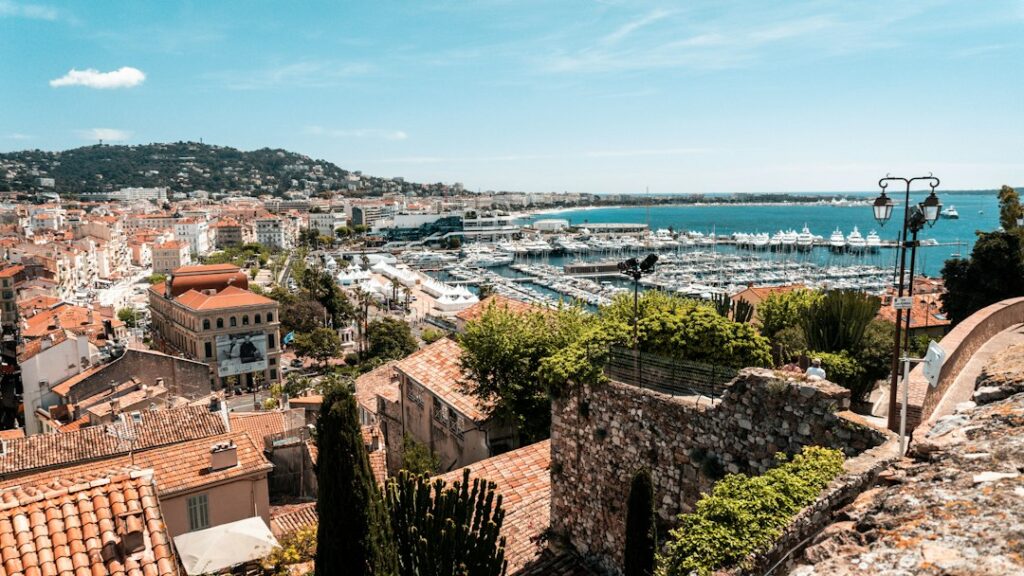
The Côte d’Azur does not do understated. This is a coast that speaks in vivid, saturated tones: Mediterranean blue against honeyed stone, cypress trees framing terraces that drop to the sea, golden hour light that photographers chase from Nice to Saint-Tropez. The glamour seeker who has been imagining a Riviera wedding, the one whose Pinterest board is a wall of sea-terrace dinners and medieval towers against blue sky, will find no other French region that delivers this specific vision as completely.
The trade-off for this level of visual impact is cost. The Côte d’Azur carries a 20 to 40% premium over comparable services in other French regions. Catering runs €100 to €160 per person for a seated dinner, with gastronomic menus reaching €180 to €300. Photography and videography sit 20 to 40% above other regions. The primary airport is Nice Côte d’Azur (NCE), 30 minutes from Château de la Napoule and well-connected with direct flights from New York, London, and major European cities. This is the most accessible southern airport for international guests, but the hotels near Riviera venues are among the most expensive in France, with Cannes 4- and 5-star properties running €150 to €400+ per night in peak season.
What to watch for: July and August bring extreme heat (35 to 40°C), peak tourist crowds, and the highest vendor rates. The Cannes Film Festival in mid-May turns hotel pricing upside down. Most Riviera wedding venues are dry-hire spaces without on-site accommodation, which means your budget must absorb hotel blocks and shuttle transport as structural costs, not optional add-ons. June and September are the strongest months: reliable outdoor evenings, warm temperatures, and slightly lower tourist pressure. For couples who prioritize having guests stay on-site at the venue itself, the Riviera’s dry-hire model is a poor structural fit.
Logistics That Shape a Southern Château Wedding
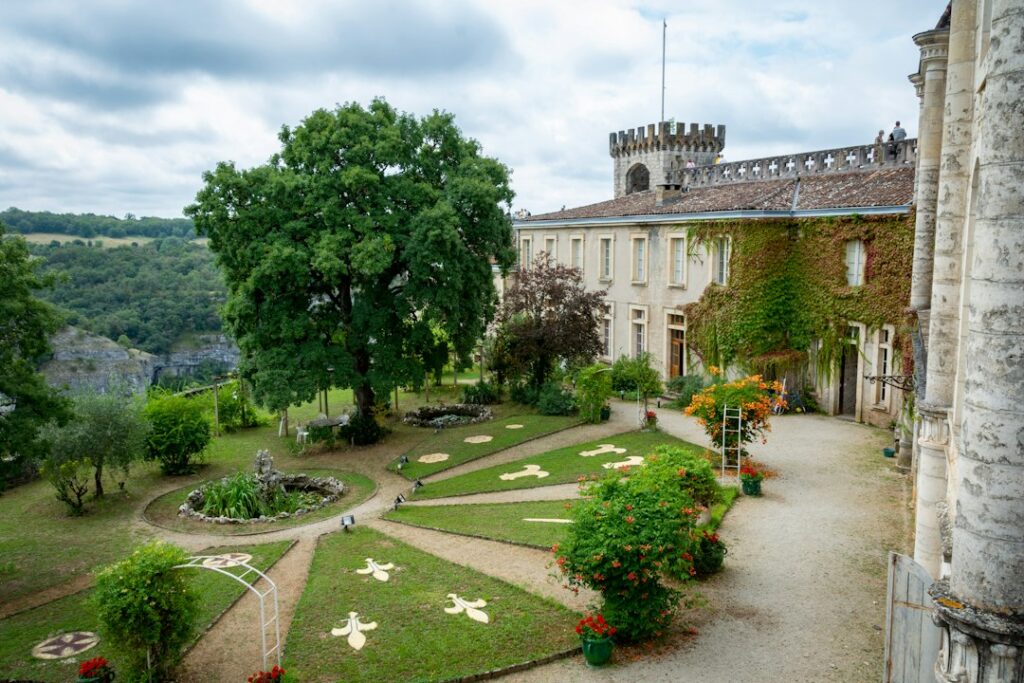
Five logistical factors determine whether a southern French château wedding feels seamless or stressful. Each one has a real cost implication, and each one is easy to overlook when you are falling in love with a venue’s photographs. Understanding them before you commit to a property is the difference between a budget that holds and one that balloons by 25%.
Airport Access: Nice vs. Marseille vs. Montpellier
The south of France is served by three main airports, and the distance from your chosen airport to your château shapes your guests’ experience more than any single decorative decision. Marseille Provence (MRS) is the gateway to Provence: 30 minutes to Aix-en-Provence, 1 hour to the Luberon, 1 hour 15 minutes to Avignon. Nice Côte d’Azur (NCE) is the gateway to the Riviera: 25 to 30 minutes to Château de la Napoule, 1.5 hours to Saint-Tropez, but 2 to 2.5 hours to the Luberon, which makes it impractical for most Provençal venues. Montpellier Méditerranée (MPL) is the gateway to Languedoc: 30 minutes to Château de Sainte-Cécile, 35 minutes to Château de Pondres, 1 hour 15 minutes to Château l’Hospitalet near Narbonne.
The key decision for international couples is which airport has the best flight connections from your guests’ departure cities. Nice has direct flights from New York and London, making it the strongest option for US-based guests. Marseille connects through major European hubs (London, Paris, Frankfurt, Amsterdam) but has fewer long-haul options. Montpellier has direct flights from London and Paris but limited long-haul service, so US couples typically connect through Paris CDG. If your guests are flying from multiple continents, a venue within 30 to 45 minutes of a well-connected airport reduces travel friction significantly.
July and August Heat on Non-Air-Conditioned Estates
This is the logistical factor that catches the most international couples off guard. Many southern French châteaux are historic buildings constructed centuries before air conditioning existed. Their thick stone walls provide natural insulation that keeps interiors surprisingly cool during the day, but reception rooms without climate control become uncomfortably hot during a July dinner service, particularly when 100 or more guests fill a space designed for natural ventilation. A July wedding at a non-air-conditioned Provençal estate means guests in formal attire at 38°C, which affects comfort, energy levels, and the length of time people are willing to remain at the table.
Among the venues on this list, Château de Fonscolombe and Château l’Hospitalet both have air-conditioned rooms, which makes them safer bets for peak-summer weddings. Château de Sannes, Château de Tourreau, Château Rieutort, and Château de Sainte-Cécile rely on natural ventilation, which works well in May, June, and September but becomes a genuine comfort issue in July and August. If you are set on a July or August date at a non-air-conditioned estate, ask your planner about portable climate control rentals, which can add €2,000 to €5,000 to your production budget. Alternatively, shift to shoulder months: May and September offer comfortable temperatures, golden light, and venue hire reductions of approximately 25%.
Vendor Availability in Rural Areas
The south of France has a deep pool of wedding vendors, but they are not evenly distributed. Quality florists, photographers, production companies, and planners are concentrated in Aix-en-Provence, Marseille, Nice, and Montpellier. A château in the deep Languedoc countryside or the outer Luberon may be a 60 to 90 minute drive from the nearest full-service florist, which means travel fees, minimum order requirements, and limited date availability. The practical impact: vendors who must travel 90 minutes each way typically charge €500 to €1,500 in travel and logistics fees, and some simply decline bookings beyond a certain radius during peak season.
Provence has the densest vendor infrastructure, with Aix-en-Provence and Marseille serving as hubs for florists, photographers, and planners who regularly work at Luberon estates. The Riviera has a sophisticated vendor ecosystem centered on Nice and Cannes, but pricing sits 20 to 40% above other regions. Languedoc has a growing vendor community in Montpellier and Narbonne, but the pool is smaller, which means booking early is essential. For any southern venue, reserve your photographer, florist, and planner 9 to 12 months ahead for peak-season dates. The best vendors are booked first, and the ones available in May for a June wedding are not the ones you want.
The French VAT Structure
This is where most international couples get caught. French quotes are frequently presented HT (hors taxes, before VAT), and the VAT is added on the final invoice. The rates are not uniform across your wedding: catering and food service carry a 10% VAT rate, while venue hire, equipment rental (tables, chairs, tents, lighting), and all alcoholic beverages are taxed at the full 20% rate. A venue quoting €25,000 HT becomes €30,000 TTC. A caterer quoting €12,000 HT becomes €13,200 TTC at the food rate. Across 10 to 15 vendor invoices, the cumulative VAT surprise typically adds €3,000 to €8,000 that couples did not anticipate.
Always confirm whether a price is HT or TTC before building your budget, and ask your planner to present all figures TTC so you are comparing real costs, not pre-tax ones. The venues on this list that publish TTC pricing (Château de Sannes and Château de la Napoule) make budgeting more transparent. Venues that quote HT require you to mentally add 20% to every venue and equipment line, and 10% to every catering line, which is easy to get wrong across 15 invoices.
Accommodation Gaps and Shuttle Costs
Most southern French châteaux sleep far fewer guests than they can seat for dinner. Château de Sannes sleeps 31 but seats 220. Château de la Napoule sleeps nobody. Château de Tourreau sleeps 29 but seats 150. This gap means the majority of your guests will need off-site accommodation, and shuttle transport between the venue and their hotels becomes a structural line item, not an optional convenience. Budget €3,000 to €6,000 for weekend shuttle transport depending on the number of hotel pickup points and the distance from the venue.
The venues with the largest on-site accommodation capacity, Château de Fonscolombe (110 guests) and Château l’Hospitalet (82 guests), minimize this gap and the associated costs. For couples planning a 40 to 60 guest intimate wedding where everyone stays on-site, these two estates are the strongest structural fits in the south. For larger celebrations, plan to block hotel rooms 12 to 18 months in advance, particularly in Provence and the Riviera where summer tourism competes for the same rooms. In Languedoc, hotel pressure is lower, but the supply of quality properties near rural châteaux is also thinner, which means booking early is equally important.
French event liability insurance (responsabilité civile professionnelle) runs €150 to €400 and is required by virtually every venue. Security guards are mandated at several venues on this list, including Château de Sannes and Château de la Napoule, typically costing €500 to €1,500 depending on guest count and event duration. These are not optional line items, and they are easy to miss when you are comparing venue hire prices.
If you are weighing these southern châteaus against venues in other parts of France, our guide to wedding locations across ten French regions places the south in context alongside the Loire Valley, Burgundy, Bordeaux, the Alps, and Paris.
Start Planning Your Southern Château Wedding
The right wedding château south of France is not the one with the most beautiful photographs. It is the one whose region matches the emotional tone you want your celebration to carry, whose cost structure fits your budget without hidden VAT surprises, and whose logistics, from airport distance to accommodation capacity to July heat, you have understood before you sign a contract. The lavender dreamer belongs in Provence. The wild-Mediterranean romantic belongs in Languedoc. The glamour seeker belongs on the Côte d’Azur. Each region has a specific cost structure, a specific set of tradeoffs, and a specific version of a southern French wedding that aligns with one of these visions.
Contact Myfrancewedding to request dates, a tailored cost breakdown that distinguishes HT from TTC, and a curated shortlist of southern châteaus matched to your guest count, your budget, and the emotional tone you want your celebration to carry. We help couples navigate the French venue cost structure from the first inquiry to the final invoice, ensuring that VAT, accommodation gaps, vendor logistics, and transport are accounted for from the start rather than discovered too late.
Frequently Asked Questions
What is the most affordable region in the south of France for a château wedding?
Languedoc offers the best value, with venue hire starting from €7,500 to €15,000 for a weekend exclusive use, catering at €80 to €150 per person, and a full 100-guest destination wedding typically running €30,000 to €80,000 all-in. Prices here run 30 to 50% below Provence and the Côte d’Azur for comparable properties.
Which airport should our guests fly into for a southern French château wedding?
Marseille Provence (MRS) is the gateway to Provence, 30 minutes from Aix-en-Provence and 1 hour to the Luberon. Nice Côte d’Azur (NCE) serves the Riviera, 25 to 30 minutes from coastal venues like Château de la Napoule. Montpellier (MPL) is the gateway to Languedoc, 30 to 45 minutes from most Languedoc châteaus. Nice has the best long-haul connections from North America.
Is July too hot for an outdoor wedding at a southern French château?
July and August in the south regularly reach 35 to 40°C. Many historic châteaus lack air conditioning in reception rooms, which can make dinner service uncomfortable. May, June, and September offer comfortable temperatures, golden light, and venue hire reductions of approximately 25%. If you must marry in July, choose an air-conditioned venue like Château de Fonscolombe or Château l’Hospitalet.
What is the difference between HT and TTC in French wedding venue pricing?
HT (hors taxes) means the price is before VAT. TTC (toutes taxes comprises) means VAT is included. Venue hire and equipment carry 20% VAT, while catering and food service carry 10%. Quotes are frequently presented HT, so always confirm which applies. Across all vendor invoices, the cumulative VAT typically adds €3,000 to €8,000 to the final budget.
Do southern French châteaus provide on-site accommodation for all guests?
Most châteaus sleep far fewer guests than they can seat for dinner. Château de Fonscolombe (110 beds) and Château l’Hospitalet (82 beds) have the largest on-site capacity in the south. Most other venues require overflow hotel accommodation and shuttle transport, which typically costs €3,000 to €6,000 for a weekend. Plan to block hotel rooms 12 to 18 months in advance for peak-season dates.