Biarritz Wedding Venues Beyond Provence and the Loire
-
myfrancewedding.com
- Wedding VenuesWeddings
- 12

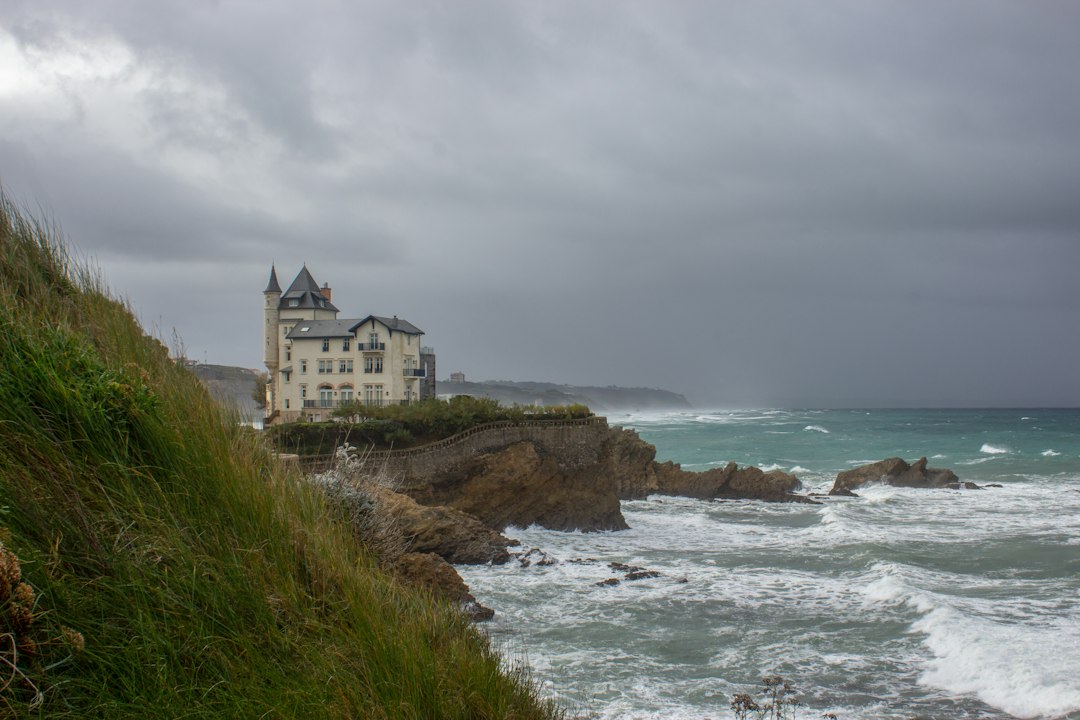
Picture a cliffside terrace where the Atlantic crashes against black rock below, the Pyrénées rise in a pale ridge to the south, and your guests are raising glasses of Irouléguy white while surfers in wetsuits paddle past in the last gold of the day. This is Biarritz, and if you have spent months scrolling through Provençal mas and Loire châteaux without finding the one, the Basque coast is the destination you may have been missing. Biarritz wedding venues occupy a category that does not exist anywhere else in France: Atlantic-luxury, where Belle Époque grandeur meets surf culture, where the food is piperade and Espelette pepper rather than ratatouille and rosé, and where the architecture is Basque red-and-white timbered façades rather than tuffeau stone and slate. What follows is the practical deep dive that the Instagram photographs do not provide.
Why Biarritz: The Basque Coast’s Wedding Allure
Most couples researching French wedding regions exhaust Provence, the Loire Valley, and perhaps Bordeaux before they encounter the Basque coast. Biarritz sits at the southwestern edge of France, 20 kilometres from the Spanish border, where the Pyrénées meet the Atlantic in a collision of landscapes that produces some of the most dramatic coastal scenery in Europe. The town was a sleepy fishing village until 1854, when Napoleon III built a summer villa for Empress Eugénie, and European aristocracy followed. What grew from that royal whim is a place unlike anywhere else in France: a town where imperial ballrooms share the same coastline as surf breaks that draw riders from across the world, where the same light that drew Corot, Sorolla, Matisse, and Picasso still turns the ocean amber at sunset, and where the rhythm of tides shapes the day the way the Mistral shapes a Provençal afternoon.
What makes Biarritz distinct from every other French wedding region is the combination of three elements that normally exist in separate destinations: Atlantic wildness, imperial grandeur, and a Basque cultural identity that predates the French nation itself. Provence gives you lavender and heat. The Loire gives you châteaux and flat river valleys. The Côte d’Azur gives you Mediterranean glamour. Biarritz gives you something rougher, more elemental, and more rooted in a culture that most international guests will not have encountered before. The Basque language, Euskara, is Europe’s oldest living language, unrelated to any other Indo-European tongue. The food, the architecture, the music, and the sporting traditions (pelota, not pétanque) belong to a culture that straddles the Franco-Spanish border and that the French state has never fully absorbed. A wedding here carries a different emotional tone than a Provençal celebration: more Atlantic, more untamed, more authentically local.
If you are still mapping French regions to your vision as a couple, our guide to wedding locations across ten French regions places the Basque coast in context alongside the other major destinations. For a deeper comparison of how regions shape the château experience, our guide to choosing your French wedding region breaks down the tradeoffs by architectural character, catering model, and airport proximity.
The Light That Drew the Painters
The Basque coast has a specific quality of light that has drawn painters since Camille Corot arrived in Ciboure in 1871. The Atlantic here acts as a vast reflector, bouncing a cold silver luminescence that shifts to deep amber as the sun drops behind the ocean. The Pyrénées to the south catch the same light and send it back as a warm glow. The result is a chromatic environment that shifts more dramatically in a single evening than the steady golden wash of Provence or the soft pearly light of the Loire. Sorolla painted it. Matisse painted it. Ramiro Arrue and the Groupe des Neuf built an entire Basque modern art movement around it. Your wedding photographer will not need to chase the golden hour here. The golden hour arrives on every clear evening and lingers long enough for a full ceremony sequence.
The Rhythm of Tides
The Atlantic coast is tidal, which the Mediterranean is not. Biarritz experiences a tidal range of roughly 3 to 4 metres, meaning the shoreline transforms twice a day. At low tide, the Rocher de la Vierge stands exposed on a causeway of rock. At high tide, waves wash the base of the same cliff where your cocktail hour may be unfolding. For a wedding, this tidal rhythm is both a gift and a planning consideration. The gift is visual: your photographs will capture a coastline that looks different in every hour of your celebration. The consideration is logistical: a beach ceremony timed for high tide means waves as a backdrop but less sand to stand on. Ask your venue or planner about the tide table for your wedding date, and plan your outdoor ceremony for the window that gives you the combination of sand and surf that matches your vision.
Ocean-View Venues Along the Côte Basque
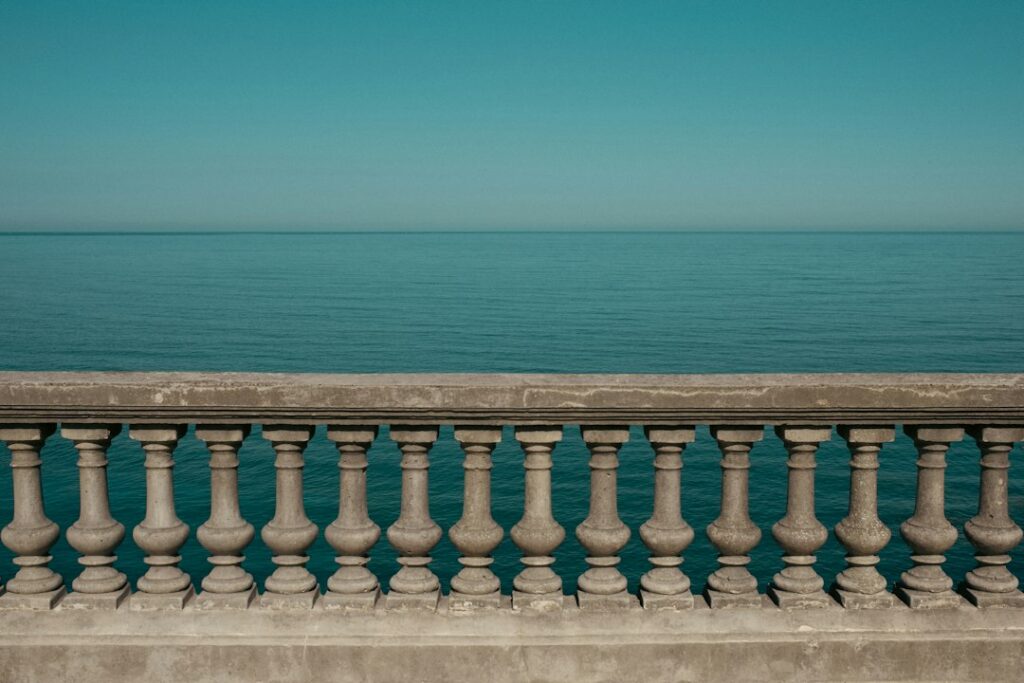
The signature Biarritz wedding venue format is the seafront hotel, where your reception happens with the Atlantic as a live backdrop. These properties combine accommodation, catering, and ceremony space in a single location, which makes them the strongest structural fit for couples who want a residential weekend where guests stay on-site and the celebration flows from ceremony to dinner to dancing without anyone leaving the property. Three venues define this category, each at a different scale and register.
Hôtel du Palais: The Imperial Statement
Built in 1854 by Napoleon III as a summer villa for Empress Eugénie, the Hôtel du Palais is the venue most couples picture when they imagine a Biarritz wedding. It stands on the Grande Plage, facing the Atlantic, and was awarded the French “Palace” distinction in 2011, the only hotel on the French Atlantic coast to receive this designation, which sits above the five-star rating. The hotel houses 86 rooms and 56 suites, for a total of 142 units, and has been classified as a historic monument since 1993.
The reception infrastructure is built around the Salon Impérial, the former ballroom of Napoleon III and Empress Eugénie, a 223-square-metre space with a retractable glass roof rising to 8 metres. It seats 180 for a banquet, accommodates 230 for a ceremony, and holds 310 for a cocktail reception. The adjacent Jardin d’Hiver, a 110-square-metre glass conservatory, extends the Salon Impérial for cocktails or intimate gatherings. Two smaller salons, the Edouard VII (78 square metres, 30 seated) and the Windsor (50 square metres, 20 seated), each open onto ocean-view terraces. The gardens host outdoor cocktail receptions for up to 200 guests from April through October, and a tent can be installed from €6,000 TTC. The hotel’s outdoor restaurant, Le Sunset, seats 40 for a banquet and holds 70 for cocktails, also available April through October.
What it does well: the most architecturally significant wedding venue on the Basque coast, with a genuine imperial ballroom, ocean views from the reception spaces, a Guerlain Imperial Spa, and a heated seawater pool. The 142 rooms mean most wedding parties can sleep on-site, and the hotel’s staff has decades of experience hosting large-scale events. What to watch for: the hotel operates year-round as a luxury property, so confirm whether your booking delivers exclusive use of the reception spaces or whether other hotel guests will be on the property during your celebration. The Palace distinction was under review by Atout France for 2026, so verify the current classification directly with the hotel if the Palace label matters to you. Pricing is arranged on request, and a hotel of this caliber does not compete on price.
Regina Experimental Biarritz: The Design Hotel Buyout
Regina Experimental is the contemporary alternative, a 5-star hotel from the Experimental Group located on the avenue de l’Impératrice, perched on the cliffside facing the ocean along the coastal road from Anglet to Saint-Jean-de-Luz. The hotel has 72 rooms and a spectacular Belle Époque atrium beneath a towering glass ceiling that can accommodate up to 365 guests for a full hotel privatization. The in-house restaurant, Frenchie Biarritz, brings the Paris-based Frenchie brand to the Basque coast, offering a modern, ingredient-driven menu that draws on Basque produce.
The atrium is the defining space: a glass-roofed courtyard that combines historic architecture with the Experimental Group’s signature design sensibility. Full hotel privatization transforms the property into a private world for your celebration, with cocktails in the atrium, dinner in the restaurant or on the terrace, and guests retiring to rooms upstairs. Three smaller meeting rooms (Leihorra, Larrade, Labat) accommodate intimate gatherings of 20 to 50 people, useful for a welcome dinner or next-day brunch.
What it does well: the strongest venue for couples who want a design-forward, contemporary wedding in a historic shell, with the Frenchie kitchen providing a gastronomic experience that is more modern than the traditional Basque catering at other venues. The full buyout model delivers genuine exclusivity. What to watch for: the atrium’s 365-guest capacity applies to full hotel privatization, which means you are paying for the entire property regardless of how many rooms you fill. If your guest count is 120 but the buyout requires 72 rooms, the per-guest concentration math shifts your budget upward. Ask specifically what the minimum spend or minimum room night commitment is for a full buyout.
Grand Hôtel Spa & Thalasso, Saint-Jean-de-Luz: The Intimate Bay-Front Option
Twenty minutes south of Biarritz, the fishing village of Saint-Jean-de-Luz offers a quieter, more intimate version of the Basque coast wedding. The Grand Hôtel Spa & Thalasso is a 5-star hotel facing the bay, with 52 rooms and suites, an Art Deco-inspired interior, and the Loreamar Thalasso spa. The hotel grew out of the Hôtel Terminus, built in the dunes at the end of the 19th century, destroyed by fire in 1904, rebuilt, and renamed in 1982. Its reception spaces are small: the Salon Arnaga (40 square metres) holds 35 for cocktails and 30 for a ceremony, and the private Sunset salon (35 square metres) seats 35 for dinner. The restaurant Aho Fina provides in-house catering.
What it does well: the strongest venue for couples planning an intimate Basque coast wedding of 30 to 35 guests, where the bay of Saint-Jean-de-Luz is the backdrop and the thalasso spa gives guests a reason to stay for the weekend. The village itself, with its traditional Basque architecture and working fishing port, offers a more authentically local experience than Biarritz’s grand hotel scene. What to watch for: the reception capacity is genuinely small. If your guest list exceeds 40, this venue is not the right fit. The salon spaces are compact, and there is no large ballroom for a bigger celebration. For couples exploring intimate venues across France more broadly, our guide to small wedding venues that maximize intimacy covers options in multiple regions.
Inland Châteaux and Basque Country Estates
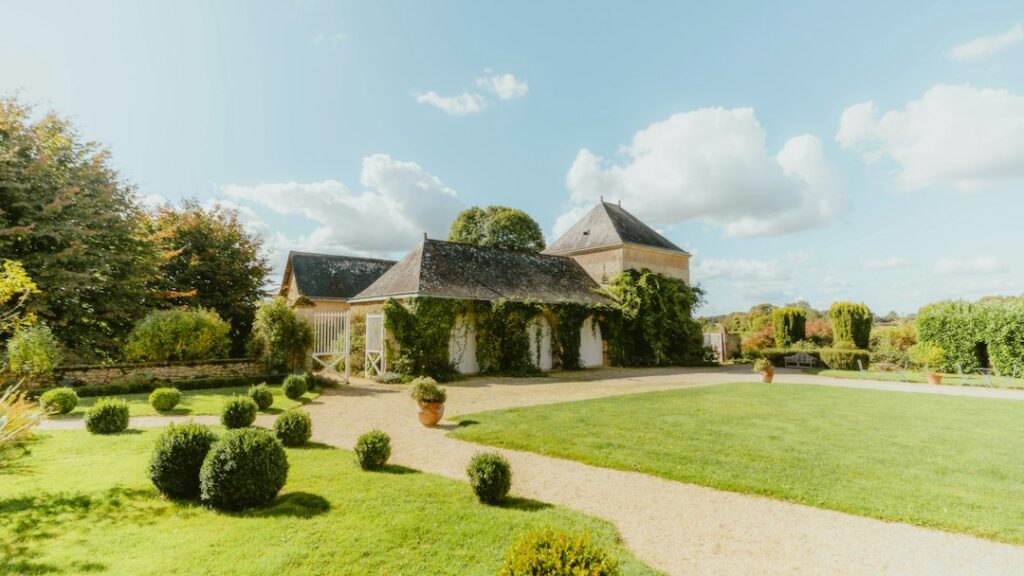
Not every Basque coast wedding needs to happen on the shoreline. The second category of Biarritz wedding venues comprises inland châteaux and Basque estates within 30 minutes of the coast, where the architecture is the story and the Pyrénées form the backdrop rather than the ocean. These properties give you privacy, space, and often the freedom to choose your own caterer, which the seafront hotels rarely allow. For couples who want creative control over the menu, the wine, and the design, this category is where the Basque Country’s most interesting options sit.
Château du Clair de Lune: Pyrénées Panorama in Biarritz
Hidden in eight hectares of century-old parkland, five kilometres from the centre of Biarritz, Château du Clair de Lune is a 19th-century manor that feels like a country estate despite being within the town’s boundaries. The reception space, called Côté Terre, spans 350 square metres including a caterer’s kitchen, restrooms, and entrance lobby. The main hall of 210 square metres seats 180 guests and can be extended to 250 with an additional fee. A covered terrace of 120 square metres opens onto a pool and a 180-degree view of the Pyrénées mountain range. The gardens are planted with magnolias, azaleas, oaks, wisteria, and lilacs, and a wisteria-covered walkway leads from the château terrace through a rose garden to the reception hall.
The property includes 18 rooms divided between the Manoir and the Pavillon de Chasse, and full hotel privatization is mandatory for weddings, with a minimum stay of two nights (three nights on holiday weekends). A bodyguard handles guest parking and security. The on-site restaurant, Marius, is run independently by chef Sebastien Sanjou in an 18th-century Basque farmhouse on the property, offering a gastronomic option for welcome dinners or next-day brunch. External caterers are permitted for the main reception.
What it does well: the best balance of proximity to Biarritz (five kilometres from the town centre, about ten minutes from the airport), genuine estate privacy, and catering freedom on the Basque coast. The Pyrénées panorama from the reception hall is a backdrop that no seafront hotel can match, and the parkland setting gives you outdoor ceremony space that the cliffside hotels lack. What to watch for: the 18 rooms for 180 to 250 seated guests is a significant accommodation gap. Most of your guests will need nearby hotels in Biarritz, and shuttle transport becomes a line item. The venue is also unavailable for weddings from the second weekend of July through the last weekend of August, which are precisely the months most international couples target. If your heart is set on a high-summer date, this venue is not available.
Château de Larraldia: The Full Basque Château Experience
Ten minutes from Biarritz in the commune of Villefranque, Château de Larraldia is a 17th-century estate incorporating Louis XIV architecture, set on 17 hectares with views of the Rhune, the Pyrénées, and Bayonne Cathedral. The property consists of the main château, a manor called the Saint-Esprit, and an orangery that serves as the reception room. The orangery covers 300 square metres with five floor-to-ceiling bay windows, and opens onto a garden and a 250-square-metre terrace that can be covered in case of rain. A professional kitchen designed for caterers sits adjacent to the orangery.
The estate offers 17 rooms across the château (7 rooms and suites) and the manor (11 rooms and suites), with a 22-metre swimming pool, a pool house, a pelota fronton convertible to a tennis court, and four gardens including a French garden, a rose garden, and a Japanese garden. The property is privatized for three days, giving families a residential château experience from Thursday through Sunday. Catering is arranged from an approved list selected by the couple, or proposed by the château itself.
What it does well: the most complete château experience in the Basque Country, with authentic 17th-century architecture, extensive grounds, a large reception room, a professional caterer’s kitchen, and genuine on-site accommodation. The three-day privatization model creates a residential weekend where your guests live in the château as if it were their family home. The pelota fronton and pool give guests activities beyond the wedding itself. What to watch for: 17 rooms for a 300-square-metre reception room that seats several hundred means a steep accommodation gap. If you are hosting 150 guests, only a fraction can sleep on-site. The approved caterer list limits your choice compared to a fully open dry-hire model, though the château’s list is curated for quality.
Maison Belzunce: The Fortified Basque Noble House
For couples who want to go deeper into the Basque interior, Maison Belzunce is a 14th-century fortified noble house, or jauregia, perched on a hillside in the village of Méharin, 40 minutes from Bayonne and 45 minutes from Biarritz airport. The estate’s former sheepfold has been transformed into a reception room seating up to 200 guests, combining old stone walls with modern design. The salons of the Jauregia provide a more intimate space for cocktails, ceremonies, or a next-day brunch. Terraces, a pool, and gardens open onto panoramic views of the Basque countryside.
The estate accommodates up to 40 guests on-site and is privatized from Thursday through Sunday, allowing a full multi-day celebration. The property is run as a family home, and the owners emphasize a personalized approach with private visits by appointment.
What it does well: the most authentically historic venue in the Basque wedding landscape, a genuine 14th-century Basque noble house rather than a 19th-century reproduction, with deep inland views that no coastal venue can offer. The 40-guest accommodation capacity is the strongest bed-to-seated-capacity ratio among the inland châteaux. What to watch for: 45 minutes from Biarritz airport is a longer transfer than the coastal venues, and Méharin is a small village with limited overflow accommodation nearby. Most of your guests beyond the 40 on-site beds will need hotels in Bayonne or Cambo-les-Bains, roughly 30 minutes away. For couples who prioritize total privacy and a genuinely private estate, our guide to exclusive wedding venues in France for total privacy places this model in a national context.
Les Collines Iduki: The Village Estate with Full Accommodation
In the village of La Bastide-Clairence, listed among France’s most beautiful villages, Les Collines Iduki is a Basque estate offering something rare in the French wedding venue landscape: accommodation that actually exceeds its seated capacity. The property has 36 lodgings with 154 beds, a pool, a restaurant, and a bar. The reception hall seats 140 guests, and a meadow by the river hosts outdoor ceremonies. The on-site restaurant, Iduki Ostatua, provides Basque cuisine made with local products.
What it does well: the strongest accommodation-to-reception ratio of any venue on this list. 154 beds for 140 seated guests means every guest can sleep on-site, which eliminates the shuttle transport costs and split-accommodation logistics that define most Basque coast weddings. The village setting is authentically Basque and visually distinctive. What to watch for: La Bastide-Clairence is 30 minutes from Biarritz, so this is an inland venue, not a coastal one. If your vision requires ocean views, the river meadow and village setting, while beautiful, are a different aesthetic. The in-house restaurant means you are working with the estate’s culinary team rather than choosing your own caterer.
Comparing Biarritz Wedding Venues: The Data
The table below compares the six venues profiled above across the dimensions that shape a destination wedding: seated capacity, on-site accommodation, catering model, and distance from Biarritz airport. Use it to shortlist by your constraints before you request a single brochure.
| Venue | Type | Seated Capacity | On-Site Rooms | Catering Model | Distance from Airport |
|---|---|---|---|---|---|
| Hôtel du Palais | Palace hotel, seafront | 180 (Salon Impérial) | 142 rooms & suites | In-house | ~10 min |
| Regina Experimental | 5-star design hotel, cliffside | 365 (full buyout) | 72 rooms | In-house (Frenchie) | ~10 min |
| Grand Hôtel, Saint-Jean-de-Luz | 5-star hotel, bay-front | 35 (intimate salons) | 52 rooms & suites | In-house | ~25 min |
| Château du Clair de Lune | 19th-century manor, parkland | 180 (extendable to 250) | 18 rooms | External caterer allowed | ~10 min |
| Château de Larraldia | 17th-century château, inland | 200+ (300m² orangery) | 17 rooms | Approved list | ~15 min |
| Maison Belzunce | 14th-century Basque noble house | 200 | 40 beds | External | ~45 min |
| Les Collines Iduki | Basque estate, village | 140 | 154 beds | In-house restaurant | ~30 min |
One pattern jumps from the table: the accommodation gap. The coastal hotels (Hôtel du Palais, Grand Hôtel Saint-Jean-de-Luz, Regina Experimental) and Les Collines Iduki are the only venues where on-site rooms approach or exceed seated capacity. Every inland château has a significant gap between the number of guests it can seat for dinner and the number it can bed for the night. This is not a flaw unique to the Basque Country. As we explain in our guide to choosing your French wedding region, every château in France seats more guests than it sleeps. But the gap is steeper here than in Provence, where some estates like Château de Fonscolombe offer 110 beds for 140 seated. In the Basque inland, the best ratio you will find is Maison Belzunce (40 beds for 200 seated) and Les Collines Iduki (154 beds for 140 seated, the rare venue that flips the ratio in your favour).
Logistics: Biarritz Airport, Weather, and Guest Experience
Biarritz Airport: The Atlantic Coast’s Best Connected Hub
The practical case for Biarritz is as strong as the aesthetic one. Biarritz Pays Basque Airport is approximately 5 kilometres from the town centre, a drive of 10 minutes. The airport offers direct flights year-round to Paris CDG (Air France, up to 5 daily) and Paris Orly (Transavia, 2 to 3 daily), plus seasonal routes to London Gatwick and London Stansted, Dublin, Amsterdam, Geneva, Lyon, Nice, Milan, Brussels, Edinburgh, Frankfurt, Munich, Luxembourg, Zurich, Marseille, and Marrakech. For guests flying from North America or Asia, the Paris CDG connection runs multiple times daily, making same-day arrival feasible.
This airport connectivity is the Basque coast’s single greatest practical advantage over other French wedding regions. The Loire Valley requires a TGV connection from Paris. Provence relies on Marseille, roughly an hour from the Luberon. The Dordogne uses Bergerac, which has only seasonal service. Corsica requires a ferry or a domestic flight. Biarritz puts international guests on the ground in a venue town within 20 minutes of landing, with no internal flights, no ferries, and no multi-leg train journeys. If your guests are flying from multiple continents, this matters more than any decorative decision.
Weather: Atlantic Unpredictability and the Seasonal Calendar
The Basque coast has an oceanic climate, which means mild temperatures year-round but higher rainfall and less predictability than the Mediterranean coast. Summer temperatures typically range from 18 to 26 degrees Celsius, which is cooler and more comfortable than Provence’s July and August heat that can reach 35 to 40 degrees. The ocean breeze keeps the air moving, and the Pyrénées to the south create a microclimate that can produce warm, clear days when the rest of the Atlantic coast is grey. But the Atlantic is the Atlantic. Rain is possible in any month, and a clear morning can turn to cloud by afternoon.
The strongest months for a Basque coast wedding are June and September. June offers long daylight hours, the ocean is warming, and the tourist crowds have not yet peaked. September brings the most stable weather of the season, the water is at its warmest after a summer of sun, and the tourist pressure eases. July and August are peak season: hotel rates are higher, beaches are crowded, and the surf competitions and cultural festivals that make Biarritz vibrant also make it busy. May and October are viable but cooler, with a higher probability of rain. For outdoor ceremonies, a solid weather backup is non-negotiable at every venue on this list.
For a detailed discussion of weather planning and outdoor venue infrastructure, our guide to luxury outdoor wedding venues that master the elements addresses backup plans, tent structures, and the questions to ask before committing to an open-air ceremony.
The VAT Question on the Basque Coast
The French VAT structure applies on the Basque coast exactly as it does across the rest of France, and it catches the same international couples off guard. Venue hire, equipment rental, and all alcoholic beverages carry 20% VAT. Catering and food service carry 10% VAT. A venue quoting €25,000 HT (hors taxes, before VAT) for a weekend exclusive use becomes €30,000 TTC (toutes taxes comprises, VAT included). A caterer quoting €12,000 HT becomes €13,200 TTC at the food rate. Across 10 to 15 vendor invoices, the cumulative VAT typically adds €3,000 to €8,000 that couples did not anticipate.
Always confirm whether a Biarritz venue quote is HT or TTC before building your budget. Hotel-venue quotes are frequently presented HT, particularly for the venue hire component, while per-person catering packages may be quoted TTC. At Château du Clair de Lune, where external caterers are permitted, the venue hire and the catering are separate invoices with separate VAT rates. At Château de Larraldia, the approved caterer list means you are comparing caterers whose quotes may use different VAT conventions. Ask your planner to present all figures TTC so you are comparing real costs, not pre-tax ones.
Regional Flavours: Basque Gastronomy for Your Reception
The food at a Basque coast wedding is not the food at a Provençal wedding, and understanding that difference is part of choosing the region. Basque cuisine is one of the most distinctive culinary traditions in France, built on a specific set of local ingredients that carry AOC and AOP designations: Espelette pepper, Bayonne ham, Ossau-Iraty cheese, Irouléguy wine. The Basque Country has one of the highest concentrations of Michelin-starred restaurants per capita in France, and the wedding catering here reflects that gastronomic depth. These are not novelty items added to a standard French menu for local colour. They are the regional culinary identity, and the best Basque caterers know how to elevate them to a wedding standard without making your dinner feel like a tourist meal.
The Core Ingredients
Piment d’Espelette is the defining spice of Basque cooking. It carries an AOC designation, and production is legally restricted to 10 communes in the Basque Country, where approximately 170 growers cultivate it. The pepper is harvested, dried, and ground into a red-orange powder with a warm, complex heat that is more nuanced than standard chilli. It appears in piperade (a dish of tomatoes, peppers, and onions, often with Bayonne ham), in axoa (a veal dish from the Espelette region), and in the seasoning of virtually every Basque meat preparation. For a wedding menu, Espelette pepper can appear in the amuse-bouche, in the sauce for a main course, or even in a chocolate dessert.
Bayonne ham is the Basque Country’s other essential product, a dry-cured ham aged in the Adour basin. Ossau-Iraty, an AOP ewe’s milk cheese from the Pyrénées, provides the cheese course with a nutty, firm-textured alternative to the cow’s milk cheeses that dominate the rest of France. The Basque cake, or gâteau basque, is the signature dessert: a shortcrust pastry filled with either black cherry jam or vanilla pastry cream, with a crosshatch pattern on top. It dates to the 17th century and is embedded in the region’s culinary heritage. Many Basque caterers offer a gâteau basque tasting bar with multiple flavours for the dessert course, which is both authentic and visually distinctive.
Irouléguy Wine: The Basque Country’s Own Appellation
The wine story at a Basque coast wedding is unlike any other French region. Irouléguy is the only wine appellation in the French Basque Country, awarded AOC status in 1970 and AOP status in 2013. The vineyard sits between Saint-Jean-Pied-de-Port and Saint-Étienne-de-Baïgorry, planted on steep slopes in the foothills of the Pyrénées, where monks from Roncesvalles Abbey established vines in the 14th century to serve pilgrims on the Santiago de Compostela route. The terroir requires terraced cultivation and manual harvesting, which limits production and gives Irouléguy a rarity that no other French wedding region’s wine can match.
Irouléguy produces red, white, and rosé wines. The reds, typically made from Tannat, are structured and deep, with dark fruit and firm tannins that pair naturally with Basque meat dishes and the Ossau-Iraty cheese course. The whites, made from Petit Courbu and Gros Manseng, are aromatic and bright, well-suited to the cocktail hour and fish courses. The practical question for your caterer or sommelier: can you build a wine pairing that incorporates Irouléguy alongside other Southwest French wines? The answer is yes, and doing so gives your wedding a regional coherence that ordering generic French wines cannot match. A suggested progression: an Irouléguy white for the cocktail and fish course, an Irouléguy red or a Madiran for the meat course, and a Crémant or a Jurançon for the toast.
Pintxos: The Basque Cocktail Hour
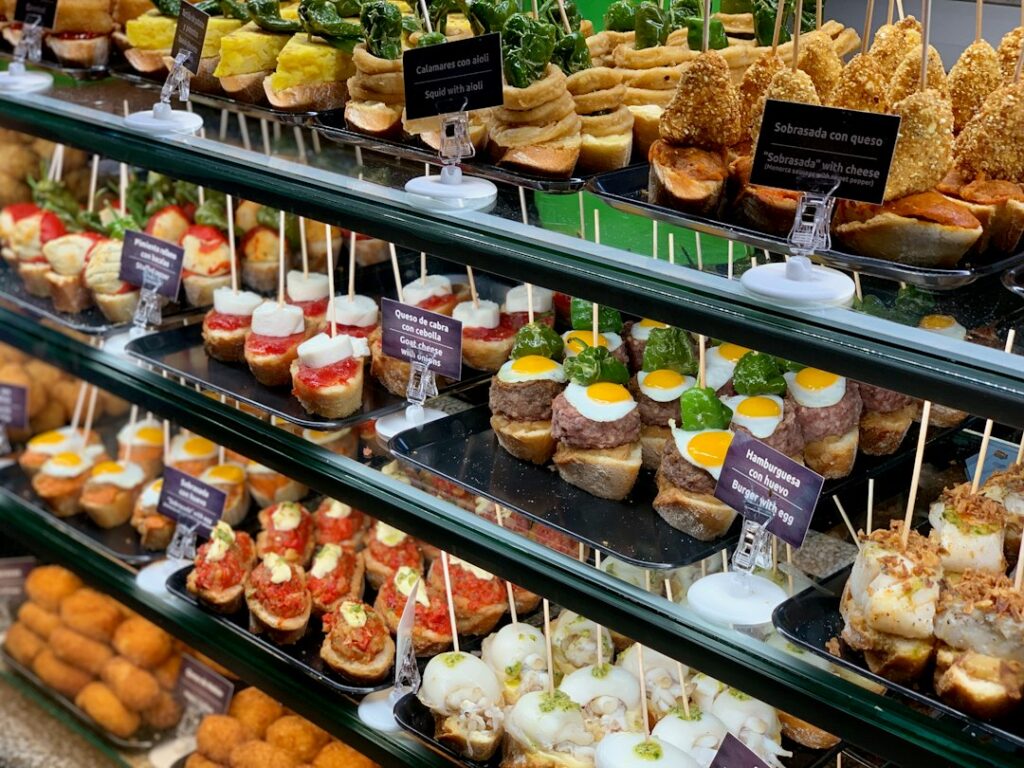
One of the most distinctive elements you can incorporate into a Basque coast wedding is the pintxo, the Basque equivalent of tapas. These are small, elaborated bites served on bread or skewers, and the pintxo culture of the Spanish Basque Country (particularly San Sebastián) is considered among the finest bar food traditions in the world. A pintxo cocktail hour, with servers passing small plates of cod brandade, spider crab, gilda skewers (olive, anchovy, and Espelette pepper), and Basque charcuterie, gives your reception a cultural specificity that a standard canapé selection cannot match. Ask your caterer whether they offer a pintxo bar or a pintxo-style cocktail service, and whether they source from Basque producers.
Start Planning Your Basque Coast Wedding
Biarritz is not Provence with an ocean. It is a fundamentally different kind of French wedding, shaped by Atlantic geography, Basque culture, and a light that has drawn painters for 150 years. The couples who end up with the celebration they imagined are the ones who understand that the same ocean that makes the coastline dramatic dictates a weather plan, that the same Basque identity that makes the food distinctive means your caterer needs to know how to work with Espelette pepper and Irouléguy wine at gastronomic level, and that the same airport connectivity that makes Biarritz the most accessible French wedding destination for international guests also makes July and August the most competitive months to book.
The Atlantic romantic belongs on the Basque coast. The palace-seeker belongs at the Hôtel du Palais. The design-forward couple belongs at Regina Experimental. The château traditionalist belongs at Larraldia. The village romantic belongs at Les Collines Iduki. Each venue on this list offers a specific version of a Basque coast wedding that aligns with one of these visions. For couples who want to explore further, our guide to Annecy wedding venues beyond Provence and the Loire covers the Alpine-lakeside alternative, and our guide to small luxury wedding venues for intimate French weddings profiles options for celebrations under 60 guests across multiple regions. Your French love story is waiting to unfold.
Frequently Asked Questions
What makes Biarritz different from Provence or the Loire Valley for a wedding?
Biarritz combines Atlantic wildness, Belle Époque grandeur, and a Basque cultural identity that predates the French nation. The light is different (Atlantic silver shifting to amber, which drew painters like Corot, Matisse, and Picasso), the food is Basque (Espelette pepper, Bayonne ham, Irouléguy wine, gâteau basque) rather than Provençal, and the coastline is tidal and dramatic in a way no Mediterranean or river-valley setting can match. Biarritz Airport offers direct flights from Paris, London, Dublin, Amsterdam, and Geneva, making it one of the most accessible French wedding destinations for international guests.
When is the best time of year for a Biarritz wedding?
June and September are the strongest months, offering mild temperatures (typically 18 to 26 degrees Celsius), thinner tourist crowds than July and August, and more stable weather. July and August are peak season with higher hotel rates and more competition for venue dates. May and October are viable but cooler, with a higher probability of rain. The oceanic climate means rain is possible in any month, so a solid weather backup plan is essential at every venue.
How far is Biarritz Airport from the wedding venues?
Biarritz Pays Basque Airport is approximately 5 kilometres from the town centre, about a 10-minute drive. The Hôtel du Palais, Regina Experimental, and Château du Clair de Lune are all within 10 minutes of the airport. Château de Larraldia is approximately 15 minutes. Saint-Jean-de-Luz is about 25 minutes. Maison Belzunce in Méharin is the furthest at approximately 45 minutes. The airport offers direct flights to Paris CDG, London, Dublin, Amsterdam, Geneva, and other European cities.
What types of wedding venues are available around Biarritz?
Biarritz venues fall into two categories: seafront hotels including the Hôtel du Palais (Palace-distinction, 180 seated), Regina Experimental (5-star design hotel, 365 for full buyout), and the Grand Hôtel in Saint-Jean-de-Luz (intimate, 35 seated), and inland châteaux and Basque estates including Château du Clair de Lune (180 seated, 18 rooms), Château de Larraldia (200-plus seated, 17 rooms), Maison Belzunce (200 seated, 40 beds), and Les Collines Iduki (140 seated, 154 beds).
Can we incorporate Basque food and wine into our Biarritz wedding menu?
Yes. Espelette pepper (AOC), Bayonne ham, Ossau-Iraty cheese (AOP), piperade, and gâteau basque are regional specialties that skilled Basque caterers can elevate to wedding standard. Irouléguy, the only wine appellation in the French Basque Country (AOC 1970, AOP 2013), produces red, white, and rosé wines from grapes grown on terraced Pyrénées slopes. A pintxo-style cocktail hour with Basque tapas is another way to incorporate local culture. Venues with imposed catering may feature Basque ingredients on their menu, while external-caterer venues like Château du Clair de Lune let you build the pairing entirely.